
Summary:
After a bad storm rolls through Monmouth County, your inbox fills up fast. Door-knockers appear. Neighbors start trading names. And suddenly you’re staring at three wildly different estimates with no clear way to tell who’s actually qualified and who’s going to cash your deposit and disappear.
That’s the reality of hiring a home improvement contractor in Monmouth County right now. The market is crowded, the fraud complaint rate is among the highest of any consumer category in the state, and the average homeowner has no easy way to tell a legitimate operation from a storm chaser.
This page exists to change that. Here’s what you actually need to know.
What Local Roofing Contractors in Monmouth County Should Be Able to Prove
The first thing any legitimate contractor should be able to hand you — before you discuss a single shingle — is their New Jersey Home Improvement Contractor registration number. It starts with “13VH” followed by ten digits, and you can verify it yourself in about thirty seconds at njconsumeraffairs.gov.
If a contractor can’t produce that number, or gets vague when you ask, that’s your answer.
New Jersey law requires any contractor performing home improvement work valued at more than $500 to hold this registration. It’s not a technicality — it’s a legal requirement under the NJ Consumer Fraud Act, and it exists specifically because this industry has a documented history of homeowners getting burned.
In January 2024, Governor Murphy signed new legislation tightening these requirements further, establishing a formal State Board of Home Improvement and Home Elevation Contractors and raising the minimum general liability insurance requirement to $500,000 per occurrence. Knowing this doesn’t make you a difficult customer. It makes you an informed one.
Siding Contractor Red Flags in Monmouth County
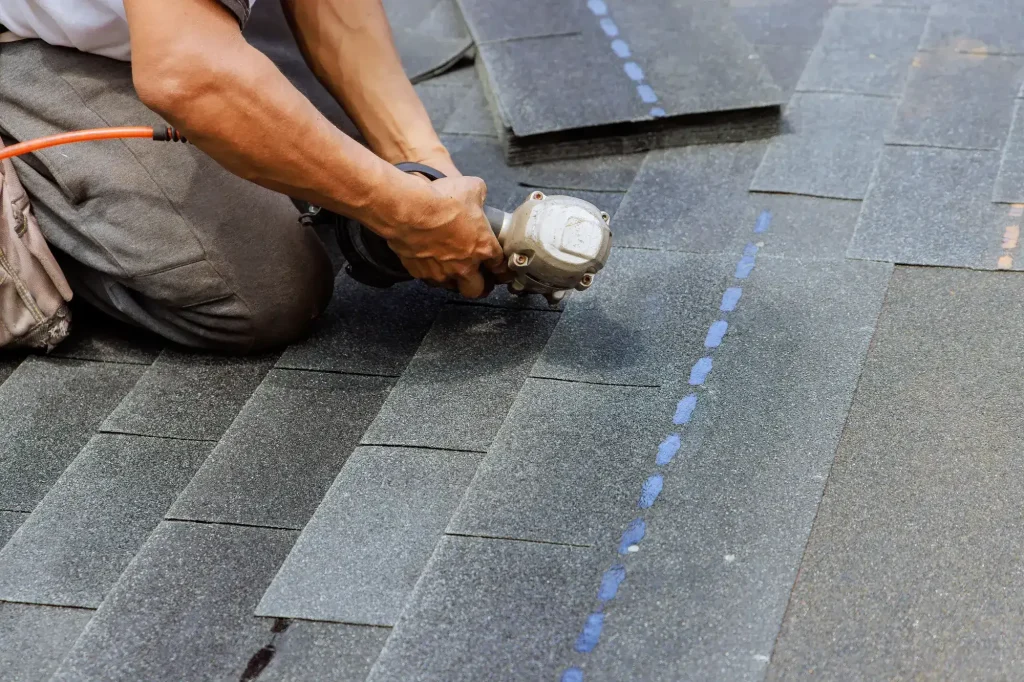
Siding replacement is one of the most common projects homeowners in Monmouth County undertake — and one of the most commonly botched by contractors who cut corners where they think no one is looking. The problems don’t always show up immediately.
Improper installation around windows and doors might not cause visible water intrusion until the second or third winter after the job. By then, the contractor who did the work may be long gone.
The most important question you can ask a siding contractor isn’t about price. It’s about who’s actually doing the work. Many larger operations use subcontractors — meaning the crew that shows up at your house is not the crew that gave you the estimate, not the crew the company has vetted, and not the crew that will be accountable if something goes wrong.
Ask directly: are these your employees, or are you subcontracting this out? The answer tells you a lot.
A written contract is not optional in New Jersey for any project over $500. That contract should spell out the full scope of work, the specific materials being used, the total cost, a payment schedule, and the contractor’s full legal business name and a verifiable business address — not a P.O. box.
If the contract you’re handed is vague on any of those points, ask for a revised version before you sign. A contractor who pushes back on that request is showing you something important about how they operate.
One more thing worth knowing: requesting more than 30 to 33 percent of the total project cost upfront before work begins is a documented red flag in this industry. Deposits are normal and reasonable, but a contractor asking for 50 or 60 percent before a single piece of siding comes off your house is asking you to absorb all the risk. Don’t do it.
How to Find a Reliable Gutter Contractor in Monmouth County Before the Next Storm
Gutters are easy to ignore until they fail — and in Monmouth County, they fail in ways that compound quickly. When gutters pull away from the fascia, back up during heavy rain, or drain improperly, you’re not just dealing with a gutter problem. You’re dealing with the foundation, the siding, and potentially the interior of your home.
The gutter is the last line of defense between a hard rain and your basement.
The challenge with finding a gutter contractor is that the work looks simple from the outside, which means the barrier to entry is low and the quality range is enormous. Seamless gutters need to be pitched correctly — a fraction of an inch over a long run — or they’ll pool water and pull down under the weight.
Downspout placement matters. Hangers need to be set at the right intervals for the load. These are details that separate a clean, functional installation from one that looks fine on day one and fails by the second winter.
What you’re looking for in a gutter contractor is the same thing you’re looking for in any exterior contractor: someone who can show you a verifiable license number, uses their own crew rather than subcontractors, and is willing to put the full scope of work in writing before anyone picks up a tool.
In a coastal market like Monmouth County — where salt air accelerates corrosion on aluminum gutters and fascia — material selection also matters. Ask specifically what gauge aluminum they use and whether their hangers are rated for the wind loads common to this area.
The best time to find a gutter contractor is not the day after a storm when everyone is scrambling. It’s now, when you can take your time, check references, verify credentials, and make a decision without pressure. A contractor who shows up at your door after a nor’easter rolls through and tells you the deal is only good today is not a contractor you want near your house.
Why Monmouth County Homeowners Call A Russo Roofing & Siding
We’ve been doing exterior work in Monmouth County since 1980. That’s more than four decades of roofs, siding jobs, gutter installations, and emergency calls — through nor’easters, through the aftermath of Hurricane Sandy, through the kind of winters that remind you why material selection matters.
The reason people in this area keep calling us — and keep referring their neighbors to us — comes down to a few things that are genuinely uncommon in this industry. Antonio, the owner, is on every job site. Not a project manager, not a crew leader. The owner.
Our license number is 13VH13248500, verifiable at njconsumeraffairs.gov. We don’t use subcontractors. And we back our roofing work with a 30-year labor warranty, because we’re still going to be here in 30 years.
What a 30-Year Roofing Warranty Actually Covers in Monmouth County
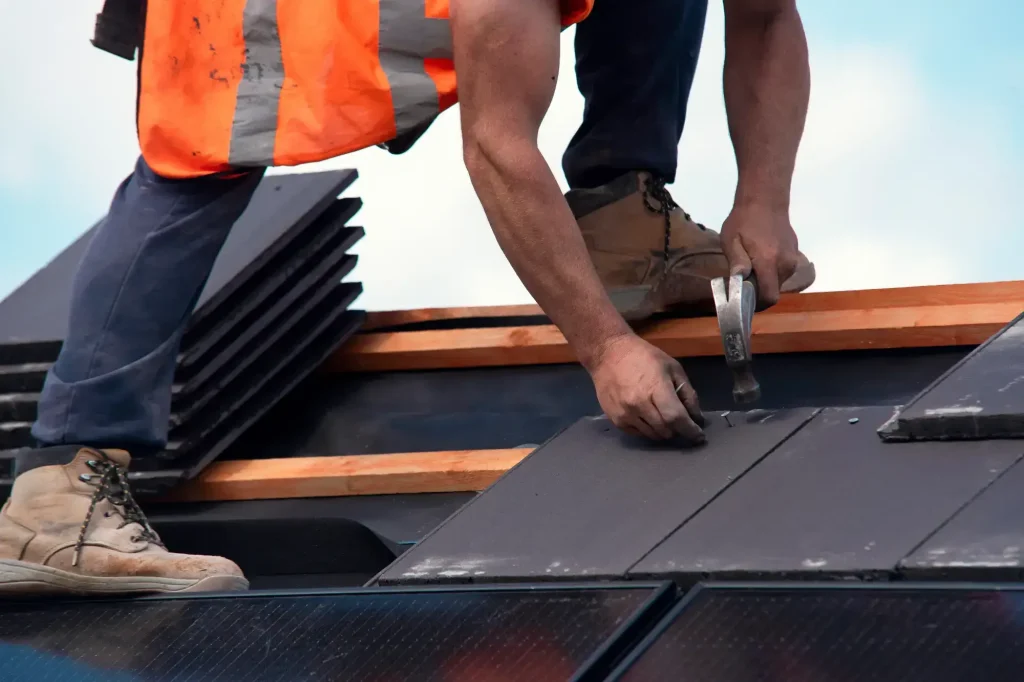
Most homeowners hear “30-year warranty” and assume it means the manufacturer is covering their roof for three decades. It doesn’t. Manufacturer warranties cover the materials — the shingles themselves — not the labor or the installation.
If your roof fails because of a manufacturing defect in the shingles, the manufacturer’s warranty applies. If your roof fails because of how it was installed — flashing that wasn’t seated correctly, underlayment that wasn’t overlapped properly, a valley that wasn’t finished the right way — that’s a labor issue, and most contractors offer five years on labor if they offer anything at all.
Our 30-year labor warranty means we stand behind the installation itself, not just the materials. That’s a meaningful distinction in Monmouth County, where coastal wind exposure, heavy snow loads, and freeze-thaw cycles put real stress on a roof system every single year.
A roof that’s installed correctly for this climate will perform very differently from one that was installed to a generic standard and happened to use good shingles.
We also carry a 20-year workmanship warranty on top of that. The reason we can offer both is straightforward: we stock materials chosen specifically for local climate conditions, Antonio supervises every job personally, and we use our own licensed and insured crew on every project.
When you control every variable in the installation process, you can stand behind the result. Contractors who subcontract the work or send whoever’s available that week can’t make the same promise — and most don’t try.
If you’re a senior homeowner, we also offer a 10% discount, and we have $500 off full roof replacements available right now. Same-day free estimates, no obligation. If you’ve been putting off a roof inspection because you weren’t sure who to call, that’s the easiest place to start.
Storm Damage Claims in Monmouth County: What Most Contractors Won't Tell You
After a significant storm event — a nor’easter, a tropical storm remnant, a hail event — the insurance claim process is where a lot of homeowners lose money they’re entitled to. Not because the insurance company is necessarily acting in bad faith, but because the documentation submitted doesn’t show the adjuster what they need to see in the format they need to see it.
This is an area where contractor expertise varies enormously, and most contractors don’t have it. We document storm damage the way Monmouth County adjusters need it documented. We know what gets approved and what gets pushed back on in this specific market, because we’ve been navigating these claims in Monmouth County for over 40 years.
That institutional knowledge is worth real money to a homeowner who’s trying to get a legitimate claim processed without months of back-and-forth.
Monmouth County has a documented severe wind risk — over 124,000 properties in the county face some level of risk from severe wind events over the next 30 years, and the county’s coastal exposure to nor’easters and tropical weather means that’s not a theoretical number. It’s a recurring reality.
Shore communities from Port Monmouth to Atlantic Highlands to Sea Bright deal with conditions that accelerate wear on every exterior surface: salt air corrosion on gutters and fascia, wind uplift on roofing systems, moisture infiltration around siding seams.
If you’ve had storm damage and you’re not sure whether it’s worth filing a claim, the honest answer is: you don’t know until someone who understands the documentation process takes a look. We offer same-day free estimates, and we can tell you quickly whether what you’re seeing is insurable damage or normal wear.
That conversation costs you nothing. We’re available Monday through Sunday, 5:00 AM to 10:00 PM, with 24/7 emergency service for situations that can’t wait.
How to Choose the Right Home Improvement Contractor in Monmouth County
The short version: verify the license number, ask who’s actually doing the work, get everything in writing, and don’t let urgency push you into a decision you haven’t had time to think through. Those four steps alone will eliminate most of the bad actors in this market.
The longer version is that the contractor you choose for exterior work on your home is someone you’re trusting with your family’s safety and a significant financial investment. In Monmouth County, where storm risk is real and housing values are high, that decision deserves more than a quick Google search and the lowest quote.
If you’re in Monmouth County and you want to talk through what your roof, siding, or gutters actually need — not what someone’s trying to sell you — reach out to A Russo Roofing & Siding. We’ve been having that conversation with homeowners in this area for over 40 years, and we’re not going anywhere.