
Summary:
You’re looking at another roof replacement quote, and the number makes you wince. Fifteen years ago, you went with asphalt shingles because they were affordable. Now you’re replacing them again, and you’re wondering if there’s a better way.
There is. Corrugated metal roofing offers New Jersey homeowners something asphalt never will: a roof that outlasts your mortgage. But with stainless steel, aluminum, zinc, and various panel styles all claiming to be “the best,” how do you know which option actually protects your home against coastal salt air, nor’easters, and summer heat?
Let’s cut through the marketing and look at what actually works in Monmouth County.
Best Metal Roofing Materials for Residential Applications
Not all metal roofs are created equal, especially when you’re dealing with New Jersey’s climate. The material you choose determines how your roof handles everything from August humidity to January ice storms.
Steel dominates the residential market because it offers the best strength-to-cost ratio. Aluminum costs more upfront but never rusts—a huge advantage if you’re within a few miles of the ocean. Zinc sits at the premium end, developing a protective patina that actually heals minor scratches over time.
The real question isn’t which material is “best” overall. It’s which one matches your specific situation: your budget, your distance from the coast, and how long you plan to stay in your home.
Understanding Gauge Thickness and Why It Matters

Walk into any building supply store and you’ll see metal roofing panels labeled with numbers like 26-gauge or 29-gauge. Lower numbers mean thicker metal, but here’s what most homeowners don’t realize: that thickness directly impacts how your roof performs for the next 50 years.
Twenty-six gauge steel is the sweet spot for most residential corrugated metal roofing. It’s thick enough to resist denting from hail and strong enough to handle heavy snow loads without flexing. Some contractors will try to save you money with 29-gauge material, but the cost difference is minimal and you’re sacrificing significant durability.
Twenty-four gauge offers even more protection if your home sits in an area that gets hammered by severe weather. The panels weigh more and cost slightly more to install, but they can take a beating. Think of it this way: the difference between 26 and 29-gauge might save you a couple hundred dollars now, but 26-gauge could save you thousands in repairs over the decades.
Here’s what matters in Monmouth County specifically. Coastal homes deal with salt spray that accelerates corrosion. Inland properties face temperature swings that cause expansion and contraction. A thicker panel handles both situations better because there’s simply more material protecting your home.
The gauge also affects how panels respond to wind. New Jersey doesn’t see hurricanes often, but when nor’easters roll through with 60+ mph gusts, thin panels can flex and potentially pull away from fasteners. Thicker panels stay put.
When you’re comparing quotes, don’t just look at the bottom line. Ask what gauge we plan to use. If a contractor is proposing 29-gauge to hit a lower price point, understand that you’re trading long-term performance for short-term savings.
Corrugated vs Standing Seam vs Steel Tile Roofing
You’ve probably seen all three styles around Monmouth County, and they each serve different purposes. Corrugated metal roofing is the classic wavy panel most people picture when they think “metal roof.” Standing seam features vertical panels with raised seams that lock together. Steel tile roofing mimics the look of clay tiles but weighs a fraction as much.
Corrugated panels are the most affordable option and the fastest to install. The exposed fasteners mean installation goes quickly, and if you ever need a repair, it’s straightforward. The wavy pattern isn’t just aesthetic—it adds structural strength that helps panels span longer distances without support. For homes with a roof pitch of 3:12 or greater, corrugated works beautifully.
Standing seam costs more because the concealed fastener system takes longer to install. But those hidden fasteners mean no holes through the panels where water could eventually penetrate. The panels lock together with raised seams, creating a sleek, modern look that’s become popular on contemporary homes. Standing seam also handles low-slope roofs better than corrugated, working on pitches as low as 1:12.
Steel tile roofing targets homeowners who want the Mediterranean or Spanish aesthetic without the weight and fragility of actual clay tiles. Real clay tiles can weigh 900 pounds per square, putting serious stress on your roof structure. Steel tiles weigh around 150 pounds per square while delivering the same visual impact. They’re also more forgiving in freeze-thaw cycles—clay can crack when water gets in and freezes, but steel flexes slightly and bounces back.
The choice often comes down to your home’s architecture and your priorities. Traditional colonials and farmhouses look great with corrugated’s classic profile. Modern designs pair well with standing seam’s clean lines. Mediterranean or Mission-style homes benefit from steel tile’s authentic appearance without the maintenance headaches.
Installation complexity matters too. Corrugated panels can go up in a day or two for most homes. Standing seam takes longer because each seam needs to be properly locked. Steel tiles fall somewhere in the middle. If you’re on a tight timeline—say, trying to finish before winter—corrugated gets you weathertight faster.
Stainless Steel Metal Roof vs Aluminum Comparison
This is where the coastal versus inland decision really matters. Both materials will outlast asphalt shingles by decades, but they behave very differently in Monmouth County’s varied microclimates.
Steel (specifically galvanized or Galvalume-coated steel) costs less and offers superior strength. It resists denting better than aluminum, which matters when you’re dealing with hail or falling branches. The protective zinc or zinc-aluminum coating prevents rust, and steel holds paint finishes well, giving you more color options.
Aluminum costs 20-30% more but brings one massive advantage: it naturally resists corrosion. No coating needed. For homes within a mile of the ocean, that’s not a luxury—it’s a necessity. Salt spray eats through steel’s protective coating over time, but aluminum shrugs it off.
How Coastal Salt Air Affects Different Metals
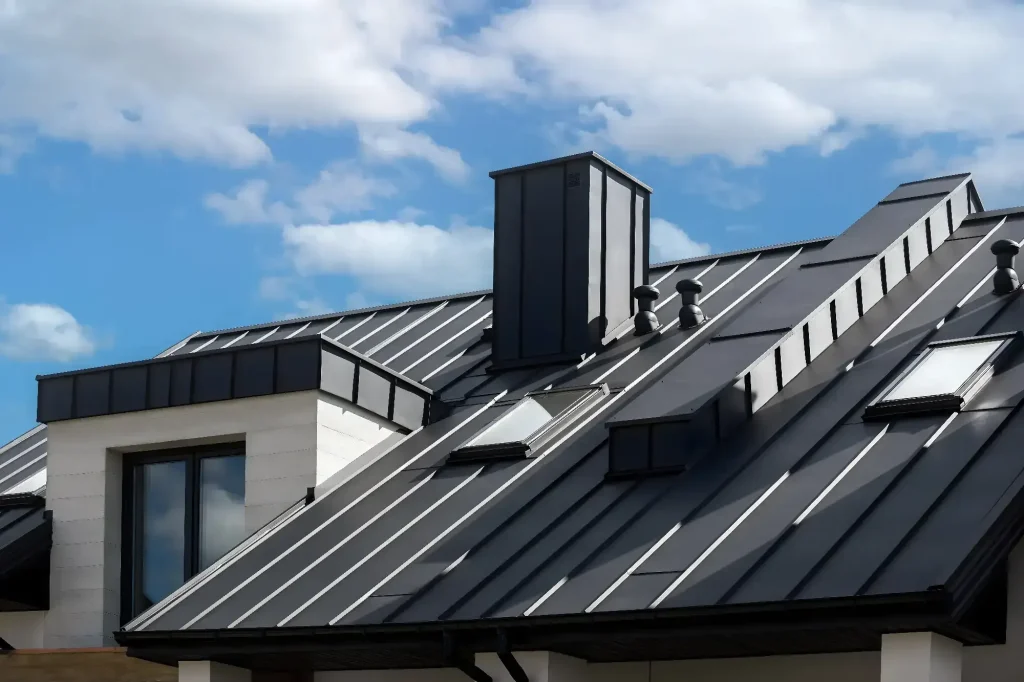
If you live near the shore, you’ve seen what salt does to cars. It does the same thing to roofs, just slower. The difference is, you can wash your car. Your roof sits there taking the hit year after year.
Steel roofing relies on a protective coating—usually zinc (galvanized) or a zinc-aluminum blend (Galvalume). These coatings work by corroding sacrificially. The zinc oxidizes instead of the steel underneath. Eventually, though, salt spray wins. The coating breaks down at cut edges and fastener holes. Once that happens, the steel beneath starts rusting.
Galvalume performs better than straight galvanized in coastal areas—about three times better according to exposure testing. The aluminum in the coating provides better corrosion resistance than zinc alone. But “better” doesn’t mean “immune.” Even Galvalume steel will eventually show rust in high-salt environments.
Aluminum solves this problem because it forms its own protective oxide layer naturally. When that layer gets scratched or damaged, it reforms automatically. Salt spray can’t penetrate it the way it penetrates steel coatings. This is why you see aluminum used extensively on boats and in coastal architecture.
The performance gap shows up most clearly in the first five to ten years. Steel roofs in coastal areas often start showing edge rust or fastener corrosion within that timeframe. Aluminum roofs look the same at year ten as they did at installation.
Distance from the ocean matters more than you might think. Homes right on the beach face constant exposure. Move inland three miles, and salt concentration drops significantly. Five miles inland, and steel performs much better. Ten miles inland, and the coastal corrosion issue largely disappears.
If you’re in Monmouth Beach or Sea Bright, aluminum makes sense despite the cost premium. If you’re in Freehold or Colts Neck, steel works fine and saves you money. The break-even point sits somewhere around two to three miles from the ocean, depending on prevailing winds.
Weight, Strength, and Structural Considerations
Here’s something most homeowners don’t consider until we bring it up: your roof structure has weight limits. Older homes especially weren’t designed to carry heavy roofing materials. This is where aluminum’s light weight becomes a practical advantage beyond just corrosion resistance.
Aluminum weighs about one-third what steel weighs. For a 2,000 square foot roof, galvanized steel panels run around 1,500 to 2,000 pounds total. The same coverage in aluminum weighs 1,000 to 1,200 pounds. That difference matters on homes with older framing or structures that weren’t built to modern codes.
But weight isn’t the whole story. Steel’s density gives it superior impact resistance. When hail comes through or a branch falls during a storm, steel panels resist denting better than aluminum. Aluminum is softer, which means it’s more susceptible to cosmetic damage from impacts. The dents rarely affect function, but they’re visible.
This creates an interesting trade-off for New Jersey homeowners. Coastal properties benefit from aluminum’s corrosion resistance and lighter weight, but they also face more severe storms that can cause impact damage. Inland homes can use heavier steel without structural concerns, and the harder material handles impacts better, but they don’t need aluminum’s corrosion protection.
The structural question also affects installation complexity. Lighter materials like aluminum can sometimes be installed over existing shingles without removing the old roof first. The combined weight stays within structural limits. Steel’s extra weight often requires a complete tear-off, adding to project costs and timeline.
Expansion and contraction matter too, though both materials handle it differently. Metal expands when hot and contracts when cold—that’s just physics. Aluminum expands more than steel per degree of temperature change. Proper installation accounts for this with fastening systems that allow movement. Steel’s lower expansion rate makes it slightly more forgiving of installation errors.
For most Monmouth County homes built in the last 40 years, either material works structurally. The decision comes down to location, budget, and priorities. Older homes or homes with known structural limitations might lean toward aluminum. Properties that face frequent severe weather might prefer steel’s impact resistance despite the corrosion trade-off inland.
Choosing the Right Metal Roofing for Your Monmouth County Home
You now understand the real differences between corrugated, standing seam, and steel tile options. You know why gauge thickness matters and how coastal location affects material choice. The question is: what makes sense for your specific home?
Start with your location. Within three miles of the ocean, aluminum’s corrosion resistance justifies the cost premium. Further inland, galvanized or Galvalume steel delivers excellent performance at a lower price point. Your roof pitch determines whether corrugated or standing seam makes more sense—steeper pitches work with either, but low slopes need standing seam’s superior water-shedding ability.
The best metal roofing decision balances upfront investment with long-term performance. A quality installation using the right materials for your location means you’re done thinking about your roof for the next 50-plus years. That’s the kind of peace of mind asphalt shingles can never provide.
We’ve helped Monmouth County homeowners make these decisions for over 40 years. Our owner-supervised approach means you’re working with people who understand local climate challenges and stand behind our recommendations with a 30-year labor warranty.