Summary:
What Counts as a Roofing Emergency
Not every roof issue requires a midnight phone call. A few missing shingles you noticed yesterday? That’s urgent, but it’s not an emergency. Water actively pouring into your living room during a storm? That’s an emergency.
Here’s the difference. An emergency means water is getting inside your home right now, or your roof has damage that’s about to let water in with the next rainfall. It means the clock is ticking on secondary damage—the kind that turns a $500 repair into a $5,000 nightmare.
Active leaks during storms top the list. So does major structural damage from fallen trees or large debris. If you can see daylight through your roof where there shouldn’t be any, that’s an emergency. Same goes for significant shingle blow-off that’s left your underlayment exposed.
Why Monmouth County Roofs Face More Emergency Situations
Living in Monmouth County means your roof takes a beating that homes in other parts of the country never see. The coastal location isn’t just about nice beach days. It’s about nor’easters that slam the shore with wind-driven rain. It’s about salt air that corrodes flashing and fasteners faster than you’d think possible.
Winter brings its own problems. Heavy snow loads stress your roof structure. Ice dams form along the eaves when heat escapes through your attic, melting snow that refreezes at the roof edge. That ice creates a dam that forces water under your shingles—straight into your home.
Then there’s the freeze-thaw cycle. Water gets into small cracks and gaps. It freezes and expands. It thaws and contracts. Every cycle makes those cracks bigger. What starts as a minor vulnerability becomes a major entry point for water.
Summer storms hit hard and fast. Sudden downpours overwhelm gutters. High winds lift shingles and can damage roof shingles quickly. Hail damages surfaces. And the humidity? That creates perfect conditions for mold growth the moment water gets inside.
This isn’t meant to scare you. It’s meant to explain why emergency roof situations happen more often here than in, say, Arizona. Your roof is working harder than most. Understanding that helps you recognize problems early and respond fast when they occur.
The good news is that we know these challenges inside and out. We’ve seen every type of storm damage Monmouth County can throw at a roof. That experience matters when you need help at 3 AM during a nor’easter.
What to Do the Moment You Spot a Leak
First things first—safety. If water is near light fixtures or electrical outlets, shut off power to that area. Don’t touch electrical components with wet hands. If you’re not sure how to safely cut power to a specific area, shut off the main breaker. You can deal with resetting clocks later. You can’t undo an electrical shock.
Move people, pets, and anything valuable away from the leak area. Water spreads. That drip hitting the floor? It’s splashing. It’s soaking into carpet or hardwood. It’s running along baseboards. Get electronics, documents, furniture—anything that water can ruin—out of the zone.
Now contain what you can. Put buckets, pots, or plastic bins under the drip points. If you have a large tarp or plastic sheeting, spread it on the floor under and around the buckets to catch splashes. Use towels to soak up water that’s already on surfaces, but don’t spend too much time on cleanup yet. Your priority is stopping more damage.
If you can safely access your attic, go look. Bring a flashlight. You’re trying to find where water is actually entering. Look for wet spots on the underside of the roof decking. Check insulation—it’ll look darker and heavier when it’s wet. You might see water running along rafters before it drips down into your living space.
Finding the entry point in the attic helps in two ways. First, you might be able to put a bucket up there to catch water before it soaks through your ceiling. Second, when you call a roofer, you can tell them exactly where the problem is. That saves time when they arrive.
Here’s what you don’t do: Don’t go on your roof during a storm. Don’t go on your roof at night. Don’t go on a wet roof even if it’s daytime and the storm has passed. Wet shingles are incredibly slippery. One wrong step and you’re not just dealing with a roof leak anymore—you’re dealing with a trip to the emergency room.
Document everything. Take photos and videos of the leak, the water damage, and the affected areas. Get shots of the ceiling, the walls, the floor. If you can safely photograph the roof from the ground or a window, do that too. This documentation matters for insurance claims, and it helps the roofer understand what they’re walking into.
Then make the call. A reliable 24/7 roofing service in Monmouth County, NJ should answer around the clock or have an answering service that gets you to someone fast. If you’re leaving voicemails and hearing “we’ll call you back during business hours,” that’s not emergency service. Keep calling until you reach someone who can help now.
Why Fast Action Prevents Bigger Problems
Every hour that water sits in your home, the damage multiplies. It’s not just about the visible water stains on your ceiling. It’s about what’s happening behind the walls and above the drywall where you can’t see.
Water soaks into insulation. Wet insulation loses its R-value—its ability to insulate. It also becomes heavy, pulling away from where it’s supposed to be. If it stays wet, it becomes a breeding ground for mold. And wet insulation is expensive to replace because the labor to access it, remove it, and install new material adds up fast.
Then there’s mold. This is the big one that keeps homeowners up at night. Mold spores are everywhere—they’re in the air right now. But they need moisture to grow. When your roof leaks and water sits in your attic, your walls, or your ceiling materials for 24 to 48 hours, you’ve given mold exactly what it needs.
The Real Cost of Delayed Roof Leak Repair

Here’s how a small problem becomes a big one. Let’s say you have a minor leak around a chimney flashing. It’s dripping a little during heavy rain, but it’s not that bad. You put a bucket under it and figure you’ll deal with it when the weather clears up.
That leak is letting water run down inside your wall cavity. You can’t see it, but it’s there. It’s soaking the drywall. It’s wetting the wood framing. It’s saturating the insulation. After a few days, mold starts growing. Not just surface mold you can wipe off—the kind that’s growing inside your walls.
A few weeks later, you notice a musty smell. You see a bigger stain on the ceiling. Now you’re not just fixing the flashing. You’re opening up walls. You’re removing contaminated insulation and drywall. You’re treating mold. You might be replacing sections of framing if the wood has started to rot.
What could have been a $400 flashing repair is now a $2,000 to $3,000 restoration project. And that’s if you catch it relatively early. Let it go longer, and you’re looking at even more extensive damage.
This isn’t theoretical. We see this progression all the time. The homeowner who waited, who thought they’d save money by putting off the repair, ends up spending five times more than they would have if they’d called immediately.
There’s also the insurance angle. Most homeowner policies cover sudden storm damage. They don’t cover damage from lack of maintenance or from a leak you knew about but didn’t fix. If your insurer finds out you had a leak for months and did nothing, they can deny your claim. Then you’re paying for everything out of pocket.
The structural integrity of your home is at stake too. Wood rot weakens framing. Prolonged moisture exposure can compromise the roof decking—the plywood or OSB boards that your shingles are attached to. If the decking fails, you’re not just replacing shingles anymore. You’re replacing the entire roof structure in that area.
Fast action isn’t about panic. It’s about economics. It’s about protecting your investment. It’s about preventing a manageable problem from becoming a disaster.
What Professional Emergency Roof Repair Actually Involves
When you call for emergency roof repair in Monmouth County, here’s what should happen. A qualified roofer arrives within a reasonable timeframe—usually within an hour or two, depending on weather conditions and how many calls they’re handling. During major storms, response times stretch, but you should get a realistic estimate of when they’ll be there.
We start with an assessment. Even in an emergency, a good roofer doesn’t just slap a tarp on your roof and leave. We need to understand what’s causing the leak. Is it damaged shingles? Failed flashing? A puncture from debris? The solution depends on the problem.
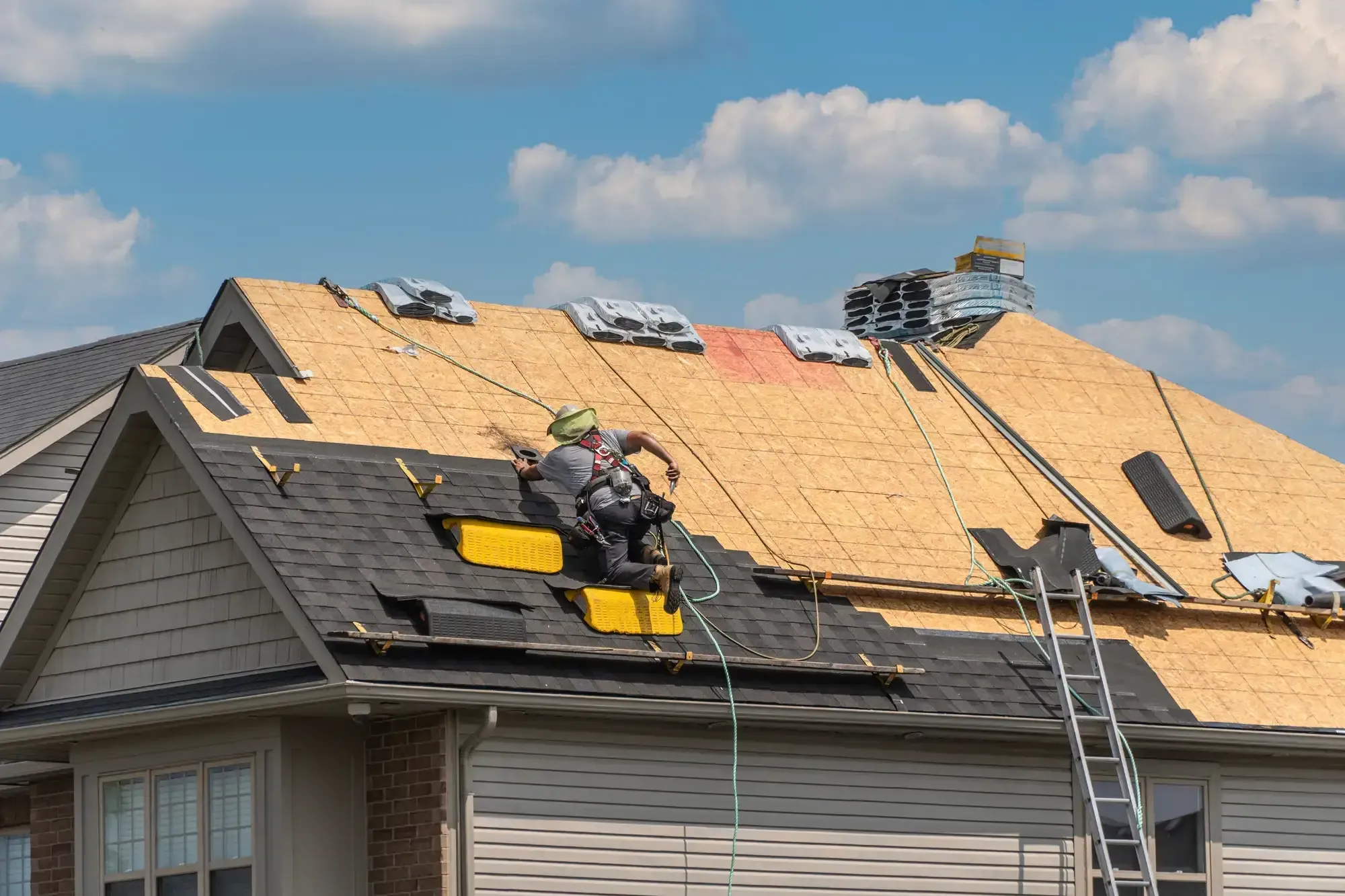
If it’s actively raining or conditions are unsafe, our first priority is temporary protection. That usually means tarping the damaged area. A proper emergency tarp isn’t just thrown over the roof. It’s secured correctly, extended beyond the damaged section, and positioned so water runs off rather than pooling or seeping under the edges.
Once the immediate emergency is handled, we’ll give you a clear explanation of what we found and what needs to happen next. Emergency repairs are temporary. They stop the water from getting in right now. Permanent repairs happen once conditions allow for proper work—usually when the weather clears and we can safely access the roof during daylight.
You should get documentation. Photos of the damage. A written estimate for permanent repairs. If this is insurance-related, we provide the information you need for your claim. A reputable roofer knows what insurance adjusters want to see.
Here’s what separates a professional emergency response from a fly-by-night operation. Professionals show up with the right equipment. We have tarps, fasteners, and tools ready to go. We’re licensed and insured—which matters because if someone gets hurt on your property, you need to know our insurance covers it, not yours.
We give you realistic timelines. If someone says they can do permanent repairs tomorrow but there’s another storm coming, be skeptical. Quality work requires decent conditions. We prioritize getting your home protected now and scheduling proper repairs when we can do the job right.
Owner supervision makes a difference too. When the person running the company is actually present at your job, you get accountability. We’re not going to cut corners or rush through the work because our name and reputation are directly on the line. That level of oversight is rare in emergency situations, but it’s what you should look for.
We’ve been doing this for over 40 years. We’ve seen every type of storm damage this area produces. We know which repairs hold up and which ones fail. We understand local building codes. We work with insurance companies regularly and know how to document damage properly.
That experience is what you’re paying for when you call for emergency service. You’re not just getting someone to patch a hole. You’re getting someone who can assess the full extent of the damage, protect your home effectively, and guide you through the process of getting it fixed right.
Finding a Roofer You Can Trust When It Matters Most
The middle of a storm is the worst time to be searching for a contractor. You’re stressed. You’re dealing with water damage. You need help now. That’s when you’re most vulnerable to making a bad choice.
Here’s what to look for. A local company with decades of experience in Monmouth County knows the area’s specific challenges. We understand how coastal weather affects roofs. We’re familiar with local building codes. And we’re not disappearing after the storm—we have a reputation in the community to protect.
Owner-supervised work is a major indicator of quality. When the owner is present at every job, you’re getting direct accountability. There’s no game of telephone between you, an office manager, a crew chief, and the workers. The person making decisions is right there, ensuring the work meets their standards.
Twenty-four-seven availability means actually answering or having a system that gets you to someone who can help. Emergency service isn’t emergency service if you can’t reach anyone when you need them. And same-day estimates show an understanding of urgency. You shouldn’t be waiting days for someone to come look at active damage.
Licensing and insurance aren’t negotiable. A licensed contractor has met state requirements. Insurance protects you if something goes wrong. Ask to see proof of both before any work starts. Legitimate companies provide this without hesitation.
Strong warranties signal confidence in the work. A 30-year labor warranty—significantly longer than the industry standard—tells you the company expects their repairs to last. We’re not worried about callback after callback because we do it right the first time.
When you’re dealing with an emergency roof situation, you need more than a quick patch. You need a permanent solution from someone who’ll stand behind their work. A Russo Roofing & Siding has been providing owner-supervised emergency roof repair in Monmouth County for over 40 years, with 24/7 availability and same-day estimates backed by a 30-year warranty. That’s the kind of reliability that matters when water is coming through your ceiling and you need help now.