
Summary:
You’ve probably been meaning to get your roof checked. Maybe there was a storm last season, or you noticed something that didn’t look right from the driveway. Maybe you just know your roof is getting up there in age and you’d rather find out now than after a ceiling stain shows up in your living room.
Whatever brought you here, you’re asking the right question at the right time. This guide covers what a real roof inspection includes, what you should walk away with at the end of one, and how to tell the difference between a legitimate assessment and a contractor who’s just looking for a reason to sell you a new roof.
What a Real Roof Inspection Actually Covers
A lot of contractors will tell you they “inspected your roof” after spending ten minutes walking around the perimeter. That’s not an inspection — that’s a glance. A thorough roof inspection covers the exterior surface, the flashing, the gutters, the ventilation system, and the attic. Each of those areas tells a different part of the story, and skipping any one of them means you could be missing something serious.
The exterior is where most people start, but it’s far from the whole picture. Shingles can look fine from the ground and still be losing granules, cracking along the edges, or lifting at the corners in ways that only show up when someone’s actually up there looking.
The attic is where the real evidence lives — water stains, soft decking, signs of moisture in the insulation. By the time a leak shows up on your ceiling, it’s already been working its way through your roof system for a while.
Flashing, Gutters, and the Details Most Inspections Miss
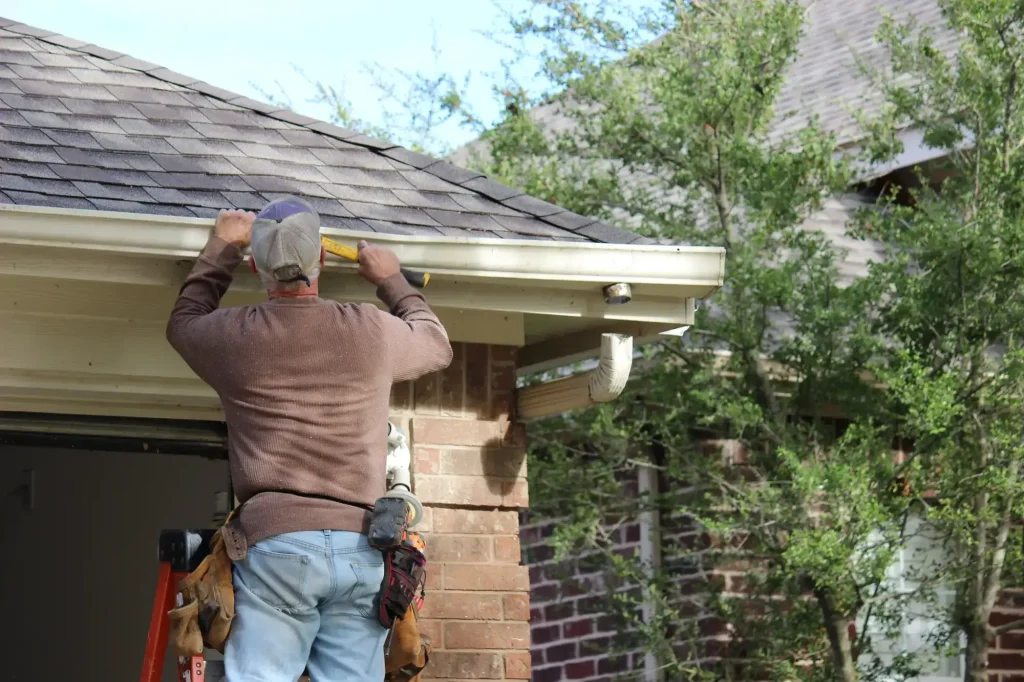
Flashing is the single most common source of roof leaks, and it’s also the part of an inspection that gets the least attention on a rushed job. Flashing is the metal material that seals the joints around chimneys, skylights, vents, and valleys — anywhere the roof surface meets something else. When it pulls away, corrodes, or loses its sealant, water finds a way in. It doesn’t announce itself. It just slowly works its way through until you’ve got a problem that’s a lot more expensive than it needed to be.
In Monmouth County, this is especially worth paying attention to. The coastal salt air that shore communities like Sea Bright, Belmar, and Manasquan deal with accelerates corrosion on metal roofing components faster than you’d see in an inland market. Even if you’re further inland — Freehold, Howell, Manalapan — the freeze-thaw cycling that New Jersey winters bring can work flashing loose over time as materials expand and contract with the temperature swings.
Gutters are part of the inspection too, and not just because they’re easy to check. Clogged or sagging gutters back water up under the drip edge, which is one of the quieter ways moisture gets into the roof system without anyone noticing. Downspouts that aren’t draining properly can also cause pooling at the foundation.
Ventilation is another area that gets skipped. Ridge vents and soffit vents work together to regulate attic temperature and moisture. When they’re blocked or failing, heat and humidity build up in the attic, which shortens the life of the roof deck and can create the conditions for mold. It’s not dramatic, but it’s the kind of slow damage that shows up years later and looks expensive.
A legitimate inspection covers all of this — not as a list of items to check off, but as a connected system where each part affects the others.
What You Should Actually Receive After an Inspection
This is the part most homeowners don’t think to ask about until they’ve already had a bad experience. A verbal “your roof looks okay” is not an inspection deliverable. A contractor walking off your property without leaving you anything in writing hasn’t given you anything useful — and if they later claim they found damage that requires immediate replacement, you have no baseline to compare it to.
What you should receive after a legitimate inspection is a written report. It should include specific findings for each area that was checked, photos of anything that warrants attention, and clear recommendations — whether that’s a minor repair, a maintenance item to watch over the next season, or a more significant concern that needs addressing soon.
The recommendations should be explained in plain language, not roofing jargon designed to make you feel like you have no choice but to trust whatever they say. The report also matters if you ever need to file an insurance claim. After a storm, your insurance company is going to want documentation of the damage — when it happened, what it looks like, what it affected.
A contractor who provides a written inspection report with photos gives you exactly that. An adjuster’s visit is a separate process with a separate purpose; your contractor’s inspection is what establishes the baseline and documents the damage in a way that supports your claim.
We provide same-day free estimates and, when damage is present, full written documentation of what we found and what we recommend. You deserve to make an informed decision — not a pressured one.
Roof Inspection Checklist: Seasonal Reality for Monmouth County Homes
The National Roofing Contractors Association recommends getting your roof inspected at least once a year, with twice a year being the better standard for most homes. In Monmouth County, that guidance isn’t just a general best practice — it maps directly to the two periods when your roof is most likely to be hiding something.
Spring is when you find out what the winter did. Fall is when you find out what the summer did. Those are the two windows where an inspection is most likely to catch something before it turns into a bigger problem.
What NJ's Winter and Storm Season Does to a Roof Before You Notice

Monmouth County doesn’t get a gentle winter. Nor’easters come in with sustained Atlantic-amplified winds, horizontal rain, and wet snow loads that stress every weak point in a roof system. Ice dams form when heat escapes through the attic, melts snow on the upper roof, and that meltwater refreezes at the cold eaves — forcing water back under the shingles.
It’s a slow process that can cause significant water intrusion before you see a single sign of it from inside the house. The spring inspection is where all of that shows up. Lifted shingles, cracked ridge caps, compromised flashing around chimneys, moisture in the attic insulation — these are the things that accumulated over five or six months of cold weather and storm exposure.
Catching them in April or May, before summer thunderstorm season arrives, is the difference between a repair and a much larger problem. Hurricane Sandy in 2012 and Hurricane Irene in 2011 are still reference points for a lot of Monmouth County homeowners. Those events caused widespread roofing damage across the county — not just in the shore towns, but inland too.
What a lot of people don’t realize is that the damage from those storms didn’t always show up immediately. Flashing that was loosened by Sandy might have held through another winter before finally failing. That’s the nature of roof damage. It doesn’t always announce itself right away.
Summer brings a different set of concerns. Severe thunderstorms tracking through central New Jersey can produce hail that damages shingles in ways that are essentially invisible from the ground. Granule loss from hail impact shortens the effective life of a shingle and creates spots where UV exposure accelerates deterioration. A fall inspection after a summer of storms is how you find that damage before it becomes a leak.
Roof Maintenance Services: What Happens Between Inspections
An inspection tells you where things stand. Roof maintenance services are what you do with that information over time. For most Monmouth County homes — particularly those built in the 1970s, 1980s, and 1990s, where a lot of the county’s residential stock falls — regular maintenance is what extends the life of an aging roof without rushing into a full replacement.
Maintenance typically includes minor repairs to shingles or flashing that are showing early wear, clearing debris from valleys and gutters that can trap moisture, checking and resealing penetrations around vents and chimneys, and addressing any ventilation issues before they affect the roof deck. None of these are dramatic interventions. They’re the kind of small, consistent attention that keeps a roof performing well past the point where a neglected roof would have already failed.
The honest reality is that not every inspection turns up something that needs immediate action. A lot of the time, a roof that’s been reasonably maintained is in decent shape, with maybe one or two items to monitor or address in the next season. That’s a good outcome — and it’s information worth having. Knowing your roof has another five or six years of life left, with routine care, lets you plan for replacement on your own timeline rather than in response to an emergency.
We offer roof maintenance as part of our ongoing services in Monmouth County, and we’re straightforward about what we find. If a repair will handle it, we’ll tell you that. If the roof is genuinely at the end of its useful life, we’ll tell you that too — and we’ll back whatever work we do with a 30-year labor warranty and a 20-year workmanship guarantee. That’s not a standard offer in this industry. It’s the commitment we make because we stand behind the work.
How to Find a Trustworthy Roof Inspector Near You in Monmouth County
Before you let anyone on your roof, ask for proof of NJ HIC registration and current insurance. Ask what the inspection includes and what you’ll receive at the end of it. If the answer to that last question is vague, that tells you something. A contractor who can’t clearly describe their own process probably isn’t running a very thorough one.
The red flags are easy to spot once you know what to look for. Pressure to sign a contract on the same day as the inspection. Claims that your roof is an emergency when nothing happened recently to make it one. No written report, no photos, nothing in writing. These are the patterns that separate careful contractors from those just looking for a quick sale.
If you’re in Monmouth County and you want a straight answer about what’s going on with your roof, A Russo Roofing & Siding has been doing this work for over 40 years. Same-day free estimates, written findings, no pressure. Call us and find out where things actually stand.