
Summary:
A storm rolls through [TOWN], and the next morning you’re standing in your driveway looking at missing shingles, granules in the gutters, or worse — a water stain spreading across your ceiling. You know something’s wrong. You’re just not sure what to do first.
Call your insurance company? Call a roofer? Wait and see if it gets worse?
That uncertainty is exactly where things go sideways for a lot of homeowners. The steps you take in the first 24 to 48 hours after storm damage can directly affect how your claim goes. This guide walks you through the process clearly, so you know what to do, in what order, and why it matters.
How to Get Your Roof Replaced by Insurance After Storm Damage
The short answer is: document first, then call. Most homeowners do it the other way around — they call their insurer right away and describe the damage in their own words, before anyone has actually been on the roof. That first call becomes part of the claim record, and if your description undersells the damage, it’s harder to correct later.
The right sequence starts with getting a professional up on the roof before the adjuster arrives. A thorough inspection with photographs, measurements, and written documentation gives you something concrete to hand to your insurance company — and something to stand behind if the adjuster’s assessment comes in lower than expected.
Wind and hail are the leading cause of homeowners insurance claims in the U.S., accounting for more than 42% of all claims, with an average payout of nearly $15,000. That’s not a small number. Getting the documentation right is worth the effort.
Roof Inspection After a Storm: What Actually Needs to Happen

Here’s something most homeowners don’t know: insurance adjusters in New Jersey sometimes inspect roofs from the ground. Binoculars from the driveway. That method can miss granule loss, bruised shingles, compromised flashing, and subtle hail impacts that are only visible when you’re actually up there. If the adjuster’s report doesn’t capture the full scope of damage, your settlement reflects that — and you’re left covering the gap.
Having a licensed roofing contractor inspect the roof before the adjuster shows up changes that dynamic entirely. A proper inspection documents everything in writing, with photos and measurements, so there’s a clear professional record of what the storm actually did. Then, if you can get your contractor on the roof at the same time as the adjuster, even better. When a contractor can point out specific damage in real time — a lifted flashing edge here, hail bruising on a ridge cap there — it’s much harder for that damage to get written off as routine wear and tear.
In [TOWN], where housing stock spans multiple decades, this matters especially. Insurers sometimes try to attribute storm damage to age-related deterioration rather than the weather event itself. A well-documented inspection that clearly ties the damage to a specific storm — not gradual aging — is the most effective tool you have against that argument.
Many [TOWN] homeowners also carry a separate wind deductible calculated as a percentage of dwelling coverage, typically 1% to 5%. On a $500,000 home, a 2% wind deductible means $10,000 comes out of your pocket before insurance pays anything. Knowing that number before you file helps you decide whether a claim makes financial sense — or whether the repair cost falls below your threshold.
We walk you through that math honestly. Not every situation warrants a claim, and we’ll tell you the truth about that.
Roof Damage Assessment: What the Documentation Should Actually Include
When we talk about documenting roof damage for an insurance claim, we don’t mean a few photos from the backyard. A useful damage assessment is specific enough that someone who never visited your property could understand exactly what happened and where.
That means photographs taken from the roof surface — not just from the ground — showing granule loss patterns, cracked or displaced shingles, dented flashing, compromised ridge caps, and any areas where the underlayment has been exposed. It means measurements. It means a written description that connects the damage to the storm event, not to general age or condition.
One practical tip that applies specifically to [TOWN] homeowners: local news sources publish storm coverage with dates, wind speeds, and hail reports. Saving that coverage and including it in your claim file gives you corroborating evidence of the weather event itself. If the Governor declared a state of emergency following a significant weather event, that declaration is a documented, official record that a weather event occurred. That kind of supporting documentation strengthens your position if the insurer questions the cause of damage.
The other thing worth understanding is the difference between an ACV policy and an RCV policy. Replacement Cost Value means insurance pays what it costs to replace your roof with new materials. Actual Cash Value means they depreciate the payout based on your roof’s age — so a 17-year-old roof might only yield a fraction of what replacement actually costs. If you’re not sure which policy you have, now is the time to check. Nearly 29% of NJ homes with asphalt shingles have less than four years of useful life remaining, which means age-based depreciation disputes are increasingly common. Understanding your coverage before you file puts you in a much stronger position.
Choosing the Right [TOWN] Roofing Contractor for an Insurance Claim
After a major storm in [TOWN], contractors appear fast. Some of them are legitimate. Some are not. The difference matters more than most people realize — not just for the quality of the work, but for how the claim itself unfolds.
In New Jersey, all residential roofing contractors are required to be registered with the NJ Division of Consumer Affairs as Home Improvement Contractors. That registration requires proof of general liability insurance, workers’ compensation coverage, and compliance with state consumer protection laws. Hiring an unregistered contractor creates real problems: permits may not get pulled, warranties may be voided, and insurance claim complications can follow.
The contractor you choose should be able to hand you a registration number you can verify. We’re registered as #13VH13248500.
How to Spot Storm Chasers Before They Cost You More Than the Storm Did
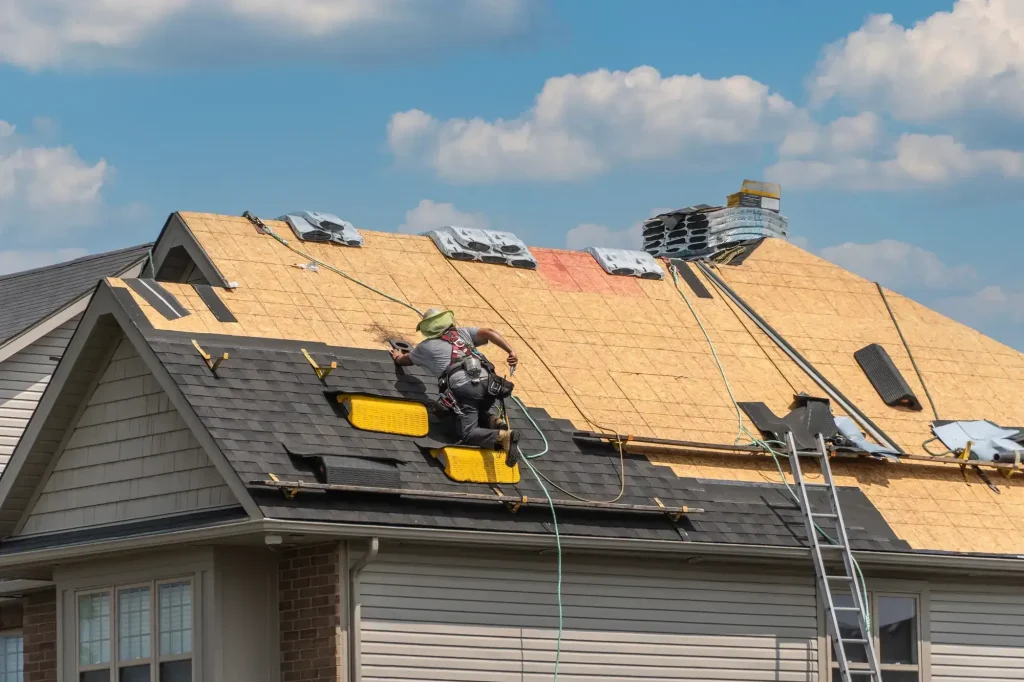
Storm chasers are out-of-state or transient crews that mobilize after major weather events and work a region aggressively before moving on. They’re not inherently malicious — some do decent work — but the structural problem is that they have no long-term accountability to you or your community. If the roof develops a problem two years from now, there’s no one to call.
The warning signs are consistent: they show up at your door unsolicited within a day or two of the storm, they pressure you to sign a contract before your insurance adjuster has visited, and they offer prices that seem significantly below what other estimates show. Sometimes they ask for full payment upfront. Sometimes they skip the permit process entirely, which in New Jersey voids manufacturer warranties and can create complications if you ever sell the home or file a future claim.
One of the more specific risks is signing a contract with a storm chaser before the adjuster arrives. When that happens, the contractor’s scope of work is set before the insurance assessment — and if the adjuster’s findings don’t match what the contractor has already committed to, you end up in the middle of a dispute that isn’t yours to manage. The right sequence is: inspection first, adjuster visit second, contractor agreement third.
[TOWN] homeowners are particularly exposed to this pattern after nor’easters and coastal storms, when significant storm activity can draw outside crews quickly. The best protection is simple: verify the NJ registration number, check Google reviews that go back more than a year, and ask directly how long the company has been operating in New Jersey. A business that’s been here for decades isn’t going anywhere.
What to Expect When the Insurance Adjuster Inspects Your Roof in NJ
Once you’ve filed your claim, the insurance company will send an adjuster to assess the damage. The timing varies — it can be a few days to a few weeks depending on claim volume after a major storm event. While you wait, don’t make permanent repairs, but do take steps to prevent further damage. Most NJ homeowner policies actually require you to protect the property from additional loss, so emergency tarping or temporary patching isn’t just acceptable — it’s often expected. Make sure any temporary work is documented with photos before and after.
When the adjuster arrives, you have the right to have your roofing contractor present. Exercise that right. An experienced contractor who has worked through insurance claims in New Jersey knows what adjusters look for, knows how to describe damage in terms that align with coverage language, and can flag items that might otherwise get overlooked or misclassified. This is not about inflating the claim — it’s about making sure the assessment is accurate.
After the inspection, the adjuster will produce a report and the insurer will issue a settlement offer. If that offer seems low, you’re not obligated to accept it. You can request a re-inspection, provide additional documentation, or engage a licensed public adjuster — a separate professional, regulated by the NJ Department of Banking and Insurance, who works on your behalf to negotiate the claim. Note that in New Jersey, your roofing contractor cannot negotiate the insurance claim for you directly — that’s the public adjuster’s role. What we can do is provide thorough documentation and be present to support an accurate assessment.
One thing that helps significantly in disputed claims is having a timestamped inspection report from a licensed contractor that predates the adjuster’s visit. If the adjuster’s findings differ substantially from the contractor’s documented assessment, that discrepancy becomes the basis for a supplemental claim or re-evaluation. It’s a straightforward process when the paperwork is in order from the start.
Working With a Local [TOWN] Roofer Who Knows the Insurance Process
The homeowners who come out of a storm damage claim in the best position are the ones who moved quickly, documented thoroughly, and worked with a contractor who had done this before — someone who knew what the adjuster needed to see and was still around to back the work years later.
That’s the part that gets lost in most guides. The process matters, but so does who you’re doing it with. A contractor who has been working in [TOWN] for over 40 years, who pulls permits, carries proper insurance, and backs every roofing job with a 30-year labor warranty, is a different thing entirely from a crew that showed up after the last storm and will be gone before the next one.
If your roof took a hit and you’re not sure where to start, reach out to us. Same-day estimates, 24/7 emergency availability, and an owner who shows up in person — because that’s how it’s been done here since 1990.