Summary:
Immediate Response: The First 24 Hours After Storm Damage
The moment your emergency call comes in, we start a clock that doesn’t stop until your property is secure. At A Russo Roofing & Siding, we maintain 24/7 emergency response teams specifically for these situations.
Within the first few hours, we arrive to assess the immediate danger. We’re not just looking at obvious damage—we’re evaluating structural integrity, identifying potential safety hazards, and determining what needs to happen right now versus what can wait for permanent repairs.
This initial response isn’t about fixing everything immediately. It’s about stopping the bleeding, so to speak, and preventing a manageable situation from becoming a catastrophic one.
Safety Assessment And Risk Evaluation During Extreme Weather
Before any work begins, we conduct a thorough safety evaluation of both the property and the surrounding area. This process involves checking for downed power lines, assessing structural stability, and identifying any immediate threats to occupants.
We examine the roof from multiple angles, often using binoculars or drones to avoid putting workers at risk on a compromised structure. We’re looking for signs of structural damage, areas where water is actively entering the building, and sections that might collapse under additional stress from wind or debris.
During this assessment, we also evaluate interior damage, checking for water intrusion, compromised electrical systems, and potential mold conditions. This comprehensive approach ensures that all safety concerns are addressed before any repair work begins. In Monmouth County, where coastal storms can bring both high winds and flooding, this multi-faceted assessment is particularly crucial.
Weather conditions play a crucial role in determining what work can be done immediately. If the storm is still active or conditions remain dangerous, we focus on securing the property and wait for safer conditions to begin more extensive work. The safety of both workers and occupants always takes precedence over speed of repair.
We understand that Monmouth County’s weather patterns can be unpredictable, with storms often followed by additional weather events. This knowledge influences our approach to emergency repairs, ensuring that temporary measures can withstand potential follow-up storms while permanent repairs are being planned.
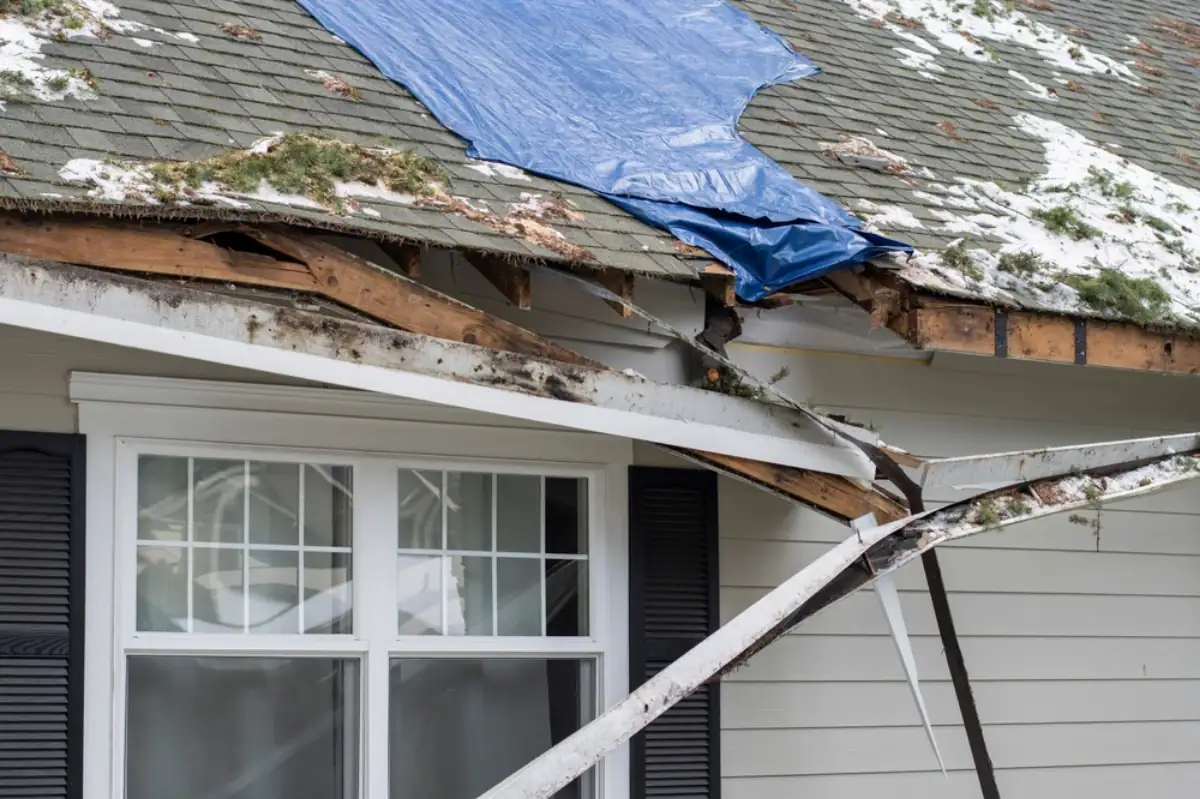
Emergency Tarping And Temporary Protection Methods
Before any work begins, we conduct a thorough safety evaluation of both the property and the surrounding area. This process involves checking for downed power lines, assessing structural stability, and identifying any immediate threats to occupants.
We examine the roof from multiple angles, often using binoculars or drones to avoid putting workers at risk on a compromised structure. We’re looking for signs of structural damage, areas where water is actively entering the building, and sections that might collapse under additional stress from wind or debris.
During this assessment, we also evaluate interior damage, checking for water intrusion, compromised electrical systems, and potential mold conditions. This comprehensive approach ensures that all safety concerns are addressed before any repair work begins. In Monmouth County, where coastal storms can bring both high winds and flooding, this multi-faceted assessment is particularly crucial.
Weather conditions play a crucial role in determining what work can be done immediately. If the storm is still active or conditions remain dangerous, we focus on securing the property and wait for safer conditions to begin more extensive work. The safety of both workers and occupants always takes precedence over speed of repair.
We understand that Monmouth County’s weather patterns can be unpredictable, with storms often followed by additional weather events. This knowledge influences our approach to emergency repairs, ensuring that temporary measures can withstand potential follow-up storms while permanent repairs are being planned.
Coordinating With Insurance And Documentation Requirements
We understand that emergency repairs are just the beginning of a longer process that involves insurance claims and permanent restoration. We know exactly what documentation is needed and how to present damage in a way that supports your claim.
During the emergency response, we take detailed photographs, create written assessments, and document all temporary measures taken to prevent further damage. This documentation becomes crucial evidence for insurance adjusters and helps ensure that all necessary repairs are covered.
We also understand the importance of communication with insurance companies. We can often work directly with adjusters, providing professional assessments and helping to streamline the claims process.
Working With Insurance Adjusters For Storm Damage Claims
The relationship between roofing contractors and insurance adjusters can significantly impact the outcome of your claim. We know how to present damage assessments in language that insurance companies understand and appreciate.
When adjusters arrive to evaluate the damage, having us present can prevent misunderstandings and ensure that all damage is properly identified and documented. We can point out issues that might not be immediately obvious to someone without roofing expertise, such as hidden structural damage or compromised flashing systems.
We also understand the importance of separating emergency repairs from permanent restoration work. We can clearly document which expenses are related to immediate protection measures versus long-term repairs, helping to ensure proper coverage for all necessary work.
With over 40 years of experience, we have established relationships with insurance companies and understand specific requirements for different carriers. This knowledge helps us prepare documentation that meets insurance standards and reduces the likelihood of claim disputes or delays. In Monmouth County, where storm damage claims are unfortunately common, this expertise becomes invaluable.
We also help homeowners understand what their insurance policies cover and what they don’t. This includes explaining the difference between sudden storm damage and gradual wear and tear, helping homeowners set appropriate expectations for their claims.
Preventing Further Damage And Protecting Your Coverage
Insurance companies expect property owners to take reasonable steps to prevent additional damage after an initial incident. Failure to act promptly can result in denied claims for subsequent damage, making emergency response not just about immediate protection but also about protecting your insurance coverage.
We understand these requirements and ensure that all emergency measures meet insurance standards for damage prevention. We document our actions thoroughly, providing clear evidence that appropriate steps were taken to minimize losses.
The concept of “reasonable steps” can be subjective, but working with experienced contractors helps ensure that your actions meet industry standards and insurance expectations. This might involve emergency tarping, water extraction, securing damaged areas, or other measures depending on the specific situation.
We also help homeowners understand their ongoing responsibilities after emergency repairs are completed. This includes monitoring temporary measures, reporting any changes in condition, and scheduling permanent repairs within reasonable timeframes. For homeowners in coastal areas like Monmouth County, where salt air and moisture can accelerate damage, this ongoing vigilance is particularly important.
Quality contractors will also advise homeowners about what activities might void their insurance coverage. For example, attempting DIY repairs or hiring unlicensed contractors can sometimes complicate insurance claims. Professional guidance helps homeowners navigate these potential pitfalls.
Planning For Permanent Repairs And Long-Term Solutions
Emergency repairs are designed to buy time, not replace the need for permanent solutions. We use the emergency response period to develop comprehensive repair plans that address both immediate damage and underlying vulnerabilities.
This planning process involves evaluating the performance of existing roofing materials, identifying areas that might be susceptible to future damage, and recommending improvements that could prevent similar problems. We don’t just fix what’s broken—we help you build back better.
The transition from emergency response to permanent repair requires careful coordination and planning. We work with homeowners to schedule repairs at appropriate times, source quality materials, and ensure that all work meets local building codes and manufacturer specifications. When you’re dealing with storm damage in Monmouth County, having a contractor who understands both emergency response and long-term solutions like A Russo Roofing & Siding can make the difference between a quick fix and lasting protection for your home and family.