
Summary:
Metal roofing is one of those topics where the internet gives you a range so wide it’s almost useless. Five dollars a square foot. Twenty dollars a square foot. Somewhere in between. What does that actually mean for your house in Monmouth County?
The honest answer is that the cost depends on the metal type, the system, the size and complexity of your roof, and — more than most guides will tell you — who installs it and how. This page walks through the real numbers for Monmouth County in 2026, explains what drives the differences, and gives you the cost-of-ownership comparison that most homeowners never see until it’s too late.
Metal Roofing Cost in Monmouth County: What You're Actually Looking At
In Monmouth County, metal roofing typically runs between $9 and $16 per square foot installed, depending on the system you choose. For an average home here, that translates to a total project cost somewhere in the range of $18,000 to $35,000 — and in 2026, steel tariffs have pushed material costs up by roughly $1.50 to $2.50 per square foot compared to prior years, so those numbers are higher than they were even 18 months ago.
That range exists because “metal roofing” covers a lot of ground. A corrugated exposed-fastener steel panel system is a fundamentally different product than a standing seam concealed-fastener installation. Both are metal. The performance gap between them is significant.
Standing Seam Metal Roof Cost: Why It's Priced Higher and What You Get
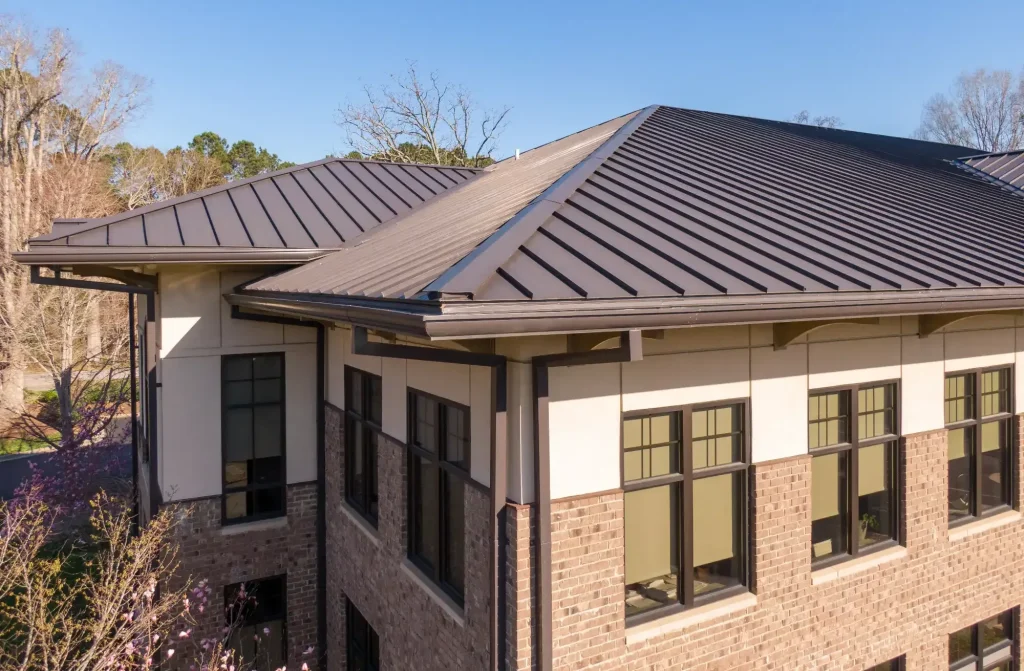
Standing seam is the premium system, and it’s the one most homeowners in Monmouth County end up choosing when they understand what they’re buying. Installed costs in the area run $12 to $16 per square foot for steel standing seam — higher than corrugated or exposed-fastener systems, which come in at $4 to $8 per square foot installed.
The reason for the price difference isn’t cosmetic. A standing seam system uses concealed fasteners — meaning the panels interlock and the fastener points are never exposed to weather. On an exposed-fastener system, every screw hole is a potential future leak. In Monmouth County’s climate, where you’re cycling from below-freezing winters to humid 90-degree summers, metal panels expand and contract constantly. Concealed fasteners accommodate that movement. Exposed fasteners work against it.
The seam height also matters for water management. Raised seams keep water moving off the roof rather than pooling at fastener points. For coastal communities like Sea Bright, Long Branch, and Monmouth Beach — where nor’easters drive rain sideways and salt air accelerates corrosion — this isn’t a luxury feature. It’s the right specification for the environment.
Standing seam systems also tend to qualify for Energy Star certification, which matters for two reasons: energy savings and potential federal tax credits. A properly installed standing seam metal roof can reflect up to 70% of solar radiation and reduce roof surface temperatures by up to 50°F compared to asphalt shingles — which translates directly to lower cooling costs through Monmouth County’s long, humid summers.
One thing worth knowing: the underlayment matters as much as the panel. A breathable synthetic underlayment adds roughly $30 to $45 per square (100 square feet) to material costs, but it’s not optional on a properly installed metal roof. It manages moisture vapor, prevents condensation, and protects the deck if any water ever gets past the panels. Contractors who skip it are cutting a corner that shows up years later.
Metal Roof vs. Asphalt Shingles: The Cost Comparison That Actually Matters
The upfront gap between metal and asphalt is real — typically $7,000 to $15,000 more for metal on an average Monmouth County home. Asphalt shingles in the area currently average around $5.60 per square foot installed, putting a comparable replacement in the $8,500 to $15,000 range. Metal roofing costs two to four times more upfront. That’s not a small difference, and it’s worth taking seriously.
But the comparison most homeowners make is the wrong one. They’re comparing the price of one metal roof against the price of one shingle roof. The more honest comparison is one metal roof against the number of shingle roofs they’ll need over the same period.
Here’s the part the roofing industry rarely advertises: a “30-year” architectural shingle typically delivers about 80 to 85 percent of its advertised lifespan under real-world conditions. In Monmouth County — with freeze-thaw cycles, coastal salt air, and the kind of nor’easters that have been testing roofs here since long before Sandy — that 30-year shingle often performs closer to 24 or 25 years before it genuinely needs replacement. A standing seam metal roof in Monmouth County commonly lasts 40 to 60 years with minimal maintenance.
Run the math over 50 years. One metal roof at $25,000, or two asphalt replacements at $12,000 each, plus ongoing maintenance, plus the energy cost difference from a roof that doesn’t reflect heat. The gap closes faster than the sticker price suggests — and for many Monmouth County homeowners, it inverts entirely.
The other piece of this equation is the warranty. When you’re comparing quotes, the labor warranty is part of the price. A contractor offering a 5-year labor warranty is quoting you a different product than a contractor offering a 30-year labor warranty — even if the panel type and square footage are identical. A roof that fails in year 8 and costs $8,000 to remediate is not the deal it looked like on paper.
We back every metal roof installation with a 30-year labor warranty. That’s not a marketing line — it’s a financial commitment that changes the total cost picture for the homeowner.
Steel Roof Cost and Material Options: What Makes Sense for Monmouth County
Steel is the most common metal roofing material in Monmouth County, and for good reason — it’s durable, widely available, and performs well in a four-season climate. But “steel roofing” covers a range of products with meaningfully different price points and performance characteristics.
Galvanized steel and Galvalume steel are the two standard options. Galvalume — a steel sheet coated with aluminum and zinc — offers better corrosion resistance and is generally the preferred specification for coastal or near-coastal applications. For communities along the Monmouth County shore, that distinction matters more than it does 20 miles inland.
How Much Does a Steel Roof Cost in Monmouth County, and What Affects the Price?
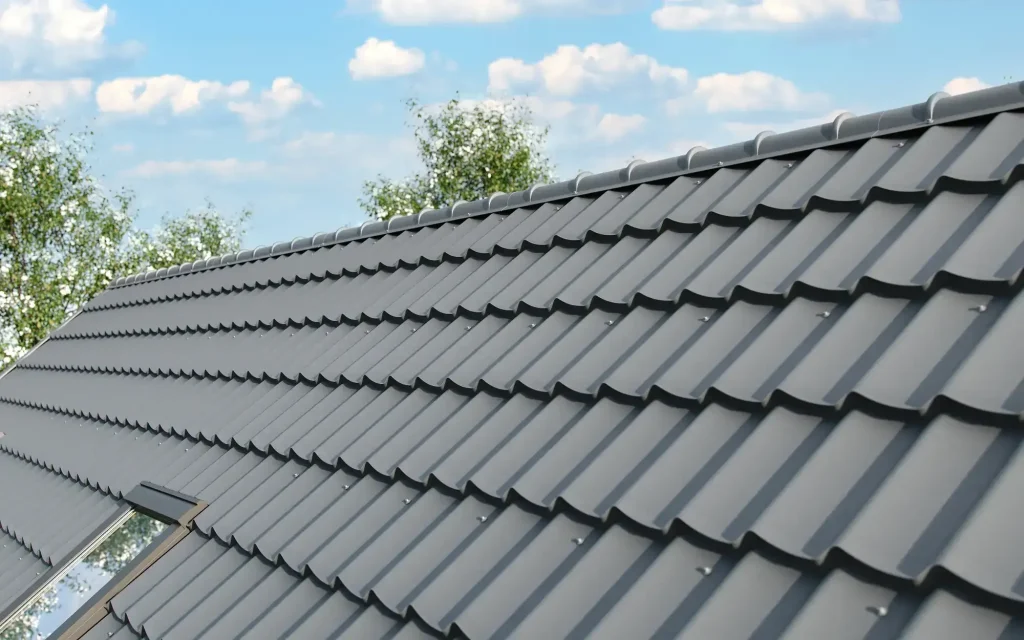
For a steel standing seam system in Monmouth County, installed costs run $12 to $16 per square foot in 2026. Corrugated steel — the exposed-fastener variety — comes in lower at $4 to $8 per square foot installed, but it’s less common in residential applications precisely because the exposed fasteners are a long-term maintenance concern.
Several factors push costs toward the higher end of those ranges. Roof complexity is the biggest one — a simple gable roof installs faster and with less waste than a roof with multiple valleys, dormers, chimneys, or skylights. Each penetration requires precise flashing work, and that’s where most metal roof failures originate when the installation isn’t done carefully. Pitch matters too: steeper roofs require more safety equipment and slower installation, which increases labor time.
Tear-off adds $1 to $2 per square foot to the project cost. If your existing roof has multiple layers, that increases the labor and disposal cost. Most Monmouth County municipalities also require a permit for a full roof replacement — permit costs start at $65 for one- and two-family dwellings, though the total varies by town.
For homeowners in coastal Monmouth County communities specifically, material selection has an additional layer. Salt air accelerates corrosion on standard galvanized steel faster than it would on a roof 20 miles inland. We use aluminum or Galvalume steel in those applications — materials specifically rated for salt air exposure — rather than substituting a lower-cost option that will degrade faster in that environment. It’s a detail that matters in Oceanport, Monmouth Beach, and Sea Bright. It’s not a detail you want to discover was skipped after the fact.
Aluminum roofing, for reference, runs $6.50 to $21 per square foot installed depending on profile and gauge — a wider range than steel because the product category includes everything from basic panels to premium architectural systems. For homeowners in the most exposed coastal locations in Monmouth County, aluminum’s natural corrosion resistance makes it worth the premium over standard steel.
What Monmouth County Homeowners Ask Before Committing to a Metal Roof
The same questions come up in almost every conversation we have with homeowners in Monmouth County. They’re worth addressing directly.
The noise question is the most common one. Metal roofs over solid sheathing and proper insulation are not dramatically louder than asphalt shingles during rain. The noise concern comes from uninsulated metal structures — barns, sheds, carports. A residential installation with a solid deck and underlayment beneath it behaves very differently. Most homeowners who’ve lived under a properly installed metal roof say they notice less noise than they expected, not more.
The denting question is legitimate but often overstated. Steel roofs at standard residential gauges are quite resistant to denting. Softer metals like aluminum and copper are more susceptible, particularly from large hail. In Monmouth County, where hail events do occur, steel is generally the more appropriate choice for that reason — and heavier-gauge panels offer better resistance than thinner ones. It’s worth asking any contractor what gauge they’re specifying and why.
Lightning is a misconception worth clearing up. Metal roofing does not attract lightning. If lightning strikes a metal roof, the material is noncombustible and disperses the energy safely — which is actually a better outcome than a combustible shingle roof in the same scenario.
The HOA question comes up in some Monmouth County communities. Metal shingle profiles and stone-coated steel options can closely mimic the appearance of traditional asphalt or wood shakes, and many HOAs that would reject a standing seam system will approve a metal shingle. If HOA approval is a factor for you, it’s worth discussing the aesthetic options before assuming metal is off the table.
Finally: what does it cost to wait? In 2026, steel tariffs have already added $1.50 to $2.50 per square foot to metal roofing costs compared to recent prior years. Market pricing on metal materials has been moving upward, not downward. A homeowner who defers a metal roof replacement for 18 months is not waiting for a better price — they’re waiting for a higher one, while continuing to pay for maintenance on a roof that’s past its useful life.
Is a Metal Roof Worth the Cost in Monmouth County?
For most Monmouth County homeowners who are asking this question seriously, the answer is yes — but the reason matters. It’s not that metal roofing is always the right choice for every budget or every situation. It’s that the cost comparison looks very different when you account for real lifespan, real maintenance, and the actual warranty backing the installation.
A 30-year labor warranty from a contractor who’s been working in Monmouth County since 1980 is a different thing than a 5-year warranty from someone who showed up last spring. The panel is only part of what you’re buying.
If you’re weighing a metal roof replacement in Monmouth County and want a straight answer on what it would actually cost for your specific home, A Russo Roofing & Siding offers same-day free estimates — no pressure, no commitment. We’ve been doing this work here for over 40 years, and we’re available Monday through Sunday to talk through what makes sense for your situation.