Skip to content

Metal Roof in Belmar, NJ

Storm-Proof Metal Roofs Built for Coastal Living

Get decades of protection from Jersey Shore weather with metal roofing designed to handle salt air, hurricanes, and everything coastal living throws at your home.
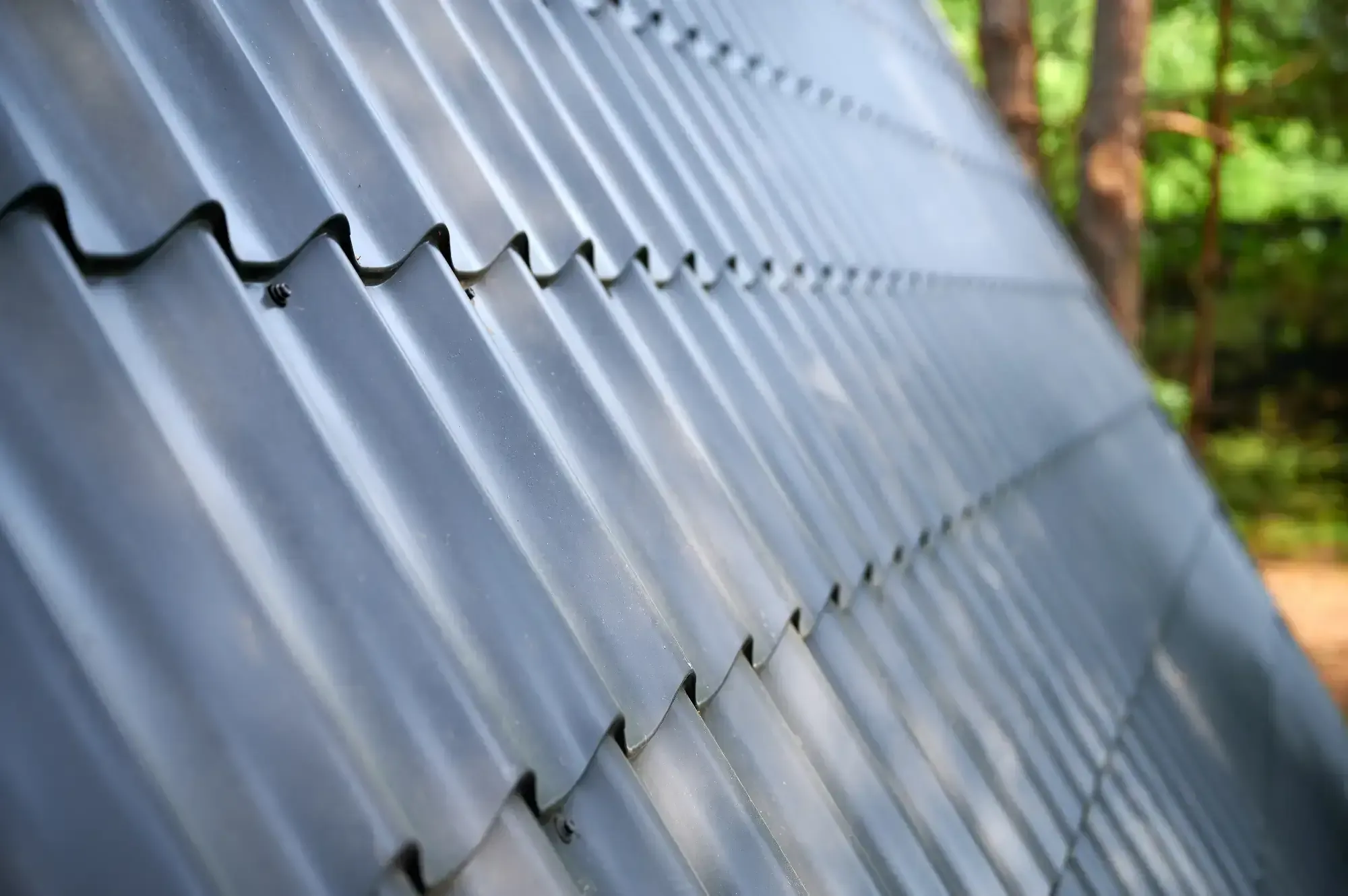
Close-up view of a metal sheet roof installed by a Roofing Contractor Monmouth County, featuring overlapping panels and wavy ridges. Trees and greenery are visible out of focus in the NJ background.

Hear from Our Customers

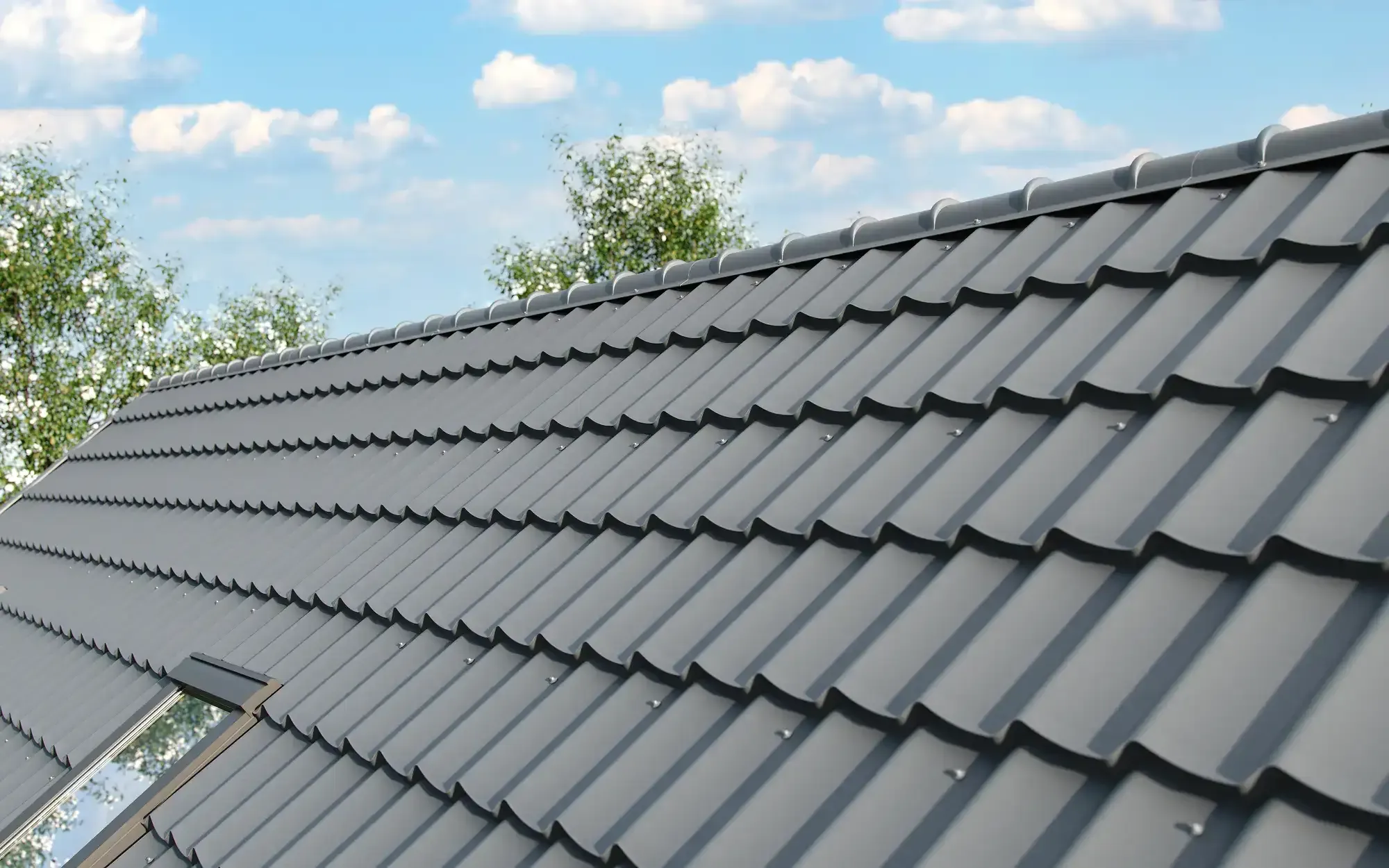
Close-up view of a sloped roof with gray metal roof tiles and a skylight, expertly installed by a trusted roofing contractor in Monmouth County, NJ, with trees and blue sky with clouds in the background.

Metal Roofing Installation Belmar

What You Get with Professional Metal Roofing

Your roof stops being a worry. That’s what happens when you install a quality metal roof in Belmar – you get 40 to 60 years of protection instead of replacing shingles every 15 to 20 years.

The salt air that makes coastal living beautiful also destroys traditional roofing materials. Metal roofing with proper coastal-grade materials and coatings resists corrosion while reflecting heat away from your home, cutting cooling costs by up to 25%.

When the next nor’easter or hurricane hits, you’ll have the peace of mind that comes with a roof engineered to handle winds over 150 mph. No more emergency repairs, no more leaks damaging your interior, no more wondering if your roof will make it through another storm season.

Belmar Metal Roofing Contractors

Local Contractors Who Understand Coastal Challenges

A Russo Roofing & Siding has been serving Belmar and the Jersey Shore for years, and we know exactly what coastal properties need. Living this close to the Atlantic means your roof faces challenges that inland properties never see.

We specialize in selecting the right metal materials and coatings for coastal environments. We understand that standard galvanized steel won’t cut it when you’re dealing with salt spray and humidity. That’s why we focus on aluminum, stainless steel, and properly coated materials that can handle what Belmar’s weather dishes out.

Our team knows the local building codes, understands the unique wind patterns along the shore, and has seen what works and what fails in coastal applications. When you’re investing in a roof that needs to last decades, local expertise matters.

A close-up view of a modern building with a brown metal sloped roof by a top Roofing Contractor Monmouth County, featuring large windows and brick walls, taken on a clear, sunny day with trees in the background in NJ.

Metal Roof Installation Process

How Professional Metal Roof Installation Works

The process starts with a thorough inspection of your existing roof structure. We evaluate what needs reinforcement, what can stay, and what needs to be completely replaced. This isn’t a one-size-fits-all approach – coastal properties have specific structural requirements.

Next comes material selection. For Belmar properties, this means choosing metals and coatings that resist salt air corrosion. Standing seam systems get priority because they eliminate exposed fasteners that can fail in coastal environments. The panels are custom-fabricated to fit your roof perfectly, eliminating unnecessary seams where water and salt can penetrate.

Installation follows strict coastal building standards. Every fastener, every seal, every connection point is designed to handle the wind loads and weather exposure your property will face. We pay special attention to areas where different materials meet, using proper flashing and sealants to prevent any weak points.

Quality control happens throughout the process. Each phase gets inspected before moving to the next step. The final inspection ensures everything meets both local codes and the manufacturer’s specifications for coastal applications.

A modern house in NJ with a dark metal roof featuring angled skylights, a large vertical chimney, and several small roof vents—showcasing the work of a top Roofing Contractor Monmouth County—set against a blue sky with scattered clouds.

Ready to get started?

Explore More Services

About A Russo & Son Roofing

Get a Free Consultation

Coastal Metal Roofing Solutions

What's Included in Belmar Metal Roofing Service

Every metal roofing project includes a comprehensive assessment of your property’s specific coastal exposure. Properties closer to the water need different materials and installation techniques than those a few blocks inland. We evaluate salt spray exposure, wind patterns, and your home’s orientation to determine the best approach.

Material selection focuses on corrosion-resistant options proven to perform in coastal New Jersey. This typically means aluminum or stainless steel panels with PVDF coatings that resist both salt corrosion and UV fade. Standing seam systems are preferred because they eliminate the exposed fasteners that cause most coastal roofing failures.

Installation includes proper ventilation systems designed for coastal humidity, ice and water barriers that exceed standard requirements, and fastening systems rated for hurricane-force winds. Every penetration gets sealed with marine-grade materials, and all flashing is fabricated from the same corrosion-resistant materials as the roof panels.

The service includes detailed documentation of materials used, installation methods, and warranty information. This matters when you’re dealing with insurance claims or when it’s time to maintain your roof years down the road.
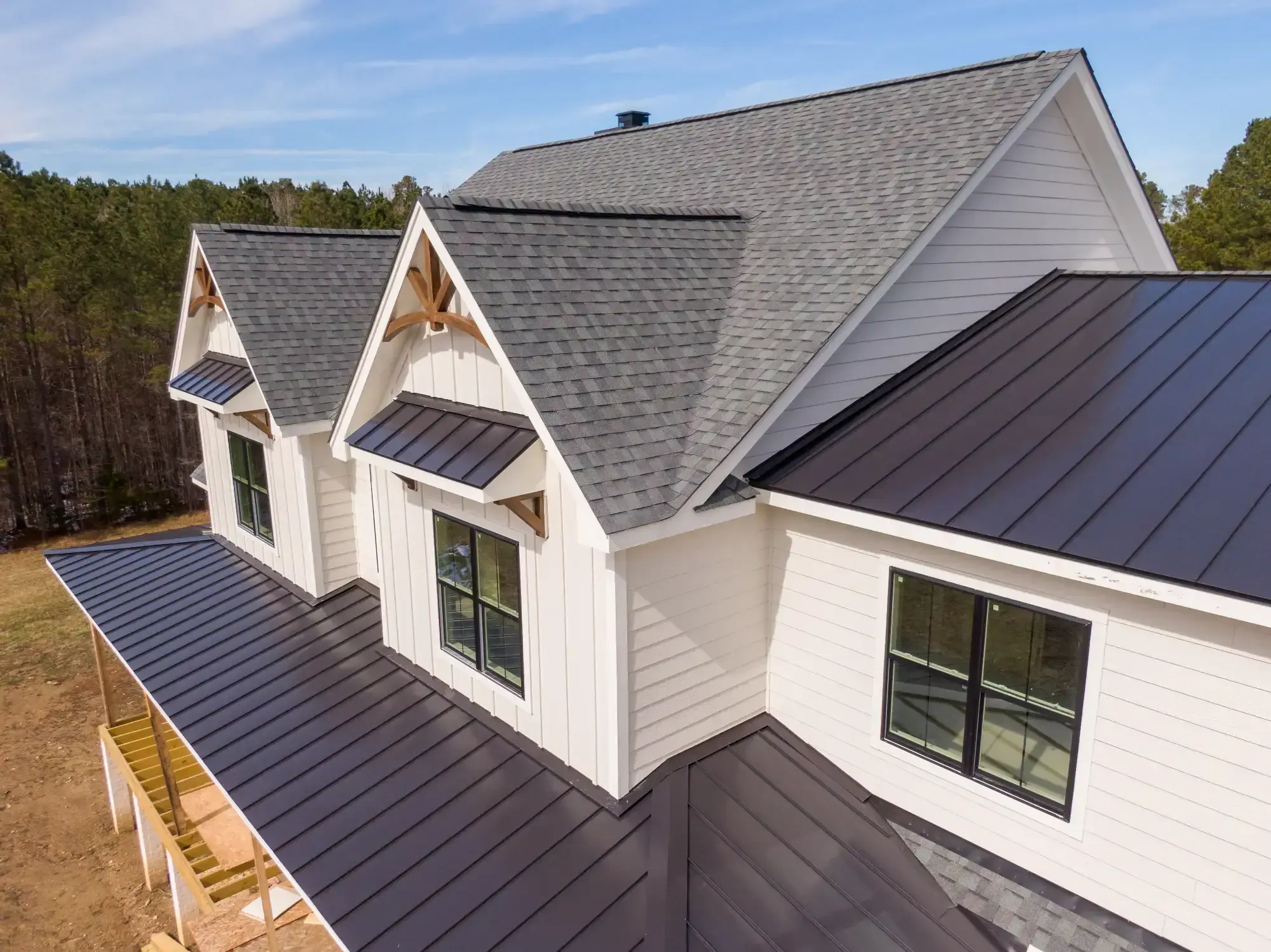
A modern farmhouse in NJ with white siding, black framed windows, and a mix of gray asphalt shingles and black metal roofing by a trusted Roofing Contractor Monmouth County, surrounded by trees under a blue sky.
A properly installed metal roof with coastal-appropriate materials typically lasts 40 to 60 years in Belmar’s coastal environment. The key is using the right materials – aluminum or stainless steel with proper coatings – rather than standard galvanized steel that corrodes quickly in salt air.Standing seam systems tend to last longer than corrugated because they eliminate exposed fasteners that can fail. The panels themselves rarely fail, but fasteners and seals are the weak points in coastal applications. Quality installation with marine-grade sealants and stainless steel fasteners makes the difference between a roof that lasts decades and one that needs repairs every few years.Regular maintenance extends the life even further. This means annual inspections to check for loose fasteners, damaged sealants, or any areas where salt buildup might be causing problems. Most coastal metal roofs that fail prematurely do so because of deferred maintenance, not material failure.
Aluminum and stainless steel are the best choices for coastal properties in Belmar. Aluminum naturally resists corrosion and performs well in salt air environments. When combined with PVDF coatings, aluminum roofing can handle both salt spray and intense UV exposure without degrading.Stainless steel offers superior strength and corrosion resistance, making it ideal for areas with extreme weather exposure. It costs more upfront but provides exceptional durability in coastal conditions. Both materials work well with standing seam systems, which are preferred for coastal applications.Standard galvanized steel should be avoided in coastal areas. While it’s less expensive initially, salt air accelerates corrosion and can cause premature failure. The money saved upfront gets lost in repairs and early replacement. Copper is another option, but it’s expensive and can stain surrounding areas as it weathers.
Metal roofing typically costs 2 to 3 times more than asphalt shingles upfront, but the long-term value is significantly better. A quality metal roof installation in Belmar runs $10,000 to $25,000 depending on the size and complexity of your roof, while asphalt shingles might cost $8,000 to $12,000.The real savings come over time. Metal roofs last 40 to 60 years compared to 15 to 20 years for asphalt shingles. Over the life of your home, you’ll likely replace asphalt shingles 2 to 3 times while the metal roof is still performing. Factor in the energy savings from better heat reflection and the reduced maintenance costs, and metal roofing often costs less over its lifetime.Insurance companies sometimes offer discounts for metal roofing because of its superior wind and fire resistance. In coastal areas prone to hurricane damage, these savings can be substantial. The improved resale value of your home is another financial benefit that helps offset the higher initial cost.
Yes, properly installed metal roofing can handle hurricane-force winds exceeding 150 mph. The key is proper installation with appropriate fastening systems and structural support. Standing seam systems perform particularly well because the panels interlock and distribute wind loads across the entire roof surface.The fastening system is critical in coastal applications. Standard roofing screws aren’t adequate for hurricane conditions. Professional installation uses structural fasteners rated for extreme wind loads, with spacing and penetration depths calculated for your specific roof design and local wind requirements.Panel design also matters. Standing seam panels create a continuous surface that wind flows over more smoothly than corrugated or ribbed panels. This reduces uplift forces that can tear roofing materials away from the structure. The interlocking seams also prevent wind-driven rain from penetrating the roof system even under extreme conditions.
Metal roofing in coastal areas requires minimal maintenance, but regular inspections are important. Annual inspections should check for loose fasteners, damaged sealants, and any areas where salt buildup might be causing corrosion. Most issues are minor and easily addressed if caught early.Cleaning is more important in coastal areas than inland. Salt spray can build up on the roof surface and around fasteners, accelerating corrosion if not removed. A simple rinse with fresh water a few times per year removes salt deposits and extends the roof’s life. Avoid pressure washing, which can damage sealants and coatings.Check gutters and downspouts regularly, as salt air can cause faster deterioration of these components. Clear any debris that might trap moisture against the roof surface. Touch up any scratches or damaged coatings promptly to prevent corrosion from starting. With proper maintenance, a coastal metal roof requires very little attention compared to traditional roofing materials.
Modern metal roofing installations are not significantly noisier than other roofing materials when properly installed. The key is proper installation over a solid substrate with adequate insulation and underlayment. This creates a barrier that dampens sound transmission into the living space.Standing seam systems tend to be quieter than corrugated panels because they lie flatter against the roof deck. The continuous surface doesn’t create the air gaps that can amplify sound. Professional installation includes proper insulation and underlayment that further reduce any noise transmission.Many homeowners find that metal roofing is actually quieter than expected, especially compared to the noise of wind-driven rain on asphalt shingles. The solid construction and proper installation techniques used in coastal applications typically result in a roof that performs quietly even during severe weather. If noise is a concern, additional insulation can be added during installation to further reduce sound transmission.