
Summary:
A hailstorm rolls through and you walk outside to check. The car has a few dents. The gutters look beat up. But the roof? Looks the same as always — at least from where you’re standing.
That’s the problem. Most hail damage to a roof is completely invisible from the ground, and the damage that gets missed today is the leak that shows up six months from now. A proper roof hail damage inspection isn’t just about finding obvious destruction — it’s about catching the kind of wear that shortens your roof’s life and gives your insurance company a reason to deny a claim down the road. Here’s what that process actually involves.
What a Roof Hail Damage Inspection Actually Covers
A thorough inspection starts at the shingle level. We’re looking for granule loss — those small, sand-like particles embedded in asphalt shingles that protect them from UV exposure and water. When hail strikes, it knocks granules loose, leaving dark, exposed patches on the shingle surface. That alone can cut years off a roof’s lifespan, even if no water is getting in yet.
Beyond granule loss, we check for bruising — soft spots beneath the shingle surface where the fiberglass mat has been crushed by impact. You can’t see bruising from the ground, and you often can’t see it just by looking at the shingle. You have to press on it. A bruised shingle looks intact but is structurally compromised.
Metal components get just as much attention. Flashing around chimneys, skylights, and vents, gutter edges, and ridge caps are all high-impact zones during a hailstorm. Dented or cracked metal is often the clearest physical evidence of a hail event — and it’s what we photograph first when building documentation for an insurance claim.
Why Hail Damage Isn't Always Obvious Right Away
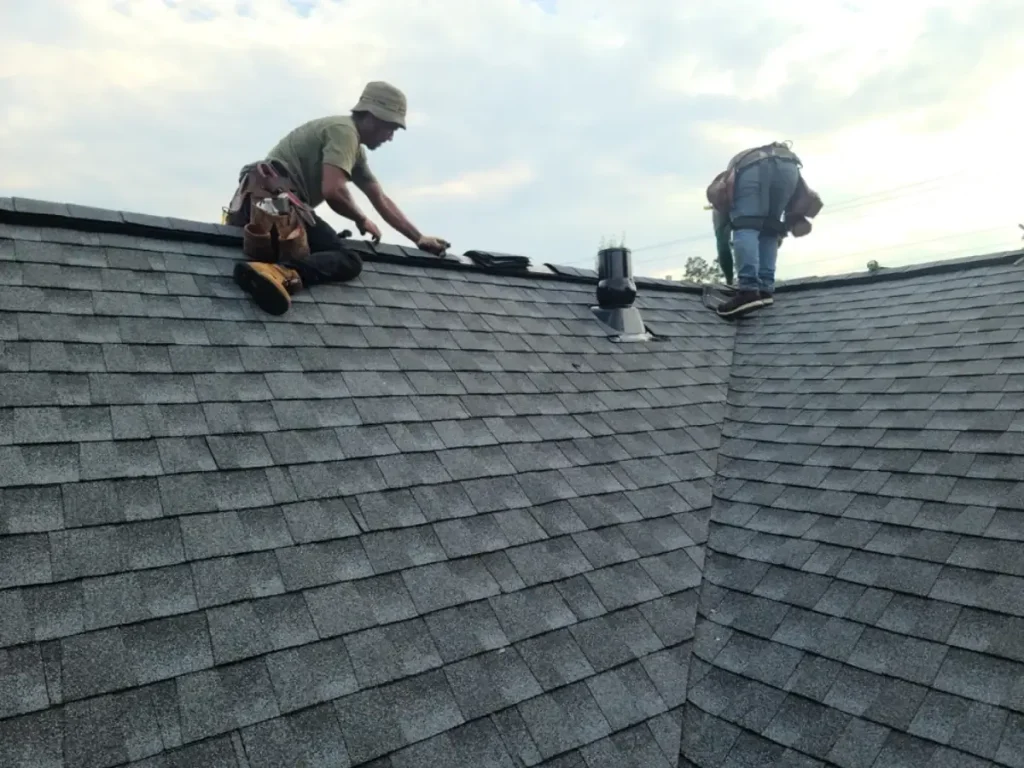
This is the part most homeowners don’t expect. Hail damage rarely announces itself with an immediate leak. What it does instead is accelerate aging. A shingle that loses a significant portion of its granules in a storm may hold up through the summer — and then fail during the first hard freeze of winter, when water seeps into the exposed area and expands.
In Monmouth County and Bergen County, that freeze-thaw cycle is a real factor. Coastal nor’easters, hard winters, and the temperature swings that come with a New Jersey climate mean that compromised shingles don’t get the benefit of the doubt. What looks like a minor ding in June becomes a water intrusion problem by January.
That’s also why the timing of an inspection matters. Most insurance policies have a window — often around 30 days — within which you need to report storm damage to start a claim. Waiting to see if a leak develops means you may have already missed the filing window by the time the damage becomes visible. The right move is to get an inspection done shortly after a significant hail event, even if everything looks fine from the driveway.
There’s also the question of documentation. A professional inspection produces a written report with photographs, impact counts per test area, and damage descriptions formatted for an insurance adjuster’s review. Without that documentation, you’re relying on the insurer’s adjuster alone — and their job is to assess the claim, not advocate for you. Having your own inspection report on file before that adjuster visit changes the dynamic considerably.
Should You Call a Contractor or Your Insurance Company First?
Most homeowners assume the first call after a storm goes to the insurance company. It’s actually worth reversing that order.
When you call your insurer first, they send their own adjuster. That adjuster is a professional — they know what they’re doing — but they’re also working on behalf of the insurance company, not you. Their job is to assess damage accurately, which sometimes means finding reasons why certain damage doesn’t meet the threshold for a covered claim.
If you call us first, you get your own documentation before anyone else sets foot on the roof. We know what hail damage looks like — and how to distinguish functional damage from normal wear. We’ll put together a report that gives you a much stronger position when the adjuster arrives. We can even be present during the adjuster’s inspection to walk through the findings together.
This isn’t about gaming the system. Legitimate storm damage is covered under standard homeowner policies, and you’re entitled to file a claim for it. It’s about making sure the full scope of what happened to your roof is properly identified and documented before the claim is evaluated. We won’t manufacture damage that isn’t there — but we will make sure nothing real gets missed.
One more thing worth knowing: hail is a no-fault weather event. Filing a claim for hail damage is not the same as filing a claim because you backed into something. How it affects your premiums depends on your specific policy and insurer, but the fear of premium increases shouldn’t stop you from filing a legitimate claim on damage that your policy was designed to cover.
How to Get Insurance to Cover Roof Replacement After Hail
Getting insurance to cover a roof replacement starts with having the right documentation — and ends with understanding what your specific policy actually says. Those two things together determine whether you walk away with a full replacement covered or a partial payout that leaves you holding a significant out-of-pocket balance.
The inspection report is your foundation. It needs to show not just that damage exists, but that the damage is functional — meaning it affects the roof’s ability to protect the home — rather than purely cosmetic. That distinction matters because many policies cover functional damage but exclude cosmetic damage. We understand insurance claims and know how to frame findings in terms that align with how adjusters evaluate coverage.
Will Insurance Cover Roof Repair or Full Replacement?

Whether your insurer pays for a repair or a full replacement depends on a few factors: the extent of the damage, the age of your roof, and the type of coverage you carry.
Replacement cost value (RCV) policies cover the full cost of replacing a damaged roof with materials of similar kind and quality, minus your deductible. Actual cash value (ACV) policies factor in depreciation — meaning an older roof gets a lower payout because the insurer accounts for its remaining useful life. If your roof is 15 years old and takes a significant hail hit, an ACV policy may only cover a fraction of what replacement actually costs.
In Monmouth County especially, where a lot of the housing stock dates back to the 1960s through 1980s, this is a real consideration. Older homes may have roofs that were already approaching end-of-life before the storm hit. A hail event can be the tipping point that makes replacement necessary — but the payout depends entirely on what kind of policy is in place.
We can help you understand what your policy covers before you commit to any course of action. That means no surprises when the adjuster’s estimate comes back, and a clearer picture of what your actual out-of-pocket costs will look like. If a full replacement is warranted and covered, that’s also the right time to ask about impact-resistant shingles — some insurers offer premium discounts for Class 4-rated materials, which can offset costs over time.
Does State Farm Homeowners Insurance Cover Roof Replacement From Hail?
State Farm is one of the most common homeowners insurers in New Jersey, and yes — hail damage to a roof is generally a covered peril under a standard State Farm homeowners policy. That’s not a company that’s unfamiliar with this kind of damage.
That said, coverage is always subject to the specific terms of your policy. State Farm, like most major insurers, distinguishes between functional and cosmetic damage. If hail dented your shingles but didn’t compromise their ability to keep water out, some policies may classify that as cosmetic and exclude it from coverage. If the damage is functional — granule loss that exposes the mat, bruising that cracks the shingle’s integrity, flashing that’s been compromised — that’s a different story.
For homeowners in Bergen County and Monmouth County, the process typically works like this: you report the storm event to State Farm, they assign an adjuster, and that adjuster schedules an inspection. Having our contractor’s report ready before that visit — one that clearly identifies functional damage with photographs and documentation — puts you in a much stronger position. Adjusters are professionals, but they’re working through a high volume of claims after any significant storm event. A well-documented report ensures nothing gets overlooked.
If State Farm’s initial assessment comes back lower than expected, you have options. Most policies include an appraisal or dispute process. We’ve worked with enough insurance claims to advise you on whether the adjuster’s findings are consistent with what the inspection actually showed — and whether it’s worth pushing back. The key is having that documentation in place from the start.
Getting a Roof Hail Damage Inspection in Monmouth or Bergen County
If a storm has come through your area recently, the smartest thing you can do is get a professional inspection scheduled before too much time passes. Not because the damage will necessarily be dramatic — it often isn’t — but because what you can’t see from the ground can quietly shorten your roof’s life and complicate a future insurance claim.
Between Bergen County’s exposure to severe weather and Monmouth County’s vulnerability to nor’easters and coastal storms, New Jersey homeowners deal with more roof stress than most people realize. The freeze-thaw cycles alone can turn minor hail damage into a serious problem over a single winter.
We’ve been doing this work in Monmouth and Bergen Counties since the 1980s. Every inspection is owner-supervised, free of charge, and backed by the kind of documentation your insurance company will actually take seriously. If a replacement turns out to be the right call, we’re currently offering $500 off any full roof replacement — and a 30-year labor warranty behind every job. Reach out to us to get your inspection scheduled.