
Summary:
You noticed the icicles. Maybe you saw a water stain on the ceiling, or felt the cold draft near a wall that wasn’t there before. Now you’re trying to figure out how bad it is — and what it’s going to cost to find out.
That’s a reasonable place to be. Ice dam damage in Monmouth and Bergen counties is one of those things that looks manageable from the outside and turns into a much bigger problem if you wait. This page covers what a roof inspection actually costs after an ice dam, what the inspector should be looking at, and how to handle the next few days without accidentally making things worse.
Dealing With Ice Dams: What's Actually Happening on Your Roof Right Now
An ice dam forms when heat escaping from your attic warms the upper section of your roof, melting the snow sitting on it. That water runs down toward the eaves, hits the cold overhang, and refreezes. As this cycle repeats — and in a New Jersey winter, it repeats constantly — the ice ridge grows. Water backs up behind it and has nowhere to go except under your shingles.
That’s the part most homeowners don’t see. The icicles hanging off your gutters are a symptom. The real problem is the water that’s already working its way through your roofing system. In older homes throughout Bergen County — places like Rutherford, Lodi, and Fairview — inadequate attic insulation from original construction makes this cycle happen faster and more aggressively than it should.
Ice Melt for Roof Dams: Does It Actually Work?
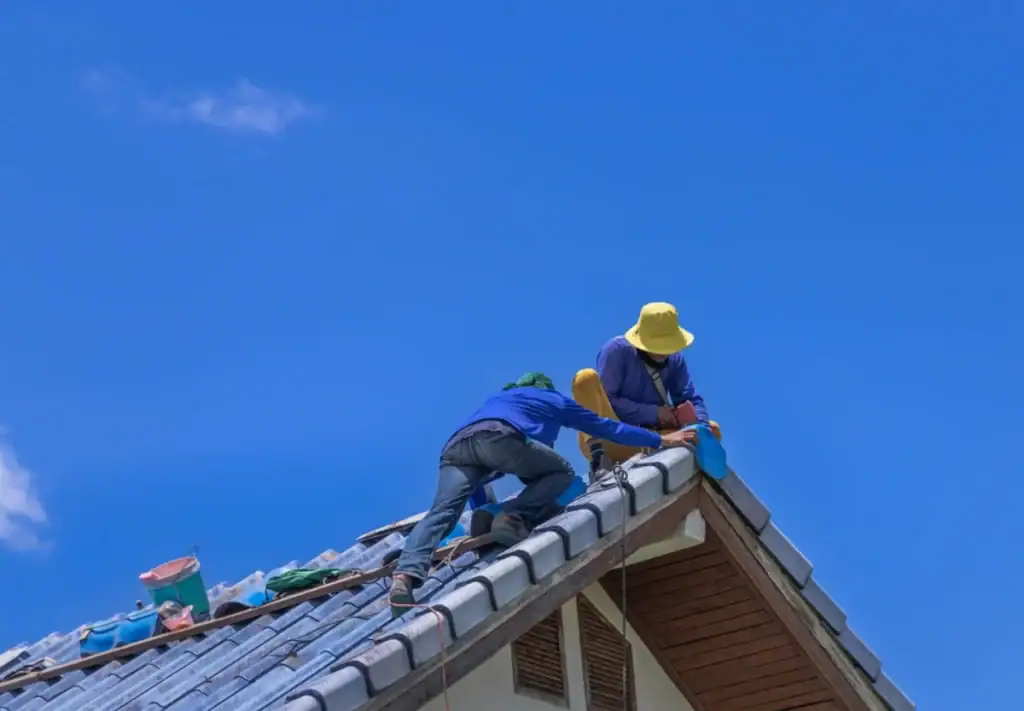
Calcium chloride ice melt is the most common DIY response to an ice dam, and it does have a legitimate use — when applied correctly, it can create drainage channels through the ice, giving trapped water a path off the roof. That’s genuinely useful as a short-term measure while you wait for a professional to assess the damage.
The problem is how most people use it. Scattering ice melt directly across shingles, or using the wrong product entirely, can accelerate shingle deterioration, corrode metal flashing, and damage gutters. And none of it addresses why the ice dam formed in the first place. If your attic is losing heat through inadequate insulation or poor ventilation — which is the root cause in the vast majority of cases — the ice dam will be back next storm.
There’s also a warranty issue worth knowing about. GAF, CertainTeed, and Owens Corning — three of the most widely used shingle manufacturers — specify that certain removal methods can void your shingle warranty. Steam removal is the only method all three recognize as warranty-safe. That matters if your roof is relatively new and you’re counting on that manufacturer coverage.
If you want to use ice melt as a stopgap, calcium chloride in a stocking or mesh tube laid perpendicular across the ice dam is the safer approach — it melts a channel without direct contact across the whole shingle surface. But treat it as a temporary measure, not a fix.
Clearing an Ice Dam Safely vs. Making It Worse
The instinct to grab a hammer, a chisel, or a pressure washer and physically break the ice is understandable. It looks like progress. It is not progress — it’s one of the fastest ways to turn a repairable situation into a full roof replacement conversation.
Chipping at ice dams cracks and dislodges shingles, gouges the surface granules that protect your roof from UV and moisture, and can damage the ice and water shield underneath. Pressure washing forces water directly into any gap in your roofing system and can strip flashing seals. Both methods void manufacturer warranties. If a contractor did this kind of work and your shingles fail two years later, you’d have no recourse.
What you can safely do from the ground is use a roof rake — a long-handled tool designed to pull snow off the lower sections of your roof without you getting on a ladder. Removing the snow load before it melts reduces the amount of water feeding the ice dam. That’s a meaningful preventive step, especially during an active nor’easter when snow is still accumulating.
Beyond that, the safest move is to protect the interior — put towels or buckets under any active drips, move valuables away from affected areas, and call a licensed roofing contractor who can assess the damage without making it worse. In coastal Monmouth County communities like Rumson and Manasquan, where wind-driven snow compounds the ice dam problem, getting a professional out quickly matters more than most DIY attempts.
If you’re seeing water stains on the ceiling or damp spots near exterior walls, don’t wait to see if they dry out on their own. Mold can develop within 48 hours of sustained water intrusion. What looks like a cosmetic stain can be the surface sign of saturated insulation and compromised drywall behind it.
What Does a Roof Inspection Cost After an Ice Dam in NJ?
This is the question most homeowners search for first, and the honest answer is: it depends on what the inspection includes and who’s doing it.
For a standard physical inspection in New Jersey — shingles, flashing, gutters, attic — you’re typically looking at $150 to $400. Post-storm and post-ice dam inspections often fall on the lower end of that range, and we offer them at no charge as part of an estimate. The inspection itself isn’t usually where the cost lands. It’s what the inspection finds that determines what comes next.
What a Thorough Post-Ice Dam Inspection Should Actually Cover

A roof inspection after an ice dam isn’t just someone walking around on your roof for fifteen minutes. If it is, that’s a red flag.
A proper inspection starts on the exterior — checking shingles for cracking, lifting, or granule loss along the lower sections where ice dam pressure is greatest. Flashing around chimneys, skylights, and roof valleys needs close attention because these are the first places where water infiltration shows up and the last places a rushed inspector checks. Gutters should be examined for separation from the fascia, which is common after a heavy ice dam pulls on them.
The attic inspection is where the real story usually lives. A good inspector will look for moisture staining on the underside of the roof decking, damp or compressed insulation, discoloration on rafters or joists, and any sign of mold beginning to develop. They should also assess your ventilation — soffit vents, ridge vents, and any exhaust fans — because inadequate ventilation is almost always part of why the ice dam formed in the first place.
At the end of it, you should walk away with a written report, photos of any damage found, and a clear explanation of what needs to happen next — whether that’s “monitor this area,” “repair within the season,” or “this needs to be addressed now.” Documentation matters especially if you’re planning to file a homeowners insurance claim. NJ homeowners insurance typically covers ice dam damage to the interior and structure, minus your deductible. A professional inspection with photos and a written report is what makes that claim viable. Without it, you’re relying on your own word against the insurance adjuster’s assessment.
Roof Inspection Cost vs. the Cost of Waiting — What NJ Homeowners Actually Risk
The math on this is pretty straightforward, even if it’s uncomfortable to look at directly.
A professional inspection runs $150 to $400 in most cases. Ice dam damage that goes undetected and unrepaired — water working through decking, saturating insulation, reaching drywall — can cost $5,000 to $25,000 to remediate once it’s fully developed, according to the Insurance Institute for Business and Home Safety.
In Monmouth County, where a lot of homes have complex rooflines with dormers, multiple pitches, and valleys — the kind of architecture you see throughout Colts Neck, Manalapan, and Wall — ice dam formation tends to be more complicated than on a simple gable roof. Water finds more paths in. There are more flashing intersections to fail. The inspection matters more, not less.
Bergen County presents a different version of the same problem. Many homes in Lodi, River Edge, and Rutherford were built in the 1950s through 1980s with insulation standards that weren’t designed for today’s energy demands. Those attics lose heat efficiently — which means ice dams form efficiently. An inspection in these homes should always include the attic, not just the exterior, because that’s where the cause and the damage both tend to show up first.
One thing worth knowing: when you verify any contractor you’re considering, NJ law requires that anyone performing home improvement work over $500 be registered as a Home Improvement Contractor with the NJ Division of Consumer Affairs. You can check any contractor’s license on their site. After a significant winter storm, unlicensed crews do show up in NJ neighborhoods. It’s worth taking thirty seconds to verify before anyone gets on your roof.
When to Stop Waiting and Get Your Roof Checked After a NJ Winter Storm
If you’ve had ice dams this winter — or you’re looking at icicles right now and wondering whether to be worried — the answer is usually: get it checked sooner than feels necessary. Not because something is definitely wrong, but because the only way to know is to look.
A professional inspection gives you a clear picture of what happened, what the damage is, and what your options are. It creates documentation for your insurance company. And it tells you whether you’re dealing with a minor repair or something that needs to move up your priority list before spring.
We’ve been doing this work in Monmouth and Bergen counties for over 40 years. We offer same-day estimates, 24/7 emergency availability, and owner-supervised inspections — meaning when we come out to assess your roof, you’re getting a straight answer from someone who will also be on-site if any work needs to happen. Reach out and let’s take a look before the next storm rolls in.