
Summary:
You noticed something — a water stain on the ceiling, a few shingles in the yard after last week’s nor’easter, or maybe your roof is just old and you’ve been putting off the question. Now you’re trying to figure out how bad it actually is, and whether you’re looking at a repair bill or a full replacement.
That uncertainty is the hardest part. Not the cost itself — the not knowing. This page is designed to give you a clear framework for thinking through the decision, with real numbers and honest guidance. By the end, you’ll know what to look for, when repair makes sense, and when it doesn’t.
Roof Repair vs. Replacement: The Decision Framework That Works
The repair-vs-replacement question doesn’t have a single universal answer — it depends on your roof’s age, the extent of the damage, and the math of what repeated repairs actually cost over time. But there are clear thresholds that make the decision much easier once you understand them.
The most important factor is age. A roof that’s under 10 years old with localized damage is almost always a repair candidate. A roof that’s 20 years or older with damage showing up in multiple spots is usually telling you something different — that the underlying system is wearing out, not just the surface.
Patching one section while the rest of the roof continues to age rarely ends well financially. You’re spending money to extend the life of a system that’s already on borrowed time.
Average Roof Life in New Jersey — and Why Monmouth County Conditions Matter
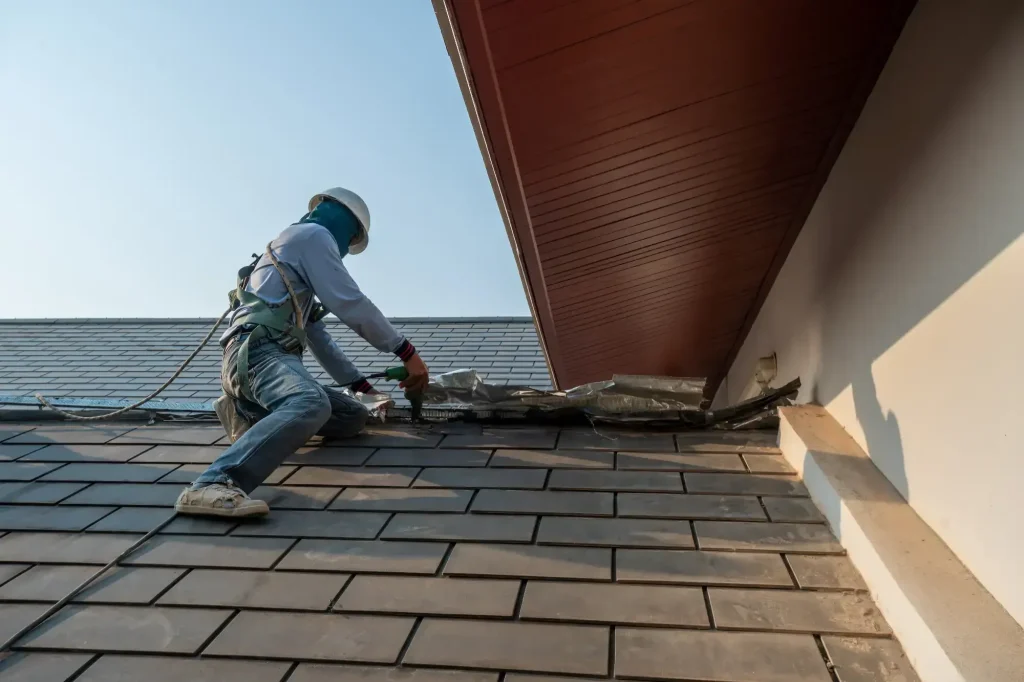
Roof lifespan in Monmouth County is shaped by conditions that don’t apply everywhere. The freeze-thaw cycling that hits the region every winter — cold nights, warmer days, repeat — puts real stress on shingles and flashing over time. Coastal communities along the shore deal with an added layer: salt air accelerates the corrosion of metal flashing and fasteners in ways that inland homeowners simply don’t experience.
A roof in Sea Bright or Manasquan is working harder than the same roof in Freehold or Marlboro.
Standard 3-tab shingles have a realistic lifespan of 15 to 20 years in Monmouth County. If your home was built or re-roofed before 2005 and still has its original 3-tab shingles, you’re likely at or past end-of-life regardless of how it looks from the driveway. Architectural shingles installed correctly can deliver 25 to 30 years of service — but that “installed correctly” part carries more weight than most homeowners realize.
Research from the Building Science Corporation found that poor attic ventilation can reduce shingle lifespan by 10%, and a contractor poll published in Roofing Contractor magazine put the real-world average at a 24% reduction. That means a roof that should last 25 years might fail at 19 — not because of the shingles, but because of what’s happening underneath them.
This is one reason why a thorough inspection matters so much before you decide anything. What looks like a surface problem sometimes has a deeper cause.
One more thing worth noting for Monmouth County specifically: Hurricane Sandy hit in October 2012, and a significant number of roofs across the county were replaced in 2012 and 2013. If your home was one of them, you’re now in the 12-to-15-year window — the zone where localized damage is often still repairable, but where a full assessment makes sense before you commit to another patch.
Roofing Warranty: What You're Actually Covered For — and What You're Not
Warranties in roofing come in two distinct forms, and most homeowners don’t realize they’re different until something goes wrong. The first is the manufacturer’s warranty, which covers the shingles themselves — defects in the material, premature granule loss, that kind of thing. The second is a workmanship or labor warranty, which covers the installation.
If a flashing detail was done incorrectly and water gets in three years later, that’s a workmanship issue, not a shingle defect.
Most contractors offer a short-term workmanship warranty — often one to five years. After that, if the installation causes a problem, you’re on your own. The manufacturer warranty on materials is typically prorated after the first 10 years, meaning it covers less and less of the replacement cost as time goes on.
This is worth understanding before you hire anyone, because the warranty terms are often where the real difference between contractors shows up. A company offering a 30-year labor warranty and a 20-year workmanship warranty is making a fundamentally different commitment than one offering a standard 2-year workmanship guarantee. The longer the warranty, the more the contractor is betting on their own work — and the more protection you have if something goes wrong years down the road.
GAF-certified contractors — a designation held by roughly 3% of roofing contractors nationwide — can offer enhanced manufacturer warranties that go beyond what non-certified contractors can provide. Non-certified contractors typically offer only the standard prorated shingle warranty. GAF certification requires ongoing training, verified business practices, and maintained insurance. It’s not a marketing badge; it’s a credential with real requirements behind it.
When you’re comparing quotes, ask each contractor specifically: what does your workmanship warranty cover, and for how long? The answer will tell you a lot about how confident they are in their own installation.
Roof Replacement Cost in New Jersey — and When Repair Stops Making Financial Sense
Cost is usually the deciding factor for homeowners who are on the fence — and the math is more straightforward than most people expect. In New Jersey, most homeowners spend between $8,500 and $17,000 on a full roof replacement, with the midpoint for a mid-sized home landing around $13,500. The range is wide because it depends on the size of your home, the materials you choose, and the complexity of the job.
Repair costs vary just as much, running anywhere from $650 for a simple fix to roughly $4,800 for more involved work. The question isn’t which number is smaller — it’s what the repair actually buys you.
When Does Repairing a Roof Stop Being Worth It?
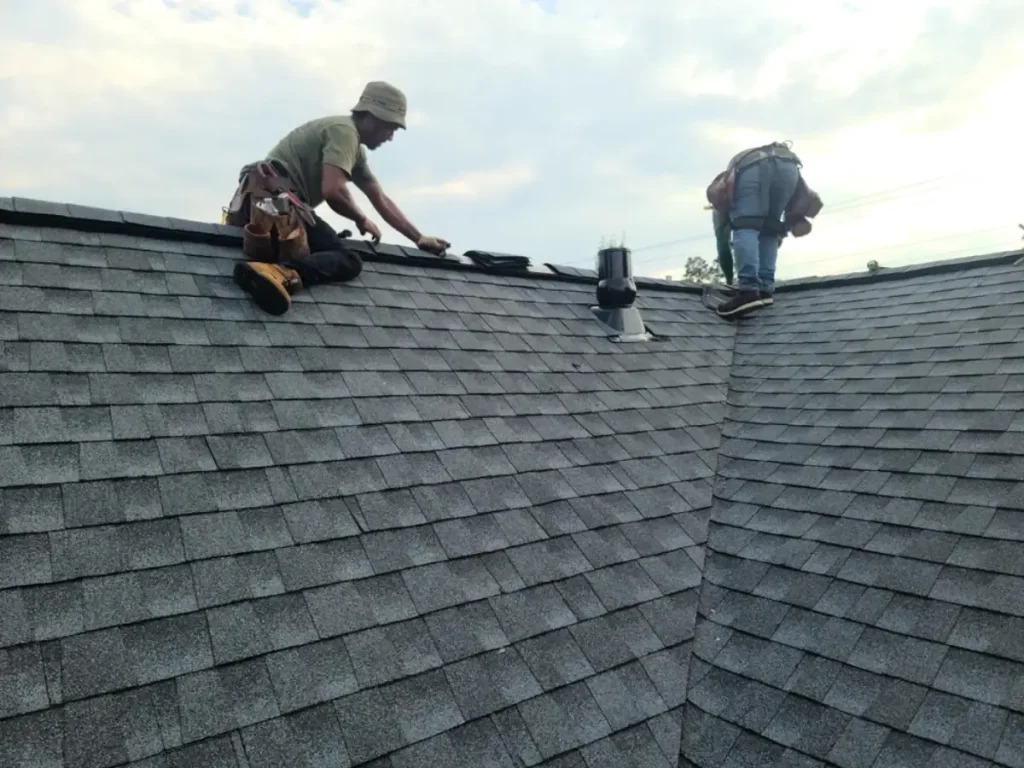
There’s a threshold that most roofing professionals use as a rough guide: when the cost of a repair approaches 30% to 50% of what a full replacement would cost, the replacement typically becomes the smarter financial decision. At that point, you’re spending a significant amount of money to extend the life of a roof that’s already aging — and you’re not resetting the clock on anything.
The damage extent matters just as much as the dollar figure. If the affected area covers less than 30% of your total roof surface and the rest of the system is in reasonable shape, repair is usually the right call. Once damage spreads beyond that threshold — or shows up in multiple unrelated spots — it’s usually a sign of systemic wear rather than isolated failure.
Recurring leaks are a particularly telling sign. If you’ve had the same section repaired twice in the past few years and it’s leaking again, the problem likely isn’t the patch — it’s the underlying condition of the decking, flashing, or ventilation system. A second or third repair in the same area is often money spent on a symptom rather than the cause.
There’s also a longer-term cost to consider. Homeowners who repair an aging roof every year or two sometimes spend more over a five-year period than a single replacement would have cost — and they’re still left with an old roof at the end of it. That’s the trap worth avoiding.
The $1,200 repair feels manageable in the moment, but if you’re doing it every 18 months, the math changes quickly. One thing that’s shifted the calculation in recent years: material prices. Construction materials are now more than 45% higher than they were in early 2020, and most major shingle manufacturers raised prices again in 2026. Waiting to replace a roof that genuinely needs replacing isn’t likely to save money — in most cases, it costs more.
How to Know If You Need a New Roof in Monmouth County — Signs That Go Beyond the Surface
Some of the clearest signs that a roof is past its repair window are visible — missing shingles, curling edges, heavy granule loss in your gutters. But a lot of what determines whether a roof is truly failing happens out of sight, and that’s what makes the repair-or-replace question harder to answer without a real inspection.
Granule loss is one of the first things to watch for. Those dark, sand-like granules in your gutters aren’t just debris — they’re the UV protection layer of your shingles. When they’re gone, the shingles are exposed, and they’ll age much faster. Curling or cupping shingles are a sign that the material is drying out and losing its flexibility, which typically accelerates in the years before a roof fails. Sagging sections — even subtle ones — suggest that the decking underneath has absorbed moisture and may be structurally compromised.
In Monmouth County, there are a few things that tend to accelerate these signs. Shore communities deal with salt air that corrodes metal components faster than homeowners expect. Wind events — nor’easters especially — routinely cause flashing displacement and shingle loss that looks minor on the surface but can let water in at the edges and valleys where damage is hardest to spot.
If your home is in a Monmouth County township that took a hit during a major storm and the roof was patched rather than fully assessed afterward, it’s worth having someone take a proper look now. The honest answer to “do I need to repair or replace?” is almost always: you need an inspection first.
Surface appearances can be misleading in both directions. What looks serious from the ground might turn out to be a flashing issue that costs a few hundred dollars. What looks like a minor shingle problem might reveal rotted decking once someone gets up there. There’s no substitute for eyes on the roof — and the inspection itself should cost you nothing.
Making the Right Roofing Decision for Your Monmouth County Home
The repair-or-replace decision comes down to three things: how old the roof is, how much of it is affected, and whether the cost of continuing to repair it makes financial sense against the cost of starting fresh. Most homeowners who go through this process honestly find that the answer becomes clear once they have real information — not a sales pitch, but an actual assessment of what’s up there.
What matters most is getting that assessment from someone who’ll tell you the truth either way. If a repair is the right answer, it should be a repair. If replacement is what the roof actually needs, you deserve to know that too — along with what it will cost, what warranty coverage you’re getting, and who’s going to be on-site making sure it’s done right.
We at A Russo Roofing & Siding offer free same-day estimates and have been doing this work locally for over 40 years. Reach out and get a straight answer before you decide anything.