
Summary:
Most homeowners don’t start thinking about their roof until something goes wrong. A leak after a storm, a shingle in the yard, or a home inspector flagging something during a sale — that’s usually what kicks things off. By then, you want answers fast, and the last thing you need is to wade through vague contractor websites that all say the same thing.
This page is for homeowners in Monmouth County and the surrounding Essex County area who want straight answers: what a roof replacement actually costs in 2025, what the permit process looks like in New Jersey, and how to tell a qualified contractor from one who’ll cut corners. Let’s get into it.
Local Roofers in Essex County, NJ: What You Should Be Verifying Before Anyone Gets on Your Roof
New Jersey doesn’t license roofing contractors the way some states do. What the state requires is registration — every contractor performing home improvement work valued over $500 must be registered with the New Jersey Division of Consumer Affairs as a Home Improvement Contractor. That registration number has to appear on every contract, proposal, and advertisement we put out. If you can’t find it, that’s a problem.
Beyond registration, the credentials that actually separate contractors are the manufacturer certifications — GAF, Owens Corning, CertainTeed. These aren’t handed out automatically. GAF certification, for example, requires meeting strict standards for business practices, training, and customer service. Roughly 3% of roofing contractors nationwide qualify. That number matters when you’re comparing three quotes that all look similar on paper.
How to Verify a Roofing Contractor's Credentials in New Jersey

The NJ Division of Consumer Affairs maintains a public license verification system where you can search any contractor’s registration status by name or registration number. It takes about two minutes and shows you whether their registration is current and whether there’s any disciplinary history on file. Most homeowners skip this step. The ones who’ve had problems wish they hadn’t.
A few things worth knowing about the current landscape: the state passed a new Licensing Act in 2024 that created a State Board of Home Improvement and Home Elevation Contractors. Existing registrations expire on March 30, 2026, so if you’re hiring anyone between now and then, it’s worth confirming their registration is still active and hasn’t lapsed during the transition period.
Insurance is the other non-negotiable. At minimum, a contractor should carry $500,000 in general liability insurance per occurrence, plus workers’ compensation. Ask for proof before any work starts. If someone hesitates on that request, you have your answer.
One more thing worth flagging: the warning signs that tend to show up after storms are real. Unsolicited door-to-door offers, pressure to sign the same day, no local address, and requests for full payment upfront are patterns that consistently precede problems. A legitimate contractor gives you time to review a written estimate and doesn’t disappear when you ask follow-up questions.
We hold NJ HIC License #13VH13248500, carry full liability and workers’ compensation coverage, and are GAF certified — credentials you can verify independently before you ever pick up the phone.
What a Written Estimate Should Actually Include
A written estimate isn’t just a number at the bottom of a page. A thorough one breaks out material costs, labor, timeline, warranty terms, and — critically — who’s responsible for pulling the permit. That last point matters more than most homeowners realize, and we’ll get into it in the next section.
On warranties, there are two separate things to understand. A manufacturer warranty covers the materials themselves — shingles, underlayment, flashing. A workmanship or labor warranty covers how those materials were installed. These are not the same thing, and a contractor who only mentions the manufacturer warranty is only covering half the picture.
The range on workmanship warranties varies significantly. Some contractors offer one year. Some offer five. Our standard is a 30-year labor warranty and a 20-year workmanship guarantee on every job — not as a promotional offer, but as the baseline expectation for work done right. When you’re comparing estimates, ask each contractor to put their warranty terms in writing and compare them side by side. The difference will be obvious.
One more thing the estimate should clarify: whether the contractor is recommending repair or replacement, and why. A failing roof that gets patched repeatedly costs more over time than a replacement done once. But a contractor who pushes replacement on a roof that has years of life left isn’t giving you honest advice. The right answer depends on the actual condition of your roof, not on what generates more revenue for the contractor.
Roofing Permits in New Jersey: What Monmouth County Homeowners Need to Know
Here’s something that surprises a lot of homeowners: a full roof replacement in New Jersey always requires a building permit. Not sometimes. Not depending on the size of the job. Every time. Under the New Jersey Uniform Construction Code, a full reroof is classified as minor work — and that classification is exactly what brings it into the permit system.
This matters for a few reasons. Unpermitted work can void your homeowner’s insurance coverage for related claims, create problems when you go to sell the house, and leave you personally liable if something goes wrong. A contractor who suggests skipping the permit to save time or money is passing that risk directly onto you.
Do You Need a Permit to Replace Your Roof in Monmouth County, NJ?
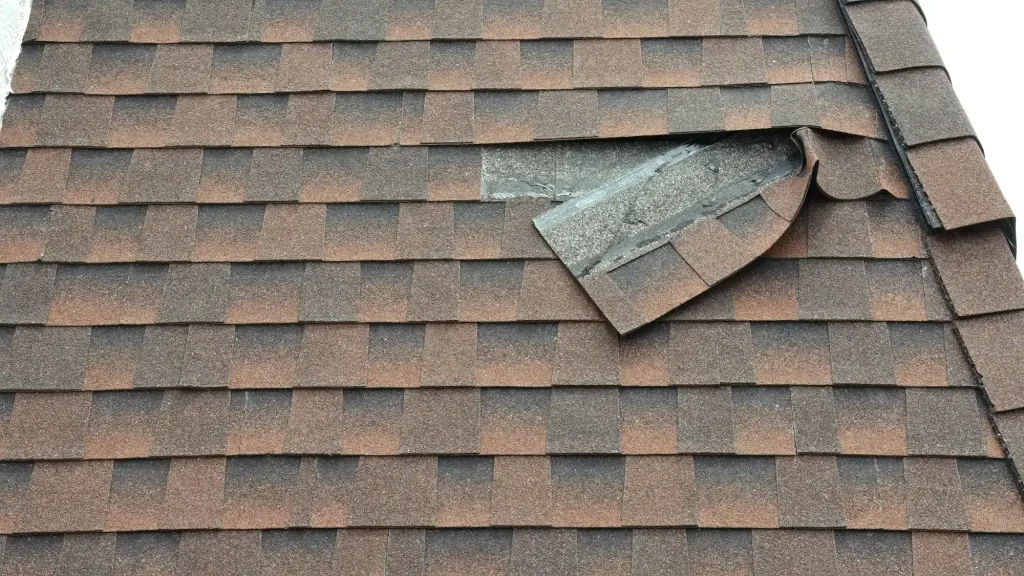
Yes — every municipality in Monmouth County requires a permit before a full roof replacement begins. That applies whether you’re in Middletown, Howell, Marlboro, Freehold, Eatontown, Tinton Falls, Aberdeen, or anywhere else in the county. The permit is pulled from the municipal construction official’s office in whichever town the property is located, and the fees and processing timelines vary by municipality.
The minimum permit fee in New Jersey is $76, though most towns charge based on the estimated value of the project, which means the permit cost scales with the size of the job. We handle the permit application, the required inspections, and the documentation that the work was completed to code as part of every project.
What you want to avoid is a contractor who either skips the permit entirely or leaves the permit application in your hands without explaining the process. Both are red flags. The permit isn’t just a formality — it’s the mechanism that ensures the work is inspected and meets the standards your municipality requires. For homeowners in coastal Monmouth County communities like Rumson, Sea Bright, or Spring Lake, where wind load requirements and building codes reflect the area’s exposure to Atlantic weather, that inspection step carries real weight.
One more thing worth knowing: under New Jersey law, you have a three-business-day right to cancel a signed home improvement contract, as long as work hasn’t started. That right can’t be waived. If a contractor pressures you to let them start immediately after signing, they may be trying to eliminate your window to cancel.
Roof Replacement Cost in Essex County, NJ: What to Expect in 2025
Roofing costs in New Jersey have moved noticeably over the past year. In 2025, a standard asphalt shingle roof replacement on a mid-sized home typically falls between $9,000 and $18,000, with most homeowners in Monmouth County landing around $12,000 to $15,000. Asphalt shingles that averaged $4.25 to $8.50 per square foot in 2024 now run closer to $5.60 per square foot on average.
Labor is typically the larger portion of the bill — roughly 60% of the total project cost, with materials making up the remaining 40%. Labor rates across most NJ counties run between $2.50 and $4.50 per square foot for installation. Those numbers shift based on roof pitch, accessibility, the complexity of the existing system being removed, and the specific materials being installed.
One thing that throws off a lot of homeowners is getting three quotes with dramatically different numbers and not knowing how to compare them. A lower quote isn’t automatically a better deal. It can reflect skipped permits, inferior materials, unlicensed subcontractors, or a workmanship warranty that’s barely worth the paper it’s printed on. What you’re buying isn’t just the shingles — it’s the installation, the cleanup, and the accountability if something goes wrong in year three.
For homeowners in Monmouth County, we currently offer $500 off any full roof replacement, plus a 10% discount for senior citizens. Same-day free estimates are available Monday through Sunday, 5:00 AM to 10:00 PM, including emergency situations where you can’t wait until next week for someone to show up.
How to Choose the Right Roofing Contractor in Essex County, NJ
The short version: verify the registration number, confirm the insurance, ask for warranty terms in writing, and make sure the contractor is pulling the permit. Those four steps alone will eliminate most of the risk in hiring a roofer.
The longer version is that the contractor you hire matters as much as the materials they use. A roof installed by someone cutting corners will fail before its time, regardless of what the shingles are rated for. Forty years of work in Monmouth County and Bergen County has taught us that the jobs homeowners regret are almost never the ones where they paid a fair price to someone they could trust — they’re the ones where they went with the lowest bid and found out why it was lowest.
If you’re in Monmouth County or the surrounding Essex County area and want a straightforward conversation about your roof, A Russo Roofing & Siding is available seven days a week. No pressure, no upsell — just an honest assessment and a written estimate you can actually compare.