
Summary:
You’re looking at roof replacement quotes and the numbers don’t match up. One contractor mentions standing seam, another talks about vertical seam panels, and a third is pushing architectural profiles. The prices range from $12,000 to $35,000, and nobody’s explaining why.
Here’s what actually matters: standing seam steel roofing isn’t one product. It’s a category of engineered systems with real performance differences. Some use snap-lock connections, others require mechanical seaming. Panel heights range from 1″ to 2″ depending on your roof’s needs. The fastening method determines how well your roof handles Monmouth County’s weather for the next 50 years.
Understanding these differences helps you choose the right system and avoid paying for features you don’t need. Let’s break down what standing seam actually means and which variations make sense for residential roofing.
Standing Seam Metal Roofing Systems Complete Guide
Standing seam steel roofing uses wide, flat panels with raised vertical seams that run from your roof’s ridge to the eaves. The defining feature is concealed fasteners—no screws penetrate the panel surface. Instead, clips or hidden flanges secure everything underneath, where weather can’t reach them.
This matters because exposed fasteners are the weak point in any metal roof. Screws loosen over time as panels expand and contract with temperature changes. Rubber washers degrade from UV exposure. Water finds its way through. Standing seam eliminates that entire failure mode.
The panels themselves are typically 12″ to 18″ wide with seams raised 1″ to 2″ above the flat surface. Those raised seams interlock—either snapping together or mechanically crimped—creating a continuous weather barrier. Steel panels are roll-formed to exact lengths, so you get custom-fit coverage with minimal seams running across your roof.
Vertical Seam Metal Roofing
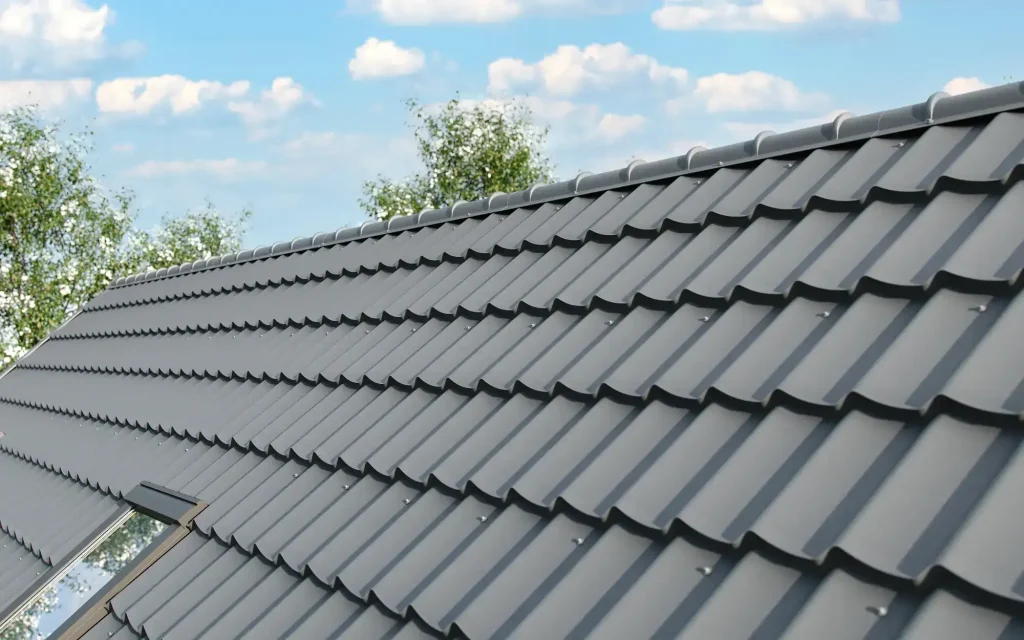
Vertical seam metal roofing is the standard residential standing seam system. The term “vertical” simply describes how the seams run—straight up and down from eave to ridge. It’s not a separate category from standing seam; it’s the most common type.
Most vertical seam panels feature 1.75″ high ribs spaced 16″ apart. This height provides enough structural rigidity to install over either solid decking or open framing. The panels use hidden clips that attach to your roof deck, then the next panel snaps over those clips, locking everything together while allowing thermal movement.
You’ll see vertical seam panels in 12″, 16″, or 18″ widths. The 16″ width hits the sweet spot for residential applications—wide enough to cover roof area efficiently but not so wide that oil canning becomes an issue. Oil canning is that wavy appearance some metal roofs develop when panels can’t handle stress properly.
The clip system matters more than most homeowners realize. Quality clips are engineered to let panels slide slightly as metal expands in summer heat and contracts in winter cold. This movement is normal and necessary. Without it, you get fastener withdrawal, panel buckling, or stress wrinkles.
Vertical seam works well on roofs with a 3:12 slope or greater. That’s a fairly standard residential pitch. Steeper roofs handle water runoff better, but the interlocking seams and concealed fasteners make vertical seam panels watertight even on lower slopes compared to exposed fastener systems.
For Monmouth County homes, vertical seam steel roofing handles nor’easters and coastal humidity effectively. The raised seams shed water quickly, preventing the pooling and ice dam issues that plague asphalt shingles. Salt air doesn’t affect properly coated steel panels the way it corrodes exposed fasteners.
Installation takes longer than corrugated metal or shingles because precision matters. Panels must align correctly for seams to interlock properly. Clips need proper spacing to support wind loads without restricting thermal movement. This is why finding experienced installers matters—mistakes during installation create problems that won’t show up until years later.
Architectural Standing Seam Metal Roof
Architectural standing seam metal roof systems are the premium option within the standing seam category. They feature taller seams—typically 2″ high instead of the standard 1.75″—and often include design elements like striations in the flat pan area to minimize oil canning.
The term “architectural” signals enhanced aesthetics and performance. These panels deliver cleaner lines, crisper seam definition, and a more refined appearance that works well on custom homes or properties where curb appeal matters. But the benefits aren’t just cosmetic.
Taller seams provide better water management on complex roof geometries. If your home has multiple valleys, dormers, or roof planes that intersect, the extra seam height helps direct water flow more effectively. The raised profile also increases the panel’s structural strength, allowing for longer panel runs without mid-span support.
Architectural profiles typically use mechanical seaming rather than snap-lock connections. A seaming machine crimps the panel edges together on-site, creating a double-lock seam that’s more weather-resistant than snap-together systems. This adds labor time and cost—expect to pay 20-30% more than standard vertical seam—but the result is a roof system engineered for extreme conditions.
These systems often come with striations or ribbing in the flat areas between seams. Those shallow ribs aren’t decorative. They add stiffness to prevent the waviness that can occur when large, flat metal surfaces experience stress. The striations break up the visual plane, making any minor oil canning virtually invisible.
Color options expand with architectural systems. Most manufacturers offer PVDF paint finishes in dozens of colors, from traditional earth tones to modern grays and even bold accent colors. The PVDF coating resists fading and chalking far better than standard painted finishes, maintaining color integrity for 30-40 years.
For Monmouth County properties, architectural standing seam makes sense when you’re planning to stay long-term and want a roof that enhances home value. The superior weathertightness matters in coastal areas where wind-driven rain can find weak points in lesser systems. The enhanced appearance helps if you’re in a neighborhood where homes compete on curb appeal.
Installation requires specialized equipment and expertise. The mechanical seaming machines aren’t something general roofers typically own. You need contractors who specifically focus on architectural metal roofing and understand how to detail valleys, ridges, and penetrations properly. Poor installation undermines every advantage these systems offer.
Best Standing Seam Metal Roof Profiles and Options
Choosing the best standing seam metal roof comes down to matching panel characteristics to your specific needs. There’s no universal “best” option—just systems better suited to different applications, budgets, and performance requirements.
Panel gauge matters. Most residential standing seam uses 24-gauge steel. That’s 0.025″ thick—substantial enough to span between clips without flexing, but not so heavy that it creates structural load issues. Some contractors try to sell 26-gauge as equivalent, but it’s 30% thinner and prone to denting and oil canning. Stick with 24-gauge minimum for standing seam applications.
The fastening method separates good systems from great ones. Snap-lock panels use male and female legs that click together, with clips underneath supporting the connection. They install faster and cost less than mechanically seamed options. For most residential roofs with standard slopes and exposure, snap-lock performs well.
Standing Ridge Metal Roofing

Standing ridge metal roofing refers to how the ridge cap—the peak where two roof planes meet—gets finished on a standing seam system. It’s not a separate type of metal roof; it’s a critical detail that affects both appearance and performance.
The ridge cap on a standing seam roof needs to accommodate the raised seams while providing weathertight coverage. Most systems use a specially formed ridge cap that sits on top of the seams, secured with clips or fasteners that match the panel attachment method. This creates a clean, finished look while allowing the panels underneath to move with thermal expansion.
Some ridge caps are flat, sitting low over the seams for a subtle profile. Others feature a raised design that emphasizes the roof’s peak line. The choice affects aesthetics more than performance, though raised ridge caps can improve ventilation by creating airflow channels at the roof’s highest point.
Proper ridge installation prevents the most common failure point on standing seam roofs. If the ridge cap doesn’t account for panel movement, you get stress concentration where panels meet the ridge. Over time, this can cause fastener withdrawal or panel buckling. Quality installers use expansion clips or slotted fastening points that let panels slide without compromising the ridge seal.
For Monmouth County homes, ridge details matter during winter. Snow accumulation at the ridge can create ice dams if ventilation isn’t adequate. A properly designed standing ridge allows air movement while preventing wind-driven rain from penetrating. This is especially important on lower-slope roofs where water doesn’t shed as quickly.
Ridge venting integrates well with standing seam systems. Continuous ridge vents can be incorporated into the cap design, providing consistent attic ventilation along the entire roof peak. This helps control moisture and temperature in your attic space, extending the life of both your roof and your home’s structure.
Color-matched ridge caps maintain the roof’s visual continuity. Most manufacturers offer ridge components in the same PVDF finishes as their panels, so everything coordinates. Some homeowners choose contrasting ridge caps as an architectural accent, but matching colors typically look cleaner and more professional.
The ridge is where you’ll see quality craftsmanship—or lack of it. Experienced installers know how to flash the ridge properly, seal end caps, and ensure every fastener is placed correctly. Shortcuts at the ridge often don’t show up as leaks immediately, but they will within a few years when thermal cycling and weather exposure take their toll.
Steel Roofing Material and Coating Options
Steel roofing material comes in several substrate types, each with different corrosion resistance and cost profiles. Galvalume is the most common—a steel core coated with an aluminum-zinc alloy that provides excellent rust protection. It’s the industry standard for standing seam panels and offers the best balance of performance and cost.
Galvanized steel uses a pure zinc coating instead of aluminum-zinc. It costs less than Galvalume but doesn’t resist corrosion as well, especially in coastal environments. For Monmouth County properties within a few miles of the ocean, Galvalume is the better choice. The aluminum content in the coating handles salt air exposure more effectively.
The coating system applied over the steel substrate determines how your roof looks and how long that appearance lasts. PVDF coatings—often called Kynar 500 after the resin used—represent the premium option. These coatings resist fading, chalking, and weathering for 30-40 years. They cost 30-40% more than standard painted finishes but maintain color integrity throughout your roof’s lifespan.
SMP coatings are the economy alternative. They offer decent protection and come in fewer colors, but they fade noticeably within 10-15 years. For a roof you’re expecting to last 50+ years, spending extra for PVDF makes sense. You don’t want a roof that performs well structurally but looks washed out after a decade.
Color selection affects more than aesthetics. Lighter colors reflect more solar radiation, reducing heat absorption and lowering cooling costs. Darker colors absorb heat, which can be beneficial in colder climates but increases air conditioning load in summer. For New Jersey’s climate, mid-tone colors offer a good compromise—they don’t show dirt as readily as light colors and don’t amplify heat like dark shades.
Bare Galvalume is an option some homeowners choose for its industrial aesthetic and natural weathering characteristics. It develops a matte patina over time as the coating oxidizes slightly. This doesn’t affect performance—the corrosion protection remains intact—but the appearance evolves. Some people love the natural metal look; others prefer the consistency of painted finishes.
Warranty coverage varies significantly by coating type. PVDF finishes typically come with 30-40 year paint warranties that cover fading and chalking beyond specified limits. SMP warranties are shorter, usually 20-25 years. Bare Galvalume warranties focus on substrate integrity rather than appearance. Understanding what’s actually covered helps you evaluate the real cost of different options.
For standing seam steel roofing in coastal New Jersey, Galvalume substrate with PVDF coating represents the best long-term value. You get corrosion resistance that handles humidity and occasional salt air exposure, plus color retention that keeps your roof looking good for decades. The upfront premium pays off in performance and appearance over the roof’s lifetime.
Choosing the Right Standing Seam System for Your Home
Standing seam steel roofing delivers performance that justifies the investment when you understand what you’re actually buying. The concealed fastener design, engineered panel profiles, and quality coatings create a roofing system that handles Monmouth County weather for 50-70 years with minimal maintenance.
The right system for your home depends on your roof’s complexity, your budget, and how long you plan to stay. Standard vertical seam with snap-lock connections works well for most residential applications. Architectural profiles with mechanical seaming make sense for complex roofs or when enhanced appearance matters. Either way, 24-gauge steel with PVDF coating provides the durability and appearance retention you want.
Installation quality determines whether you get the performance these systems are capable of delivering. We bring over 40 years of experience installing standing seam systems in Monmouth County, with owner supervision on every project ensuring proper technique and attention to detail. Our 30-year labor warranty and 20-year workmanship warranty back up that commitment to quality.