
Summary:
A storm hits overnight. You walk outside the next morning, see shingles in your yard, and before you’ve even had coffee, someone’s knocking on your door offering a “free inspection.” It feels helpful. It might not be.
After every major storm in Monmouth and Bergen County, out-of-town contractors flood the area — some legitimate, many not. The problem is they all look the same at first glance. This page will help you understand what separates a qualified storm damage contractor from a storm chaser, what the right post-storm process actually looks like, and how to protect yourself before you let anyone near your roof.
Storm Damage Repair Contractors: What the Right One Actually Does
A legitimate storm damage repair contractor doesn’t just fix what’s visibly broken. We document everything — damage type, extent, and cause — in a format your insurance company can actually use. We pull the required permits, use materials rated for your area’s conditions, and back our work with a warranty we’ll still be around to honor five years from now.
That last part matters more than most homeowners realize. A contractor who’s here today and gone next month has no stake in whether your roof holds up through the next nor’easter. We’ve been working in Monmouth and Bergen County for over 40 years, which means we have every reason to get it right the first time.
How to Tell a Storm Chaser from a Legitimate Contractor

The door-to-door visit is the most common red flag — but it’s not the only one. Storm chasers are professionals at appearing credible. They have business cards, branded trucks, and a smooth pitch about how your insurance will cover everything. Here’s what actually separates them from a contractor you can trust.
They can’t produce a New Jersey Home Improvement Contractor (HIC) license number. This is a state requirement for anyone performing home improvement work in NJ. Every legitimate contractor has one. Ours is #13VH13248500 — publicly verifiable through the NJ Division of Consumer Affairs in about two minutes. If a contractor hesitates or can’t give you a number, that’s your answer.
They pressure you to sign on the spot. Urgency is a sales tactic, not a roofing reality. Yes, you want to address damage quickly, but a contractor who won’t give you time to review the estimate, check credentials, or get a second opinion is working against your interests, not for them. The FTC Cooling-Off Rule gives you three business days to cancel most door-to-door contracts — but the better move is to not sign under pressure in the first place.
They offer to waive your deductible. This sounds like a win. It’s actually insurance fraud — illegal in New Jersey and most other states. What it usually means in practice is that the contractor plans to inflate the invoice to your insurer to cover the difference, which can expose you to fraud liability as well. We would never make this offer.
They can’t tell you who manufactured the materials they’re using or whether they’re an authorized installer. Owens Corning, GAF, CertainTeed — these manufacturers have authorization programs that require training, quality standards, and ongoing accountability. Authorized installers can offer extended manufacturer warranties that unlicensed operators simply can’t access. If a contractor shrugs at the question, that tells you something about what’s going on your roof.
Finally, check whether they’re actually pulling permits. Roofing work in New Jersey requires municipal permits in most cases. Storm chasers skip them to save time. Unpermitted work has to be disclosed when you sell your home, can stall a closing, and may require costly remediation to bring up to code. Worse, if your insurer discovers the work was done without permits by an unlicensed contractor, they can deny any future claims related to that work entirely.
What a Professional Roof Damage Inspection Actually Looks Like
A roof damage inspection from a qualified contractor is not a guy on a ladder for four minutes. A proper inspection documents the type of damage (wind, hail, impact, water intrusion), its extent across the roof system, and the likely cause — all in writing, with photos, and using terminology that insurance adjusters recognize and require.
This matters because your insurance company isn’t going to take a contractor’s word for it. They’re going to send their own adjuster, and the documentation we provide either supports your claim or creates gaps that adjusters use to reduce or deny it. The difference between a successful claim and a frustrating denial often comes down to how well the initial damage assessment was prepared.
A professional inspection also covers the full exterior — not just the shingles. A major storm rarely damages only one system. Gutters get ripped away. Siding gets dented or cracked. Flashing separates. A contractor who only looks at the roof and hands you a one-line estimate isn’t giving you a complete picture. After a nor’easter or a storm like Sandy, the damage you can see from the ground is rarely the whole story.
Here’s something worth knowing about the Jersey Shore specifically: coastal environments accelerate wear on roofing materials. Salt air corrodes metal components faster. Shingles in Rumson or Belmar are under different stress than shingles in Marlboro or Ramsey. We understand coastal exposure and assess damage accordingly — and we install materials rated for those conditions. That’s not a detail a storm chaser from out of state is going to factor in.
After the inspection, you should receive a written report with itemized costs, material specifications, and a clear scope of work. We provide that documentation before you sign anything.
Temporary Roof Repair After a Storm: What It Is and Why It Matters
When a storm tears shingles off your roof, the clock starts immediately. Every hour of open exposure is an opportunity for water to get into your attic, your insulation, your walls, and eventually your ceilings. Temporary roof repair — typically emergency tarping — is the first line of defense while the full scope of damage is assessed and a permanent repair is planned.
Done correctly, a temporary repair protects your home from further damage and preserves your ability to make an insurance claim. Done by the wrong person, it can actually complicate your claim or create new problems. Emergency tarping should be performed by a licensed contractor who documents the pre-tarp condition of the roof for insurance purposes — not a stranger who showed up uninvited and stapled a tarp down before you knew what was happening.
What Should Happen in the First 24–48 Hours After Storm Damage
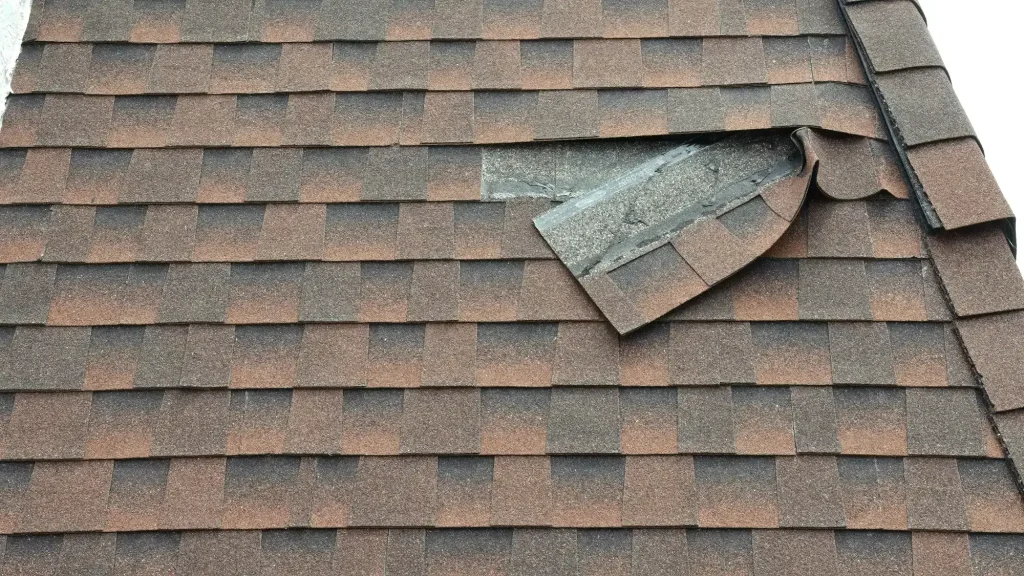
Most homeowners aren’t sure what order to do things in after a storm. Call the insurance company first? Find a contractor first? Document the damage yourself? The uncertainty is understandable, and storm chasers exploit it by showing up with ready answers that happen to serve their interests.
Here’s the sequence that actually protects you. First, document the visible damage yourself — photos from the ground, photos of any debris, photos of the interior if there’s water intrusion. Don’t wait for a contractor to do this. Your own timestamped photos are valuable evidence.
Second, call a licensed local contractor to get an emergency inspection scheduled. If there’s active water intrusion or significant structural exposure, ask about emergency tarping. We offer 24/7 availability and can respond the same day in most cases throughout Monmouth and Bergen County. This is not the moment to wait three days for an appointment.
Third, notify your insurance company. You’re required to report damage promptly under most NJ homeowner policies. But you don’t have to accept the first adjuster visit on their timeline if it conflicts with getting your home protected. Most policies allow for emergency temporary repairs to prevent further damage — we document everything before and after.
What you should not do in this window: sign a contract with a door-to-door contractor before verifying their credentials, agree to any arrangement that involves your deductible being “handled” for you, or let anyone perform work on your roof without a written estimate and a clear scope of work in hand. The post-storm window is exactly when bad actors are most active across Monmouth County, Bergen County, and the Jersey Shore after every significant storm. Knowing the sequence keeps you in control of a situation that can feel anything but.
How Roof Damage Insurance Works in New Jersey — and What Most Homeowners Get Wrong
Most NJ homeowner policies are open-peril policies, which means they cover storm damage from wind, hail, nor’easters, and tropical storms unless specifically excluded. Wind damage is the most common roof claim in the state. But “covered” doesn’t mean “fully paid” — and there are a few New Jersey-specific realities that catch homeowners off guard.
The first is the wind deductible. Along the Jersey Shore, many insurers apply a separate wind deductible of 1% to 5% of your dwelling coverage limit — not a flat dollar amount. On a $500,000 home, a 2% wind deductible means $10,000 comes out of your pocket before the insurer pays a cent. Some policies in coastal Monmouth County also carry a separate, higher deductible for named storms. If you haven’t read your declarations page recently, now is a good time.
The second is ACV vs. RCV coverage. ACV stands for Actual Cash Value — meaning the insurer pays what your roof is worth today, accounting for depreciation, not what it costs to replace it. RCV is Replacement Cost Value, which covers the actual cost of a new roof using comparable materials. Many NJ carriers have shifted older roofs — those over 10 to 15 years old — to ACV-only coverage. On a 20-year-old roof, that might mean the insurer pays 30% to 50% of your replacement cost. Understanding which coverage you have before a storm hits is far better than finding out afterward.
The third thing homeowners consistently get wrong is thinking the contractor they hire doesn’t affect their claim outcome. It does. An insurer who discovers that work was performed by an unlicensed contractor — or without required permits — can deny claims related to that work. We provide thorough, professional documentation in the format adjusters use to help your claim move forward. A contractor who hands you a napkin estimate and disappears after cashing your check does not. The contractor you choose is not a neutral decision when insurance is involved.
Working with a contractor who understands both sides of this — the roofing and the claims process — is the practical difference between a claim that closes smoothly and one that drags on for months. After Hurricane Sandy, homeowners in Monmouth County learned this the hard way. The contractors who helped homeowners document and navigate that process correctly were the ones with established local relationships and a clear understanding of what insurers actually need.
Choosing a Storm Damage Contractor in Monmouth or Bergen County, NJ
After a storm, the decision you make about who fixes your roof is one of the most consequential home decisions you’ll face — and you’re usually being asked to make it under stress, on a short timeline, with incomplete information. That’s exactly the environment storm chasers are designed to exploit.
The short version: verify the HIC license, check how long they’ve been operating in this specific market, ask about warranty terms in writing, and don’t sign anything under pressure. A contractor who’s been working in Monmouth and Bergen County for over 40 years, whose owner is on every job, and who backs their work with a 30-year labor warranty has a fundamentally different stake in your outcome than someone who drove in from out of state after seeing storm reports on the news.
If you’ve got damage and you’re not sure where to start, we offer same-day estimates and 24/7 emergency availability — no pressure, no gimmicks, just a straight assessment from a contractor who’s been in this community long enough to have a real reputation to protect.