
Summary:
After a nor’easter rolls through Monmouth County or a summer storm rattles Bergen County, a lot of homeowners do the same thing — they walk outside, look up, and think, “It’s probably fine.” Maybe it is. But the damage that costs the most is rarely the kind you can see from the driveway. A missing shingle is obvious. Rotting decking, failed flashing, and moisture working its way into your attic? Not so much. A professional roof inspection exists to find what you can’t. Here’s what that process actually looks like — and what you should know before you call us.
What Does a Professional Roof Inspection Actually Include?
A real inspection isn’t a contractor standing on your lawn squinting at your shingles. It means getting on the roof, getting into the attic, and documenting what we find — in writing, with photos. The exterior check covers shingle condition, flashing around the chimney and vents, the state of your gutters and drip edges, and any visible sagging or soft spots along the decking. The interior check — which a lot of contractors skip — is where you find the hidden stuff: moisture stains, mold, inadequate ventilation, and light coming through where it shouldn’t be.
The whole process typically takes 30 to 60 minutes for a standard home. What you walk away with should be a clear, written report that tells you what’s wrong, what’s borderline, and what’s fine — not a vague verbal summary designed to move you toward signing something.
What Do Roof Shingles Tell an Inspector About Your Roof's Health?
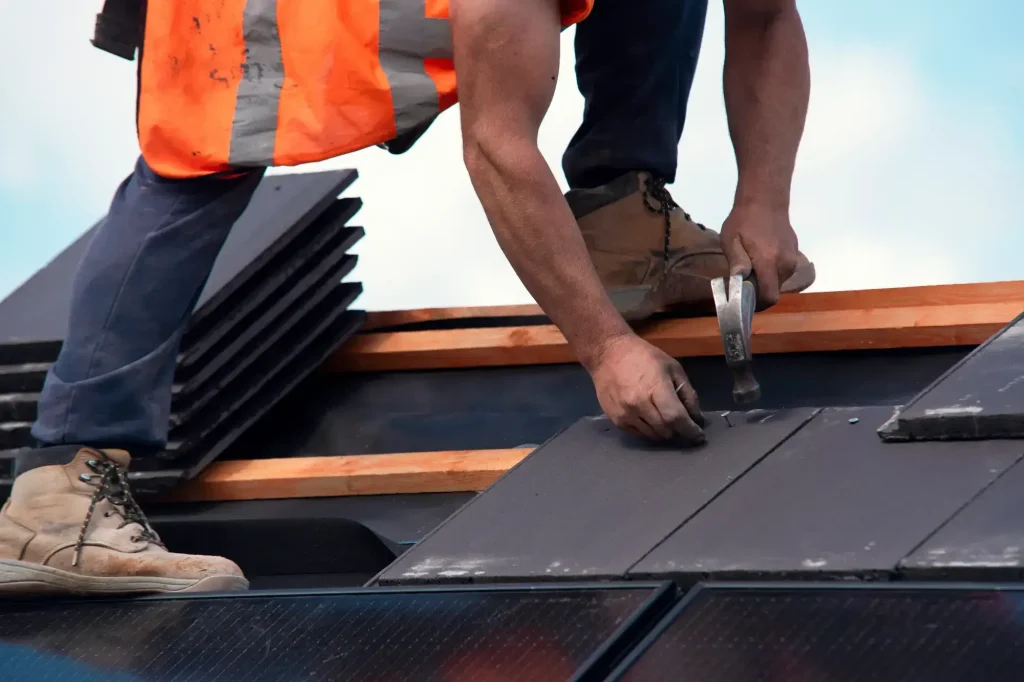
Shingles are the first line of defense, and they tell an experienced inspector a lot. The obvious issues — missing shingles, cracked sections, visible curling at the edges — are easy enough to spot. But the subtler signals matter just as much, and they’re easy to miss if you don’t know what you’re looking for.
Granule loss is one of the most important. Asphalt shingles are coated with granules that protect the fiberglass mat underneath from UV exposure. When those granules wear away, the shingle degrades quickly. You might notice it yourself by checking your gutters — if there’s a gritty, sand-like buildup collecting near the downspouts, your shingles are telling you something. Bald patches on the shingles themselves are visible up close but nearly impossible to catch from the ground.
Blistering is another one. It looks like small bubbles on the shingle surface and usually points to trapped moisture during manufacturing or, more commonly, poor attic ventilation — a problem that compounds over time. In New Jersey’s humid summers, inadequate ventilation accelerates shingle aging faster than the manufacturer’s lifespan estimates account for.
Then there’s age. Standard 3-tab asphalt shingles are typically rated for 15 to 20 years. Architectural shingles can go 25 to 30. But New Jersey’s climate — the freeze-thaw cycles in winter, the coastal salt air in Monmouth County, the heat and humidity in summer — puts more stress on roofing materials than drier climates do. A 20-year-old roof in Colts Neck or Rumson may have aged faster than the same roof would have in a different part of the country. That’s worth knowing before you assume you have years left.
We install Owens Corning, GAF, CertainTeed, and Ovation shingles — brands with strong manufacturer warranties — and as authorized installers, we can unlock warranty protection that contractors without that authorization simply can’t offer.
When Does a Roof Inspection Lead to Full Roof Replacement?
This is the question most homeowners are quietly dreading when they pick up the phone. And it’s a fair one, because nobody wants to spend money on an inspection only to find out they need to spend a lot more on a replacement roof. But knowing where you stand is always better than not knowing — especially when the alternative is a repair that buys you 18 months before the same conversation happens again.
An inspection tips toward recommending full roof replacement when the problems are widespread rather than isolated. One section of missing shingles after a storm is a repair. Granule loss across most of the surface, combined with shingles that are curling and a roof that’s already 20-plus years old, is a different conversation. Soft spots in the decking, multiple layers of shingles already installed (New Jersey building code generally allows no more than two), and flashing that can’t be effectively sealed are all signs that repair is just postponing the inevitable.
The attic inspection matters here too. If there’s evidence of long-term moisture intrusion — staining on the rafters, mold growth, insulation that’s been wet and compressed — the damage isn’t just on the surface. At that point, replacement isn’t just about the shingles. It’s about stopping a problem that’s already working its way into the structure of your home.
One thing worth knowing: if an inspection reveals that a full replacement is the right call, we currently offer $500 off any full roof replacement. It’s a straightforward discount — no complicated conditions attached. And because every replacement we do comes with a 30-year labor warranty, you’re not just getting a new roof. You’re getting one that’s backed for the long term. The industry standard for labor warranties is around five years. Thirty is a different commitment entirely.
For homeowners in Manalapan, Marlboro, Shrewsbury, or anywhere else in Monmouth County with a home built in the 1970s, 80s, or 90s — a lot of those roofs are at or past their expected lifespan. The same is true for much of Bergen County’s suburban housing stock. An inspection doesn’t obligate you to do anything. It just tells you what you’re working with.
How New Jersey's Weather Makes Roof Inspections More Urgent Than Most People Realize
New Jersey isn’t gentle on roofs. Bergen County alone sees roughly 25 to 30 severe weather days a year — nor’easters, hail, high winds, thunderstorms. Monmouth County adds coastal exposure to that mix: Atlantic storm systems, elevated humidity, and salt air that corrodes metal roofing components faster than anything you’d deal with inland. Every season brings a different kind of stress, and those stresses compound over time.
The freeze-thaw cycle is particularly damaging. When water gets into a small crack, freezes, expands, and then thaws, it widens that crack a little more each time. Do that dozens of times over a winter and what started as a minor issue becomes a real one. Spring inspections exist specifically to catch what winter left behind.
Does Your Gable Roof Need Special Attention After a NJ Storm?
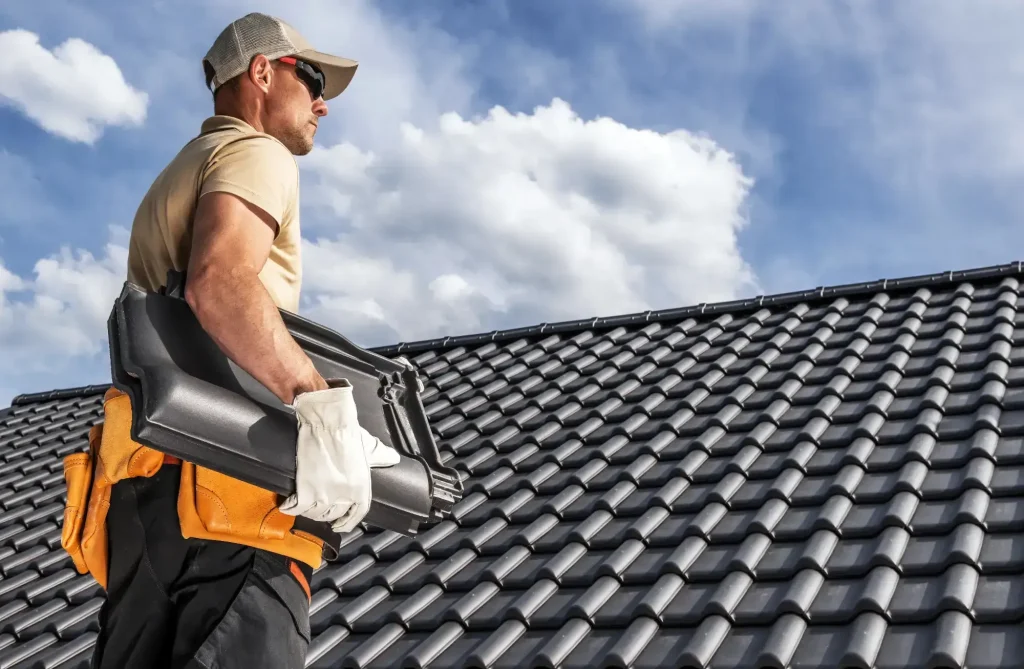
Most homes in Monmouth and Bergen Counties have some version of a gable roof — the classic shape with two sloping sides meeting at a ridge. It’s the most common residential roof style in New Jersey’s suburban housing stock, and it has a few specific vulnerabilities worth understanding.
The gable ends — the triangular walls at each end of the roof — are particularly exposed to high winds. During a nor’easter, wind can get underneath the gable-end overhang and create uplift, which is exactly as bad as it sounds. Shingles along the rake edges (the sloped edges at the gable ends) are among the first to lift or go missing in a high-wind event. After any significant storm, those areas deserve close attention.
The ridge line, where the two roof slopes meet at the top, is another primary failure point. Ridge cap shingles take a beating from every direction, and when they start to fail, water has a direct path into the structure. Valley flashing — where two roof planes meet and channel water down — is also a high-risk area. Water concentrates there, and if the flashing has separated or corroded, it’s one of the most common sources of interior leaks.
A ground-level look after a storm can tell you if shingles are obviously missing. It won’t tell you about lifted flashing, cracked ridge caps, or the condition of the decking underneath. That’s what a professional inspection is for. And in a coastal county like Monmouth, where storm intensity is amplified by the Atlantic, waiting to see if a problem develops isn’t a strategy — it’s just a longer route to the same repair bill.
What NJ Homeowners Should Know About Roof Inspections and Insurance Claims
This is where a lot of homeowners hit a wall. The storm happened. There’s clearly damage. But navigating the insurance claim process — knowing what to document, how to document it, and how to make sure the adjuster doesn’t attribute storm damage to “normal wear and tear” — is a different skill set entirely.
A professional inspection report with photo documentation is often what separates a paid claim from a denied one. Insurers in New Jersey are getting stricter about roof age and condition. There’s a documented trend of policies being non-renewed when roofs reach a certain age, and adjusters have financial incentive to minimize what they pay out. A written inspection report from a licensed contractor, with timestamped photos taken shortly after a storm event, gives you something concrete to stand behind.
We walk homeowners through this process. That means documenting the damage properly, explaining what’s covered under a typical homeowner’s policy, and helping you present the claim in a way that reflects the actual scope of what happened. It’s not a service every roofing contractor offers. Most will fix the roof and leave the insurance conversation to you.
For homeowners in Hackensack, Ridgewood, Teaneck, or anywhere in Bergen County who’ve dealt with storm damage and an insurance company in the same week — you know how overwhelming that combination can be. Having a contractor who’s done this before, who knows what adjusters look for and how to document damage correctly, makes a real difference. Our contractor license number is #13VH13248500, verifiable through the NJ Division of Consumer Affairs, and we carry the insurance coverage required under New Jersey’s Home Improvement Contractor registration framework.
One more thing worth knowing: for inspections tied to insurance claims, the inspection itself is often free. The cost of a standard residential inspection in New Jersey typically runs between $150 and $400. But when we’re helping document damage for a claim, the priority is getting you the information you need — not adding another bill to an already stressful situation.
How to Find a Roof Inspector in New Jersey You Can Actually Trust
The roofing industry has its share of contractors who appear after storms, pressure homeowners into quick decisions, and ask for large deposits upfront. The simplest protection is verification: ask for the contractor’s HIC registration number, confirm they’re insured, and check their Google reviews for patterns — not just the rating, but what people actually say.
What you want is someone who gets on the roof, checks the attic, gives you a written report, and explains what they found without a hard sell attached. Someone who’s been doing this long enough to have seen what New Jersey weather actually does to roofs over time.
At Russo & Son Roofing, Siding & Gutters, we’ve been serving Monmouth and Bergen County homeowners since 1990. If you want a straight answer about where your roof stands — and a same-day estimate if anything needs to be done — give us a call.