Summary:
You’re staring at a water stain spreading across your ceiling, or maybe you’re hearing that awful dripping sound. Your roof is leaking, and you need answers right now—not next week when three contractors finally return your calls.
Here’s what matters: water doesn’t wait, and the decisions you make in the next few hours will determine whether this stays a manageable repair or turns into a structural nightmare. This guide covers exactly what to do when your roof leaks, how to stop damage from spreading, what emergency repairs actually cost, and how to find contractors in Monmouth County, NJ who show up when they say they will. You’ll walk away knowing how to protect your home and make informed decisions when you’re under pressure.
Let’s start with what’s happening right now and what you need to do first.
What to Do Immediately When You Discover a Leaking Roof
The moment you spot water coming through your ceiling, you’re in damage control mode. Your first priority isn’t finding the perfect contractor or getting the best price—it’s stopping water from destroying more of your home.
Move furniture, electronics, and anything valuable away from the leak. Place buckets or containers to catch dripping water and protect your flooring. If water is near light fixtures, outlets, or electrical wiring, turn off power to that room at your breaker panel. Water and electricity create serious hazards, and your safety matters more than your ceiling.
Document everything with photos and videos. Capture the ceiling stain, any active dripping, where water is pooling, and the suspected area on your roof if you can see it safely from the ground. Most homeowners insurance policies require notification within 24 to 48 hours of discovering damage, and photos serve as proof for your claim. Take these now, before you start any temporary fixes.
Emergency Roof Leak Repair: Temporary Fixes That Actually Work
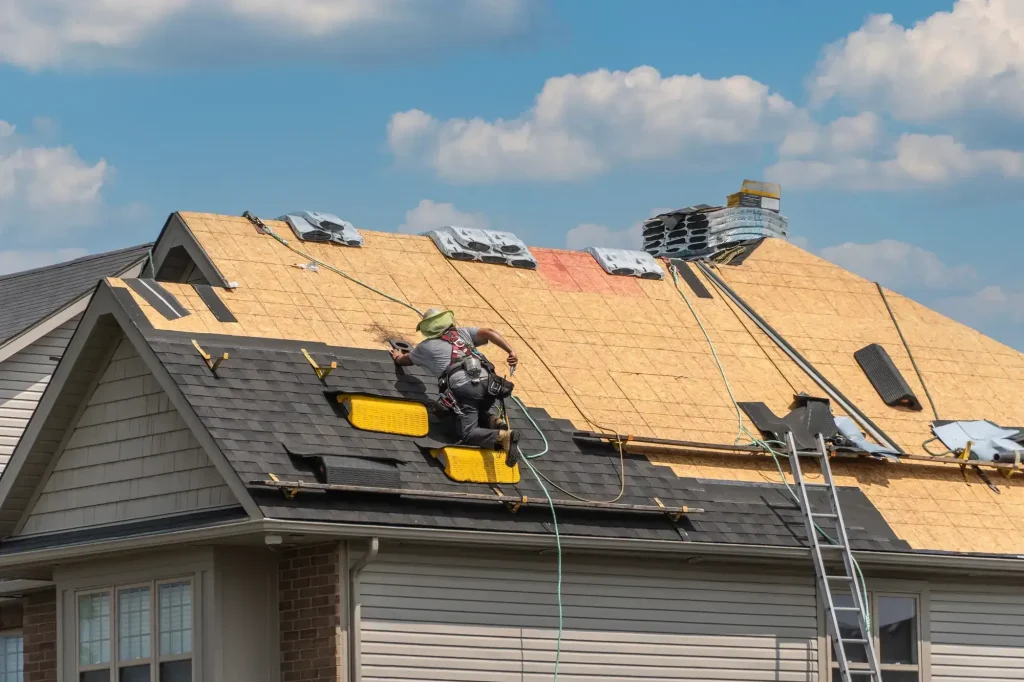
If water is actively pouring into your home during a storm and you can’t get a contractor there immediately, you need a temporary solution that holds until professionals arrive. The key word here is temporary—these are not permanent repairs, and attempting them yourself comes with real risks.
If you can safely access your attic, look for the entry point. Water travels along rafters and roof decking before dripping through your ceiling, so the leak source is rarely directly above where you see water inside. Once you locate where water is entering, place a bucket underneath to catch it and prevent it from spreading through insulation.
For exterior temporary fixes, heavy-duty tarps can prevent more water from entering. But here’s where most homeowners make critical mistakes. Driving nails through a tarp creates dozens of new leak points. The proper method involves sandwiching the tarp between two boards and securing the boards to your roof—not nailing through the tarp itself. The tarp needs to extend at least four feet beyond the damaged area on all sides because water travels horizontally under materials before entering your home.
Steep roofs, wet conditions, and working at heights during storms are dangerous. Falls from roofs and ladders cause thousands of injuries every year. If your roof pitch is steep, if it’s actively raining, or if you’re not confident working at that height, call for emergency roofing services instead. Most emergency roof leak repair in Monmouth County, NJ includes tarping services for $300 to $800, and that cost is typically covered by your homeowners insurance as “reasonable emergency mitigation.”
The reality is that DIY roof repairs often create more problems than they solve. Slathering roof tar over a leak traps moisture underneath, accelerating rot. Using cheap 2-4 mil tarps means they’ll tear within days from coastal winds. And missing the actual source of the leak means water keeps entering while you think you’ve fixed it. Professional contractors have the safety equipment, proper materials, and experience to secure your roof correctly the first time.
Water Damage Ceiling Repair: What Happens After the Leak
Once you’ve stopped active water intrusion, you’re left dealing with ceiling water damage. That brown stain isn’t just ugly—it’s evidence of what’s happening behind your drywall, and ignoring it leads to serious problems.
Water-soaked drywall loses structural integrity. If your ceiling is sagging, bulging, or feels soft to the touch, that’s water weight pulling down on compromised material. This is dangerous. Water-saturated ceilings can collapse suddenly, and the weight of soaked drywall, insulation, and trapped water creates a real safety hazard. Don’t try to fix this yourself. Get professionals involved who understand structural issues and can safely assess the damage.
Mold growth starts within 24 to 48 hours of water exposure. You might not see it yet, but if your ceiling stayed wet for even a day, mold is likely growing in the cavity above. Some molds produce toxins that make people sick, and once mold establishes itself, it spreads quickly through concealed spaces. This requires professional remediation, not just wiping down visible surfaces.
Ceiling water damage repair cost depends on the extent of the problem. Small stains from minor, one-time leaks might only need stain-blocking primer and paint after the area dries completely—maybe $200 to $500 if you hire it out. Moderate damage involving drywall replacement, fixing the water source, and treating potential mold growth runs $800 to $2,500. Severe damage affecting multiple rooms, requiring structural repairs, or involving extensive mold remediation can cost $2,500 to $10,000 or more.
The mistake homeowners make is trying to paint over water stains without addressing the source or ensuring everything is completely dry. The stain comes back, the patch fails, or mold starts growing behind the new paint. Proper ceiling leak repair means finding and fixing the roof problem first, thoroughly drying the affected area with fans and dehumidifiers, removing any compromised materials, treating for mold if necessary, and only then rebuilding and refinishing.
If your ceiling damage involves more than two feet of affected area, if you see or smell mold, or if the water source was contaminated (like from a toilet overflow), call professionals. The risk with DIY ceiling work isn’t just appearance—it’s missing hidden moisture, trapping mold inside the cavity, or working under unstable drywall that could give way.
Understanding Where Roof Leaks Actually Come From
When you see water dripping through your ceiling, your instinct is to look directly above that spot for the problem. That’s rarely where the leak actually is. Water enters your roof at one point, travels along rafters or roof decking—sometimes ten feet or more—and then drips through wherever it finds an opening.
This is why finding roof leaks is tricky and why homeowners who attempt DIY repairs often fail. They patch where they see water inside, but the actual entry point keeps letting water in. Understanding common leak sources helps you communicate effectively with contractors and recognize when you’re getting accurate assessments versus guesswork.
The most common culprits aren’t in the middle of your shingles—they’re at penetrations and transitions where different materials meet. These are the vulnerable points where water finds its way in.
Roof Damage from Flashing Failures and Penetrations

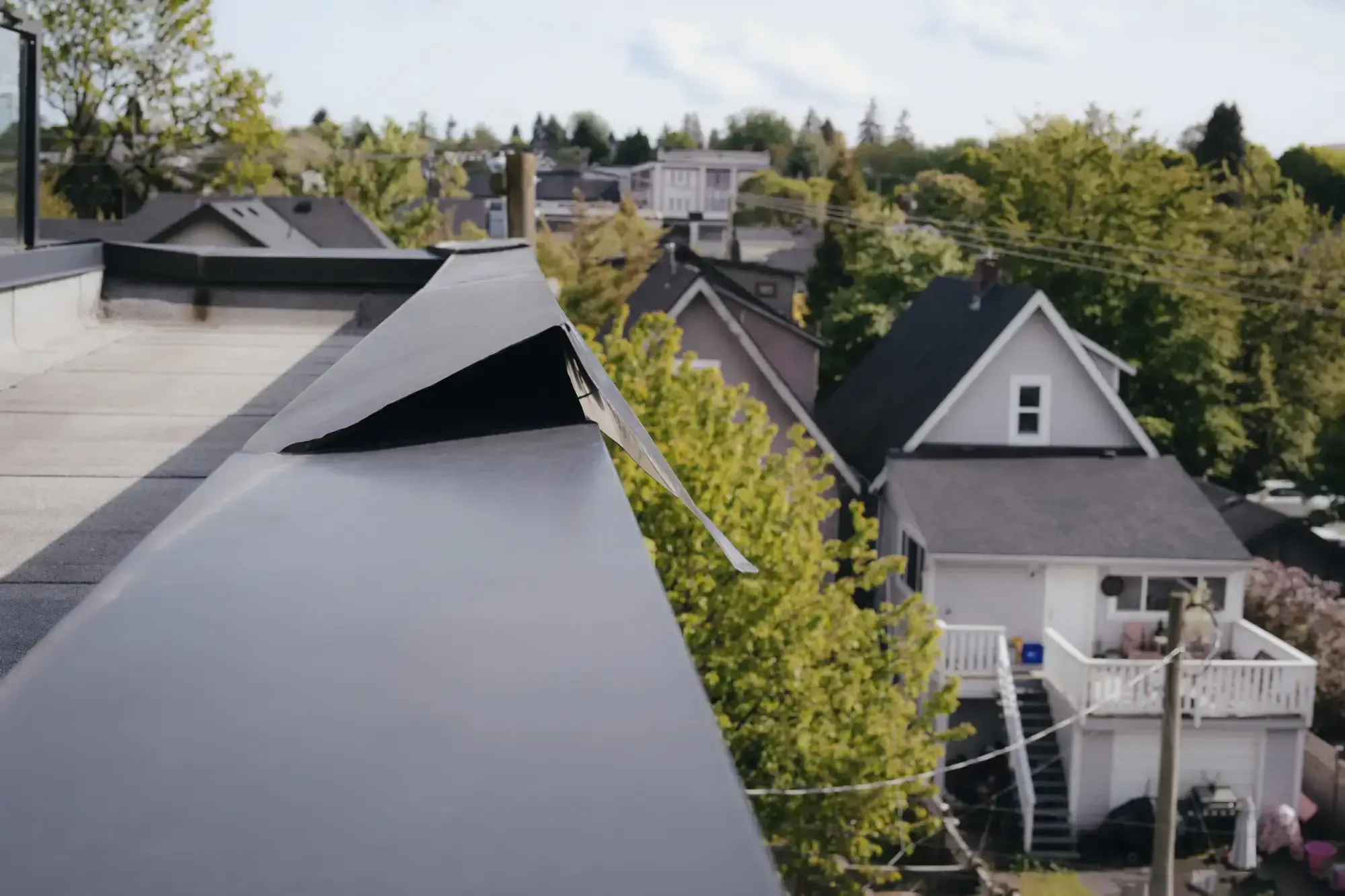
About 80% of roof leaks stem from flashing problems, not damaged shingles. Flashing is the metal material that seals joints where your roof meets vertical surfaces—chimneys, walls, dormers, skylights, and vent pipes. It creates a watertight barrier at these vulnerable transition points.
Chimney flashing fails when the sealant dries out, the metal corrodes, or thermal expansion causes it to pull away from the surface. In Monmouth County’s coastal environment, salt air accelerates corrosion significantly. Repairing chimney flashing typically costs $200 to $600, depending on the extent of the failure and whether surrounding materials need replacement.
Pipe boots are the number one source of roof leaks contractors see. These rubber seals surround the plumbing vent pipes that stick up through your roof. Sun exposure bakes the rubber until it cracks, shrinks, and pulls away from the pipe. Water runs straight down into your attic. Replacing a pipe boot is relatively inexpensive—usually $150 to $400—and takes about 30 to 60 minutes. If a contractor tells you a pipe boot leak will cost significantly more without explaining why, get a second opinion.
Skylight leaks happen when the internal window seals fail or when flashing around the skylight curb gets damaged. These repairs range from $300 to $800 for fixing seals and flashing, but can reach $2,800 if you need complete skylight replacement. The key is catching skylight problems early before water damages the surrounding roof deck.
Valley leaks occur where two roof planes meet at an angle, creating a V-shaped channel. Valleys carry more water than any other part of your roof, and they’re labor-intensive to repair correctly. Valley leak repairs typically run $300 to $1,500 depending on the size and severity of damage. Improper valley installation or deteriorated valley flashing are common issues, especially on older roofs.
Water Leakage in Roof from Shingle Damage and Storm Impact
While flashing causes most leaks, shingle damage creates obvious entry points that let water pour in during storms. Wind, age, and impact from debris cause shingles to crack, curl, lift, or blow off entirely. In Monmouth County, NJ, where nor’easters and coastal storms regularly produce 60+ mph wind gusts, shingle damage happens frequently.
High winds lift shingle tabs and break the seal strip that holds them down. In severe cases, entire sections of shingles rip off, exposing the underlayment beneath. Missing shingles show up as dark patches on your roof where the black underlayment is visible. If you see shingle pieces in your gutters or yard after a storm, that’s a clear sign you have damage.
Hail impacts crack shingles and knock off the protective granules that shield the asphalt from UV damage. Hail damage doesn’t always announce itself immediately—water might not start coming through until weeks or months later when the compromised shingles finally fail. This is why post-storm inspections matter even if you don’t see obvious problems right away.
Replacing damaged or missing shingles costs $200 to $600 for small areas. The biggest cost variable is matching. If your shingles are old or the manufacturer discontinued your specific color and profile, finding an exact match takes extra time and may require special ordering. Some contractors carry common shingle types on their trucks and can make repairs the same day. Others need to order specific products, which delays the repair but ensures a proper match.
Age-related shingle deterioration happens gradually. Shingles become brittle over time, especially from UV exposure and temperature cycles. Monmouth County’s weather pattern—snowy winters, humid summers, and unpredictable storms—accelerates this wear. Curling, cracking, or granule loss across large sections of your roof means you’re approaching the end of the roof’s useful life. At that point, repeated repairs become more expensive than replacement.
The freeze-thaw cycles common in New Jersey create unique challenges. Water seeps under shingles, freezes and expands, then thaws and contracts. This repeated cycle gradually lifts shingles and damages the seal, creating entry points for water. Ice dams—where snow melts, runs to the roof edge, and refreezes—force water back up under shingles, causing leaks. Proper attic ventilation and insulation help prevent ice dams, but once they form, they need professional attention to prevent serious damage.
Roof Leak Repair Services: Cost, Coverage, and What to Expect
When you call for roof leak repair services, you want to know three things: how much it costs, whether insurance covers it, and how long you’ll be dealing with this problem. The answers depend on what’s actually wrong with your roof and how quickly you caught it.
Minor roof repair for simple issues like replacing a pipe boot or fixing a few shingles typically costs $150 to $500. These are straightforward fixes that take a few hours and don’t require extensive material replacement. Moderate repairs involving flashing replacement, valley repairs, or larger sections of shingle replacement run $400 to $1,000. Major structural repairs—where water has damaged roof decking, insulation, or framing—can exceed $3,000 and sometimes reach $10,000 or more depending on the extent of the damage.
The national average for roof leak repair in 2026 is around $1,147, but costs in Monmouth County, NJ typically fall between $400 and $1,500 for most residential repairs. Labor accounts for 60% to 70% of your total bill, and emergency service calls add $100 to $300 in surcharges for after-hours or storm response.