Summary:
Your roof takes a beating in Monmouth County. Nor’easters, summer heat, coastal humidity, winter ice—it all adds up. And if you’re tired of replacing shingles every 15 years or dealing with leaks after every major storm, you’re probably looking at metal roofing for a reason. It lasts longer. Handles weather better. Saves you money on energy bills and constant repairs. But the options can feel overwhelming, and the upfront cost makes this decision feel like a big one. This guide breaks down what you actually need to know about metal roofing systems in New Jersey—from standing seam to copper, costs to installation—so you can make the right call for your home.
Metal Roofing Materials: Steel, Aluminum, and Beyond
Not all metal roofs are created equal. The material you choose affects everything from how long your roof lasts to what you’ll pay upfront and how it performs in Monmouth County’s weather. Steel, aluminum, copper, and zinc each bring different strengths to the table.
Steel roofing is the most common choice for good reason. It’s strong, affordable, and when coated with zinc or aluminum (galvanized or Galvalume), it resists corrosion for decades. Most steel roofs last 40-60 years with proper installation. Aluminum costs more but never rusts, making it ideal if you’re within 15 miles of the coast where salt air accelerates corrosion. It’s lighter than steel but softer, so hail and falling branches can leave dents.
Then you have premium metals. Copper develops that distinctive green patina over time and can last 70-100 years or more. Zinc offers similar longevity with a self-healing quality that protects scratches. Both are expensive—sometimes double or triple the cost of steel—but if you’re looking at this as a lifetime investment, the math starts to make sense.
Standing Seam Metal Roofers: What Makes Them Different
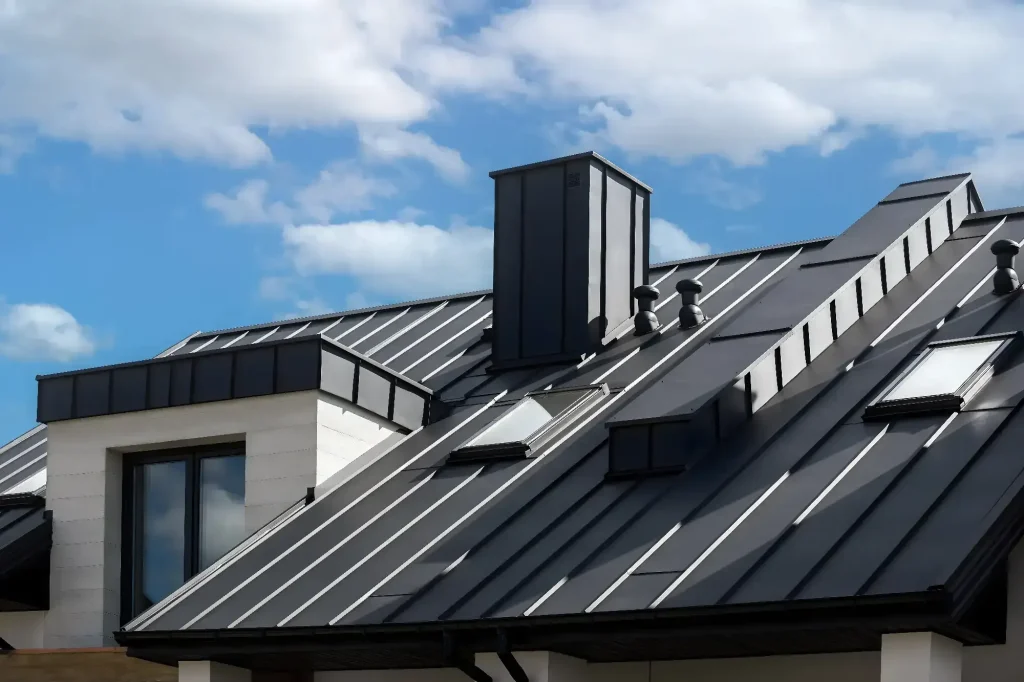
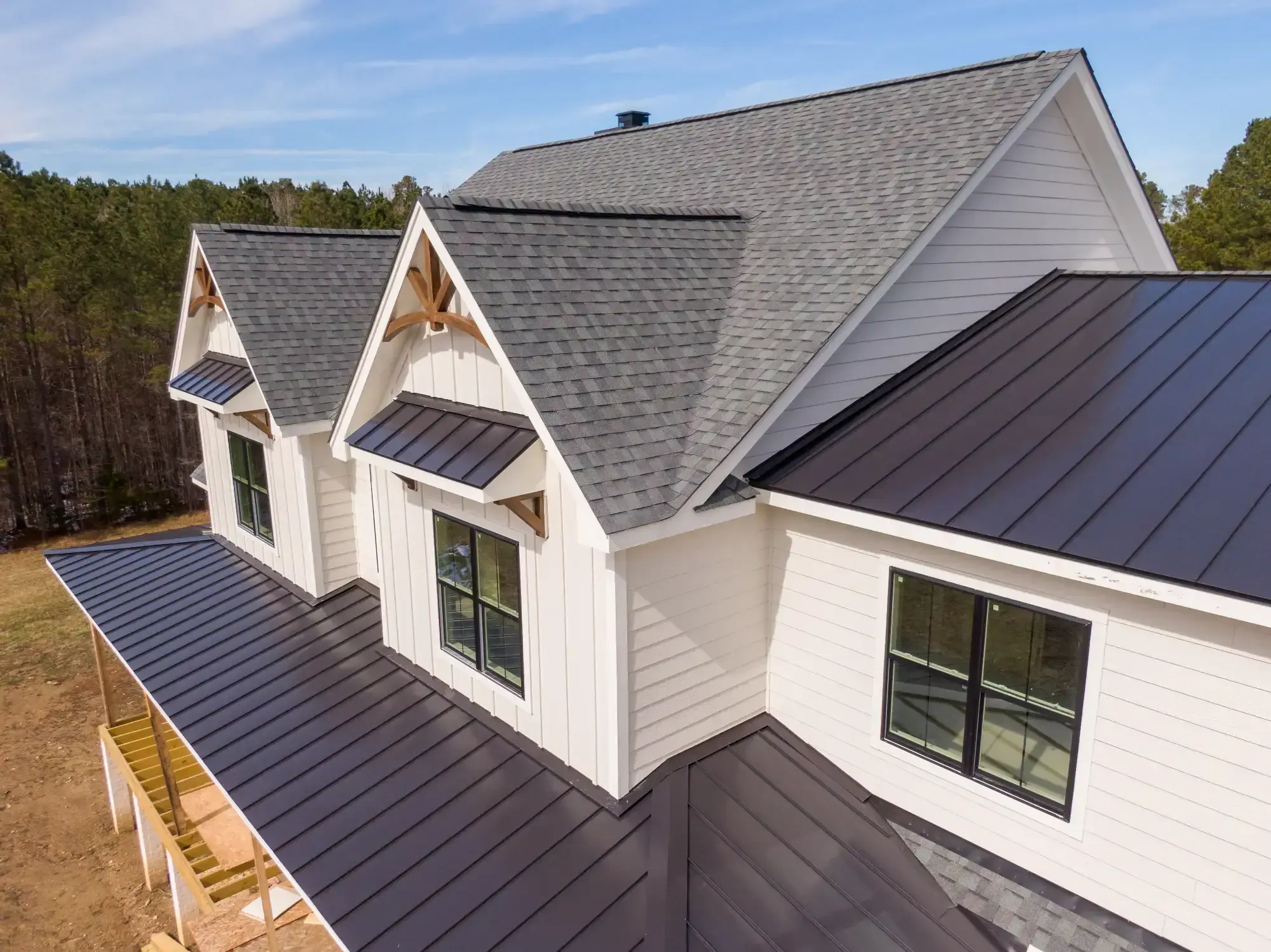
Standing seam is the most popular residential metal roofing style in Monmouth County, and for good reason. The panels feature vertical ribs with raised seams that interlock, creating a watertight barrier without exposed fasteners. That matters because exposed fasteners are the most common failure point on metal roofs—rubber washers degrade under UV exposure, and suddenly you’ve got leaks.
With standing seam, all fasteners hide beneath the panels. The seams either snap together or get mechanically crimped, allowing the panels to expand and contract with temperature changes without pulling apart. This design handles New Jersey’s freeze-thaw cycles better than any other metal roof system.
You’ll see two main types: snap-lock and mechanical seam. Snap-lock panels click together and cost less to install because they’re faster. Mechanical seam panels get crimped together with a special tool, creating a tighter seal that’s rated for higher wind speeds—often 140+ mph. If you’re near the coast or in an area that takes the brunt of storms, mechanical seam is worth the extra cost.
Standing seam roofs come in various panel widths, typically 12 to 19 inches. Wider panels mean fewer seams and a cleaner look, but they require more precision during installation. The panels run vertically from ridge to eave, so water sheds straight down without pooling. That’s critical in preventing ice dams during winter.
One thing to understand: standing seam costs more than corrugated or exposed fastener systems. You’re paying for the concealed fastener design, better weather resistance, and longer lifespan. But when you factor in that this roof will likely outlast you, the cost per year drops significantly compared to replacing asphalt shingles every 15-20 years.
Corrugated Metal Roofing for Residential Homes
Corrugated metal roofing features those familiar wavy panels you’ve seen on barns and industrial buildings. It’s making a comeback in residential applications, especially for homeowners who want the durability of metal at a lower price point. The panels are formed with alternating ridges and valleys, which adds strength and helps water run off efficiently.
The main difference between corrugated and standing seam is how they’re installed. Corrugated panels use exposed fasteners—screws with rubber washers that go through the panel into the roof deck. This makes installation faster and cheaper, but it also creates potential leak points down the road. Those rubber washers break down from sun exposure, and you’ll need to replace them every 10-15 years to prevent leaks.
That said, corrugated metal roofing still outlasts asphalt shingles by a wide margin. You’re looking at 20-30 years of solid performance if the roof is installed correctly and you stay on top of fastener maintenance. For homes with simpler roof lines or outbuildings where you want metal’s durability without the premium price, corrugated makes sense.
Corrugated panels come in steel, aluminum, and occasionally copper. Steel panels with a painted finish offer the best balance of cost and performance for most Monmouth County homes. The corrugated profile actually handles snow load well—the ridges add structural strength that flat panels don’t have. And if you’re going for a more industrial or farmhouse aesthetic, corrugated delivers that look better than any other metal roofing style.
The installation is straightforward enough that experienced roofers can complete most residential projects in 2-4 days. Just make sure whoever you hire understands proper fastener spacing and uses high-temperature underlayment. Cheap underlayment can melt under metal panels during summer, and improper fastener placement leads to leaks or panels pulling loose in high winds.
Laying Metal Roofing: The Installation Process
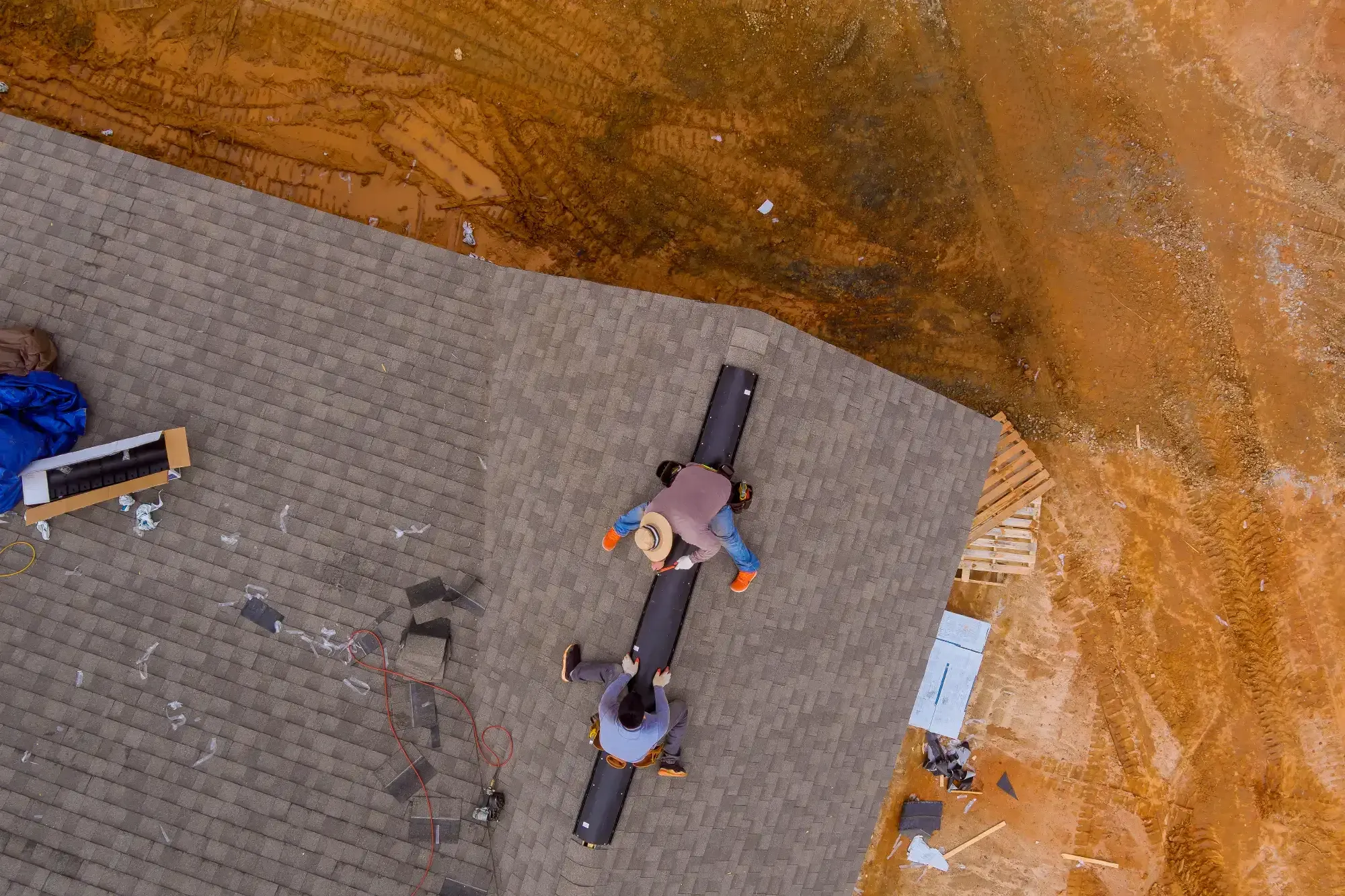
Installing a standing seam metal roof isn’t something you want a general roofer attempting. It requires specific tools, knowledge, and experience that most asphalt shingle installers don’t have. The process starts with removing your old roof—or in some cases, installing over existing shingles if your roof deck is in good shape and local code allows it.
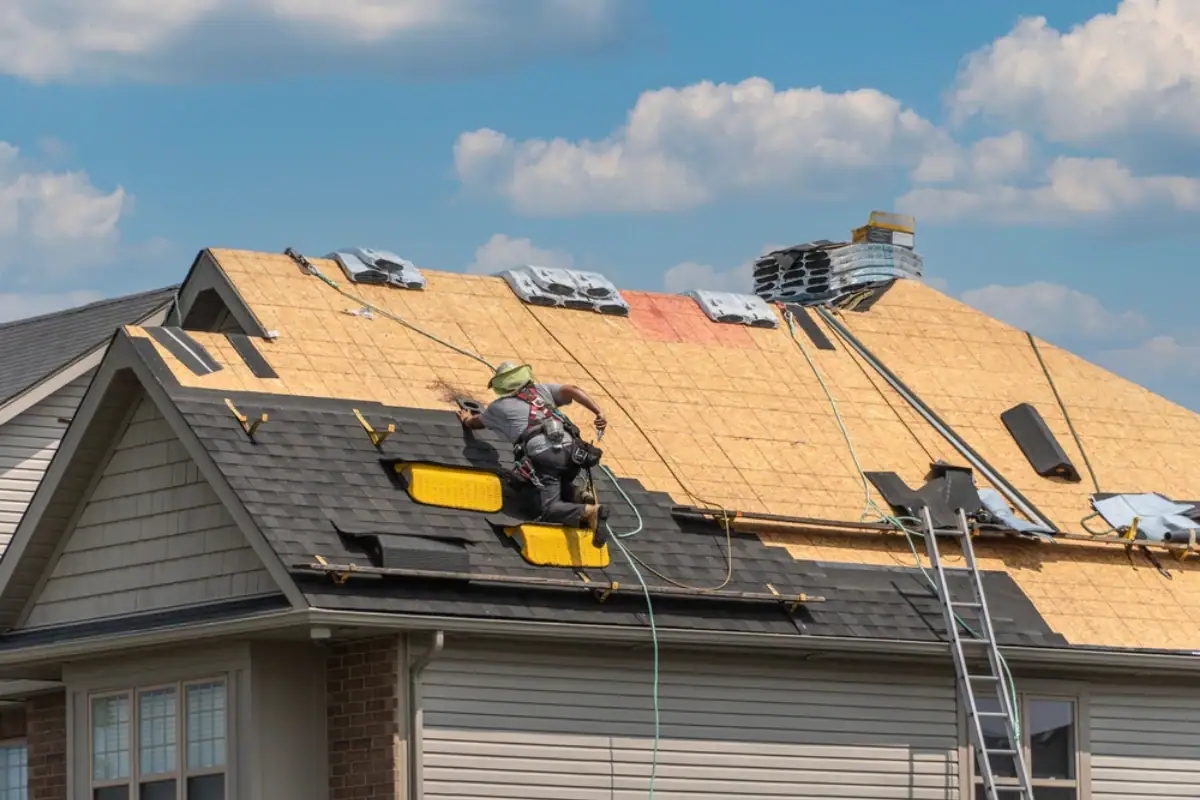
Once the deck is exposed, any damaged sections get replaced. Then comes underlayment—typically a high-temperature synthetic material or self-adhered membrane rated for metal roofing. This is your secondary moisture barrier, and it’s critical. Cheap underlayment melts under metal panels when temperatures climb in summer. That creates adhesion problems and can void your manufacturer’s warranty.
Next, installers add drip edge and starter strips at the eaves. These guide water away from fascia and provide a clean starting point for the first panel. Standing seam panels get cut to length on-site and installed from one side of the roof to the other, with each panel connecting to the previous one through the raised seam. Fasteners clip into the panel base and screw into the deck, then the next panel’s seam covers them completely.
Sheet Metal Roofing Installation Requirements
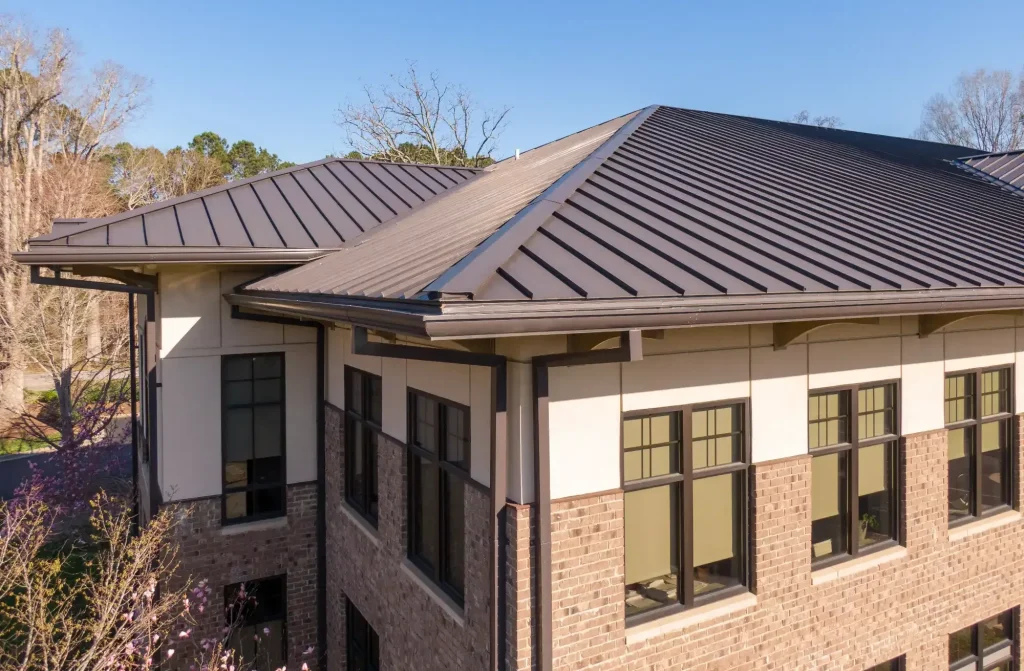
Sheet metal roofing installation demands precision that goes beyond basic roofing skills. The panels need to be measured, cut, and installed with attention to thermal movement—metal expands and contracts significantly with temperature changes. If panels are fastened too tightly or don’t have proper expansion room, they’ll buckle or develop stress cracks in the coating.
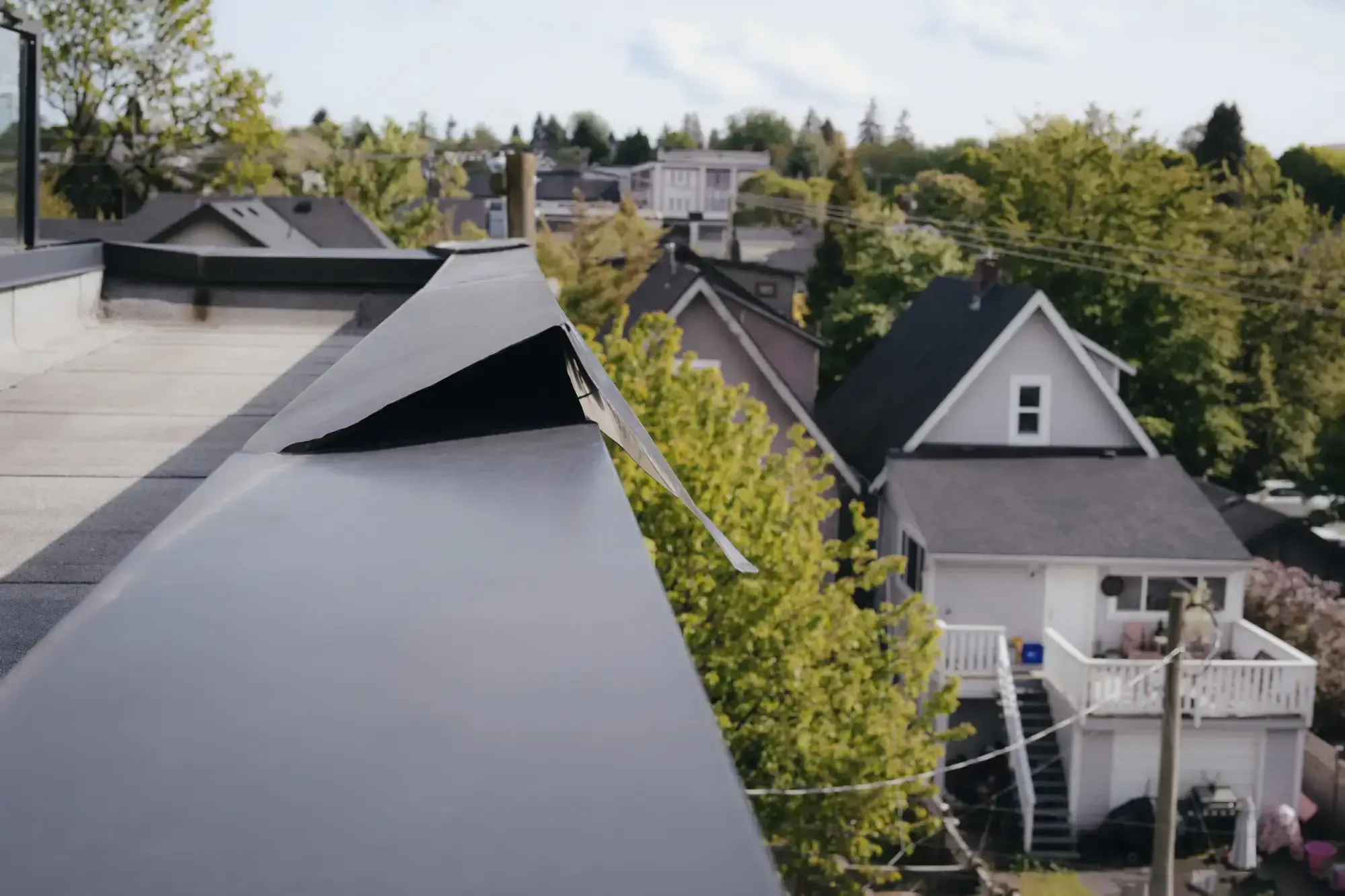
Flashing is where most metal roof installations fail. Every penetration—chimneys, vents, skylights—needs custom flashing that integrates with the panel system. Valleys, ridges, and transitions between roof planes all require specific flashing details. Cut corners here and you’ll have leaks within a year, regardless of how good the panels are.
Installers need specialized tools: panel benders, seamers for mechanical lock systems, and proper cutting equipment that doesn’t damage the panel coating. Hand shears or snips work for small cuts, but power tools with the wrong blade will leave burrs and exposed metal that rusts. Every cut edge needs to be sealed or covered with trim.
Ventilation is another critical piece. Metal roofs need proper attic ventilation to prevent condensation on the underside of the panels. Without adequate airflow, moisture builds up in winter, leading to mold, rot in the roof deck, and premature failure. Installers should verify soffit intake vents are clear and install high-volume ridge vents—at least 18-21 square inches of net free area per linear foot.
The installation timeline for standing seam metal roofing typically runs 3-7 days for most residential projects in Monmouth County. Simple ranch homes with few penetrations can be done in 3-4 days. Two-story homes with multiple roof planes, dormers, and complex flashing details take longer—usually 5-7 days. Weather plays a role too. Metal panels can be installed in cold temperatures, unlike asphalt shingles, but high winds or rain will shut down the job for safety.
Metal Roofs for Homes: Residential Installation Differences
Residential metal roof installation differs from commercial work in several important ways. Home roofs typically have more complex geometry—valleys, hips, dormers, skylights—that require custom flashing and careful planning. Commercial roofs are often simpler, larger expanses with fewer penetrations.
Homeowners also care more about aesthetics. Panel alignment, color consistency, and clean trim work matter when you’re looking at your roof every day. Commercial projects prioritize function over appearance. That means residential installers need a higher level of finish carpentry skill and attention to detail.
Structural considerations come into play too. Most residential roof framing wasn’t designed for metal roofing’s weight and wind uplift characteristics. While metal is lighter than tile or slate, it catches wind differently than shingles. Installers need to verify your roof structure can handle the load and wind forces, especially in coastal areas where wind ratings matter.
Noise is a concern some homeowners have. Metal roofs can be louder than shingles during heavy rain or hail, but proper underlayment and attic insulation minimize this. If your home has open-beam ceilings or minimal attic space, discuss noise mitigation with your installer. Adding an extra layer of sound-dampening underlayment costs a few hundred dollars but makes a noticeable difference.
The biggest difference in residential installation is accountability. When you hire a contractor for your home, you need someone who’ll be around in 10, 20, 30 years if something goes wrong. We’ve been serving Monmouth County for over 40 years, with our owner present on every job. That level of oversight and longevity matters when you’re making a 50-year investment.
Cleanup is another residential-specific concern. Metal roofing creates sharp scraps and fasteners that are dangerous if left in your yard. Professional installers use magnetic sweepers and thoroughly clean the site daily, not just at project end. If you have kids or pets, this isn’t optional—it’s essential.
Metal Roofing Installation Cost: What to Expect
Metal roofing costs more upfront than asphalt shingles—there’s no way around that. In Monmouth County, you’re typically looking at $10,000 to $30,000 for a complete metal roof replacement on a single-family home. Standing seam systems run $8 to $14 per square foot installed. Corrugated metal roofing costs less, usually $5.50 to $9 per square foot.
Those numbers include materials, labor, underlayment, flashing, trim, permits, and disposal of your old roof. Copper and zinc push the high end even further—sometimes $20+ per square foot—but remember you’re buying a roof that can last 70-100 years. The cost per year drops significantly when you spread it over that timeline.
Several factors move your price up or down. Roof size is obvious—larger roofs cost more. But complexity matters just as much. A simple gable roof with no valleys or dormers installs faster and cheaper than a hip roof with multiple planes and penetrations. Steep pitch adds labor cost because it’s slower and requires more safety equipment.